Suffolk County warns of cyanobacteria bloom in Agawam Lake, Southampton
Suffolk County warned swimmers, pet owners and boaters away from Agawam Lake after a new cyanobacteria bloom was confirmed in Southampton.

Suffolk County health officials warned residents to stay out of Agawam Lake after surface-water samples confirmed a new cyanobacteria bloom in Southampton. The June 4 notice put the lake back under a public-health lens, with the county telling families to keep children and pets away from discolored or scummy water.
The Suffolk County Department of Health Services said Stony Brook Southampton analyzed the samples that confirmed the bloom. County officials said cyanobacteria, also known as blue-green algae, occur naturally in low numbers but can spread when conditions are favorable, sometimes turning water green, blue-green, yellow, brown or red, or giving it a paint-like appearance.
The advisory said anyone who touches suspect water should rinse immediately with clean water. It also urged medical attention if exposure is followed by nausea, vomiting, diarrhea, skin, eye or throat irritation, allergic reactions or breathing problems. For Southampton residents who use the lake for walking dogs, launching small boats or fishing from shore, the warning means the usual warm-weather routines around Agawam Lake are off-limits until conditions improve.
The county asked people to report suspected blooms at Suffolk County-permitted bathing beaches to the Office of Ecology at 631-852-5760 during weekday business hours or by email. Suspected blooms in waters without a county-permitted bathing beach should be reported to the New York State Department of Environmental Conservation by email. The county also directed residents to the state’s NYHABS map of affected freshwater bodies for updates on blooms across New York.
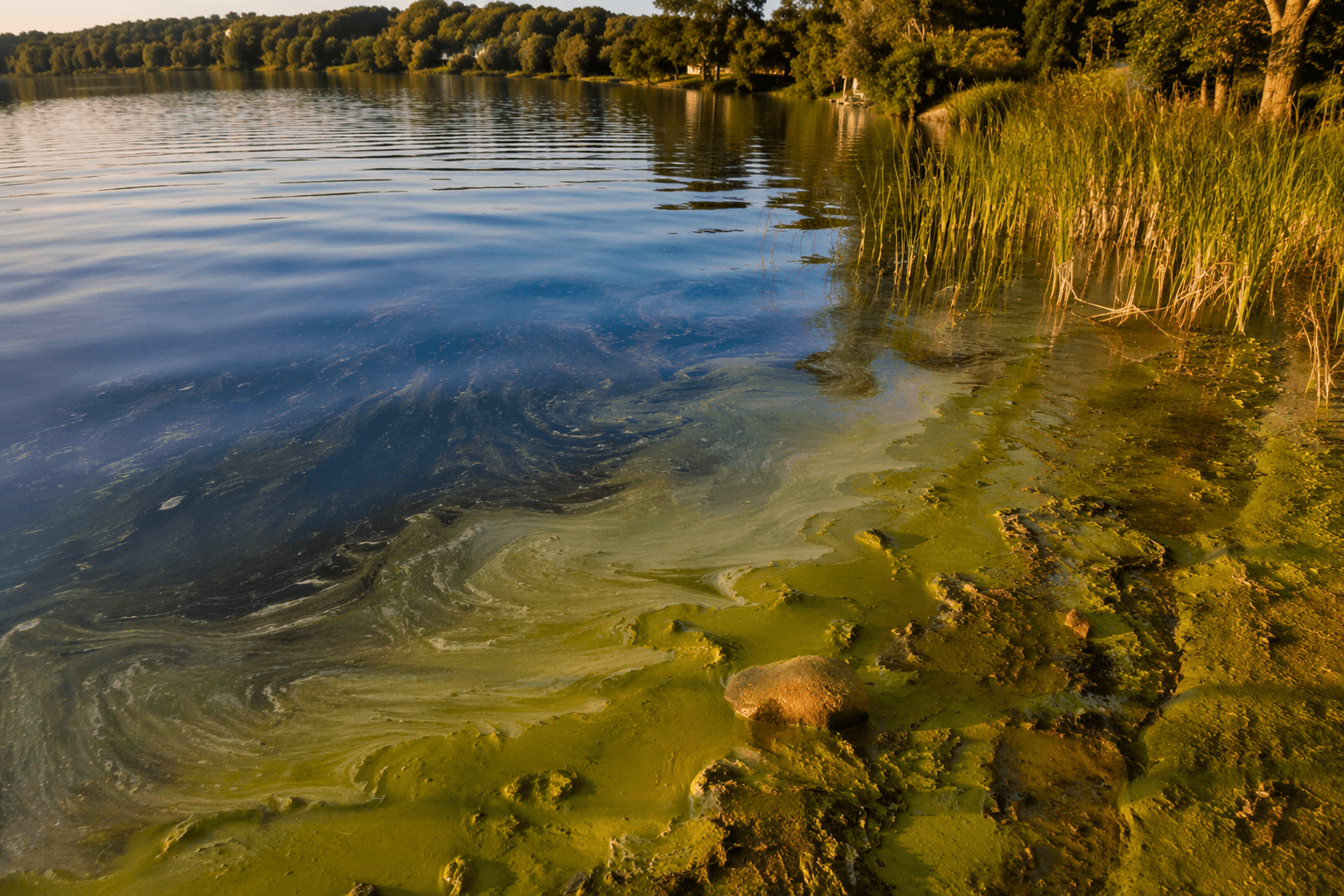
The new alert is not the first time Agawam Lake has drawn a cyanobacteria warning. Suffolk County posted a similar notice on May 26, 2017, and the lake has remained part of a broader Southampton water-quality struggle tied to blue-green algae and nitrogen pollution. A 2024 Southampton Village discussion described decades of elevated microcystin in Lake Agawam, and in July 2024, Christopher Gobler said a sample there reached nearly 1,000 micrograms per liter of microcystis, which he described as the state high mark for blue-green algae that year among the samples his team had monitored.
Southampton Village has also outlined cleanup ideas that included a mobile algae harvester and a proposed permeable reactive barrier to reduce nitrogen entering the lake from groundwater. That matters beyond one shoreline: a recent Stony Brook water-quality preview said roughly two dozen blue-green algae impairments were recorded on Suffolk’s East End in 2025, underscoring how often warm-season blooms can interrupt recreation from Southampton to Hampton Bays and beyond.
This article was produced by Prism’s automated news system from verified source data, official records, and press releases, then run through automated quality and moderation checks before publishing. The system is built and supervised by the people who set the standards it runs under. Read our full AI policy.
Did this article answer your question?