Suffolk County water depends on a federally protected aquifer system
Suffolk’s taps, wells and building permits all trace back to the same groundwater system. In a county that gets 100% of its drinking water from a sole-source aquifer, septic, fertilizer and sewer decisions land on every neighborhood.
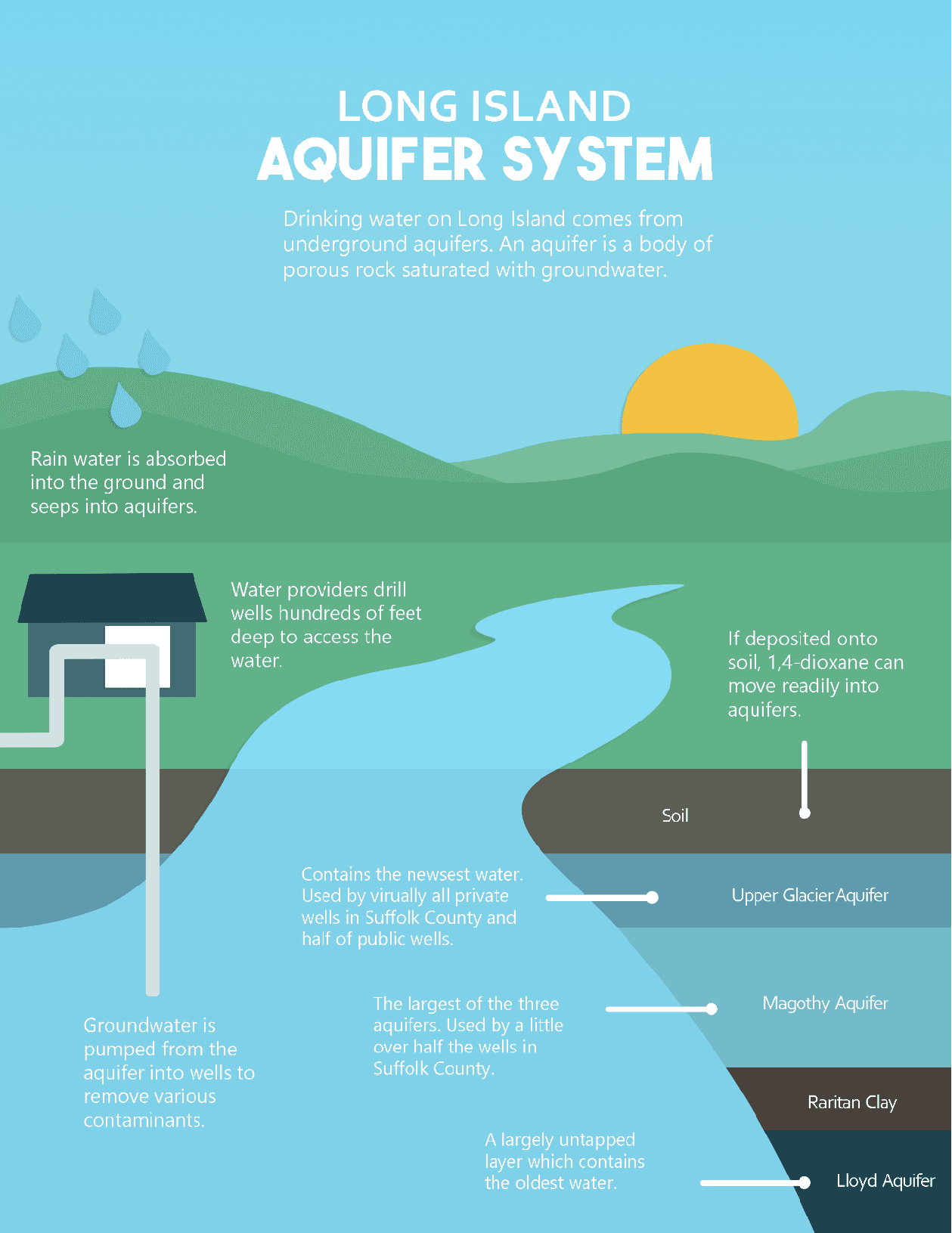
100% of Suffolk County’s drinking water comes from the federally designated Sole Source Aquifer system beneath Long Island. The story is about the rules that shape what can be built, what must be tested, and what must be cleaned up before it reaches a tap.
Why the aquifer matters so much here
The U.S. Environmental Protection Agency’s Sole Source Aquifer program exists for underground water supplies that are so essential that contamination would create a serious hazard. Projects in the designated review area that receive federal financial assistance can be reviewed to make sure they do not contaminate the aquifer, and the agency’s map of sole-source aquifers includes Long Island’s system. Because the county sits above this federally designated system, preserving groundwater integrity is critical for public health.
That federal designation helps explain why local water policy stretches far beyond drinking fountains and utility bills. County programs now include groundwater and surface-water work, fertilizer reduction, stormwater management, coastal resilience and watershed planning, because the same aquifer that supplies homes also absorbs what runs off lawns, parking lots and septic systems.
How the county’s water system is actually organized
The Suffolk County Office of Water Resources oversees a decentralized system, not a single utility. It regulates 39 Community Water Supplies and 254 Non-Community Water Supplies, while public water suppliers serve more than 90% of the county’s 1.45 million residents. Suffolk has more than 1,100 active public water supply wells, with monitoring that covers both raw water from the wells and finished treated water at the point of use.
That structure is why water policy reaches so many local decision-makers. The county’s Bureau of Drinking Water Protection reviews plans for proposed water supplies, inspects wells and treatment facilities, certifies operators and oversees daily operations, while its groundwater investigators track water-table elevations through hundreds of monitoring wells.
What sits between the aquifer and your tap
The Suffolk County Water Authority is one of the biggest pieces of that system. Created on March 29, 1937, the authority began operations on June 1, 1951 after acquiring the South Bay Consolidated Water Company, and it was New York State’s first water authority. Its supply comes from the Upper Glacial, Magothy and Lloyd aquifers, and SCWA puts the system at 70 trillion to 140 trillion gallons of water, with roughly 400 billion gallons recharged each year.
More than 600 high-capacity wells draw water from depths as deep as 750 feet. Before treatment, it tests raw water for almost 400 compounds. Depending on what is found, water may pass through granular activated carbon, advanced oxidation, air stripping or iron-removal systems, then receive lime for pH balance and chlorine for bacteria control. After treatment, the utility stores water in more than 50 elevated tanks and delivers it through 6,000 miles of water main.
Long Island’s aquifers are deep sand-and-gravel formations that filter rain and snow as water moves slowly underground over years or centuries.
What it means for homeowners and renters
For the estimated 40,000 to 45,000 private wells serving more than 200,000 people in Suffolk County, there is a charge for water analyses because demand is so high. The only way to know the quality of a private well is to test it. Contamination in one nearby well does not automatically mean another well is affected, because groundwater conditions vary from property to property.
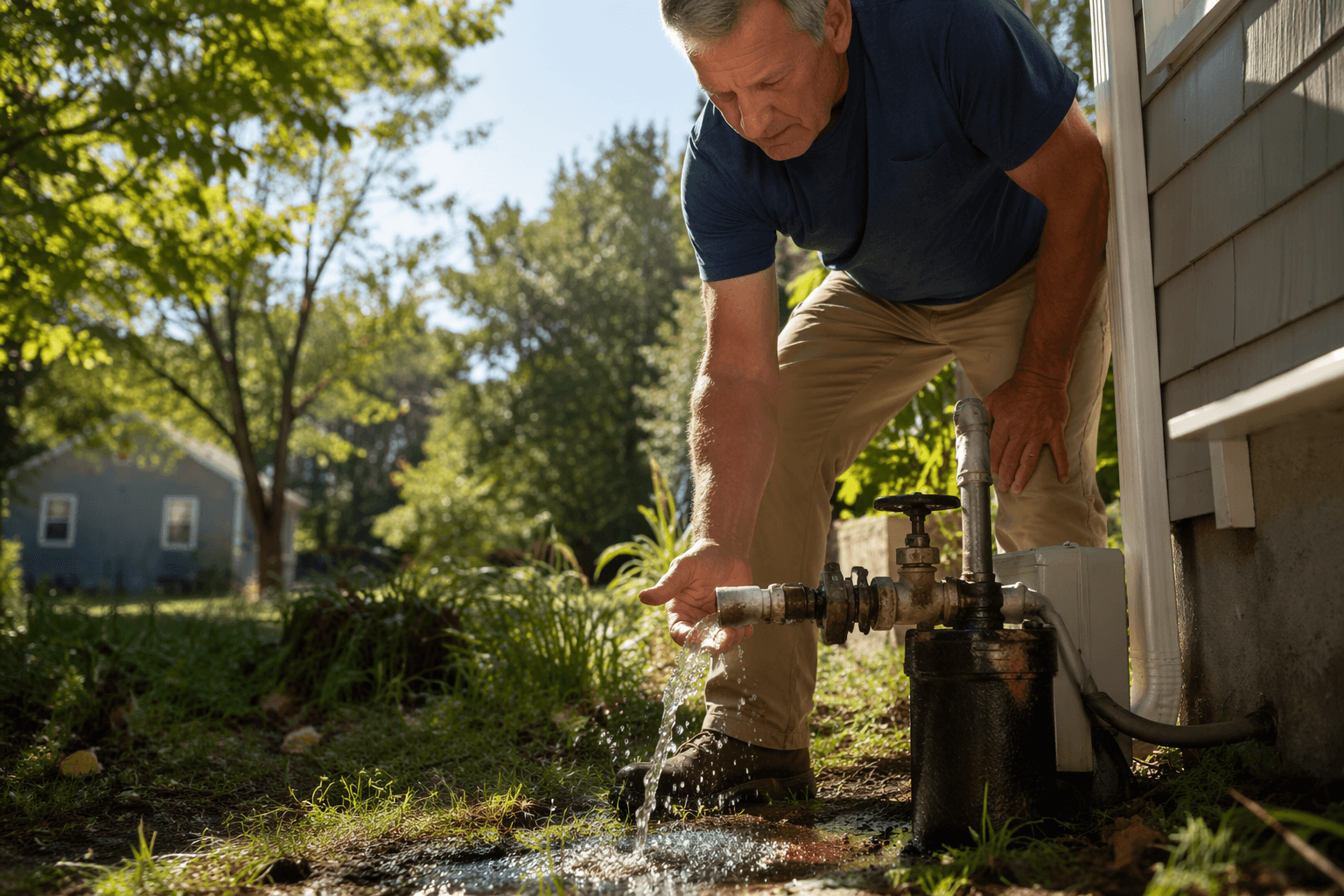
Suffolk’s testing program checks for microbiological quality, inorganic chemicals, volatile organic compounds, petroleum derivatives and, in agricultural areas, carbamate pesticides. Many tested wells meet drinking-water standards.
Why fertilizer and septic rules are part of the water story
Suffolk’s Healthy Lawns, Clean Water program includes a ban on fertilizer application to turf grass between November 1 and April 1, when runoff and leaching into groundwater are greatest because grass is not actively growing. The county also bans fertilizer on county-owned properties, with limited exceptions such as golf courses and athletic fields.
The county ties that rule directly to nitrogen pollution from both fertilizer and septic tanks. Excess nitrogen can threaten human health if it reaches groundwater, and installation grants can reach $20,000 per property, while the state replacement program can cover up to 75% of eligible costs, capped at $25,000. An innovative/alternative septic system could increase property value.
In 2024, New York authorized Suffolk County to seek a 0.0125% sales-tax increase for sewer expansion and septic replacement, and voters approved Proposition 2, raising the countywide sales tax from 8.625% to 8.75% to fund clean-water projects. Suffolk County’s Water Quality Protection and Restoration Program is funded through the county’s 1/4% Drinking Water Protection Program and uses 11.75% of those revenues for grants to municipalities and nonprofits.
What towns can approve, and what they cannot ignore
Building in Suffolk is tied to wastewater approvals because the county controls the plumbing that protects the aquifer. The Suffolk County Sewer Agency reviews out-of-district connections to county sewer districts and construction of private sewage treatment plants with multiple users, and sewer connections require approval and an S-9 form before towns can issue a building permit and certificate of occupancy. For commercial, industrial, multiple-residence and other projects, county health approval may also be required to confirm the sewage disposal system meets the sanitary code.
The aquifer system limits how much pollution can be added to the groundwater below a new subdivision, a strip mall or a sewer expansion, and federal review can reach projects that use federal funds in the aquifer review area. County grant programs also require municipal resolutions or legislative approval, which means water policy runs through town boards, the County Legislature and county agencies at the same time.
Why contamination, research and funding still dominate the agenda
In July 2025, SCWA expected its first award from the national 3M PFAS settlement, calling PFAS forever chemicals that have contaminated Long Island’s sole-source aquifer. Suffolk County works with other agencies and universities on special investigations such as the Pesticide Monitoring Program and the Long Island Breast Cancer Study, while Brookhaven National Laboratory says Nassau and Suffolk counties are completely dependent on groundwater for freshwater and that precipitation is the only source replenishing Long Island’s aquifer system.
That sales-tax funding now stretches through November 30, 2060.
This article was produced by Prism’s automated news system from verified source data, official records, and press releases, then run through automated quality and moderation checks before publishing. The system is built and supervised by the people who set the standards it runs under. Read our full AI policy.
Did this article answer your question?


