Weekend Storms Disrupted Post-Holiday Travel Across New England
Two back-to-back storms that moved through the region on the weekend of December 26 disrupted post-holiday travel and strained winter-maintenance resources. State officials and motoring groups warned of difficult driving conditions as snow, an icy mix, and later rain fell across Western Massachusetts, the Boston area, and parts of southern New England.

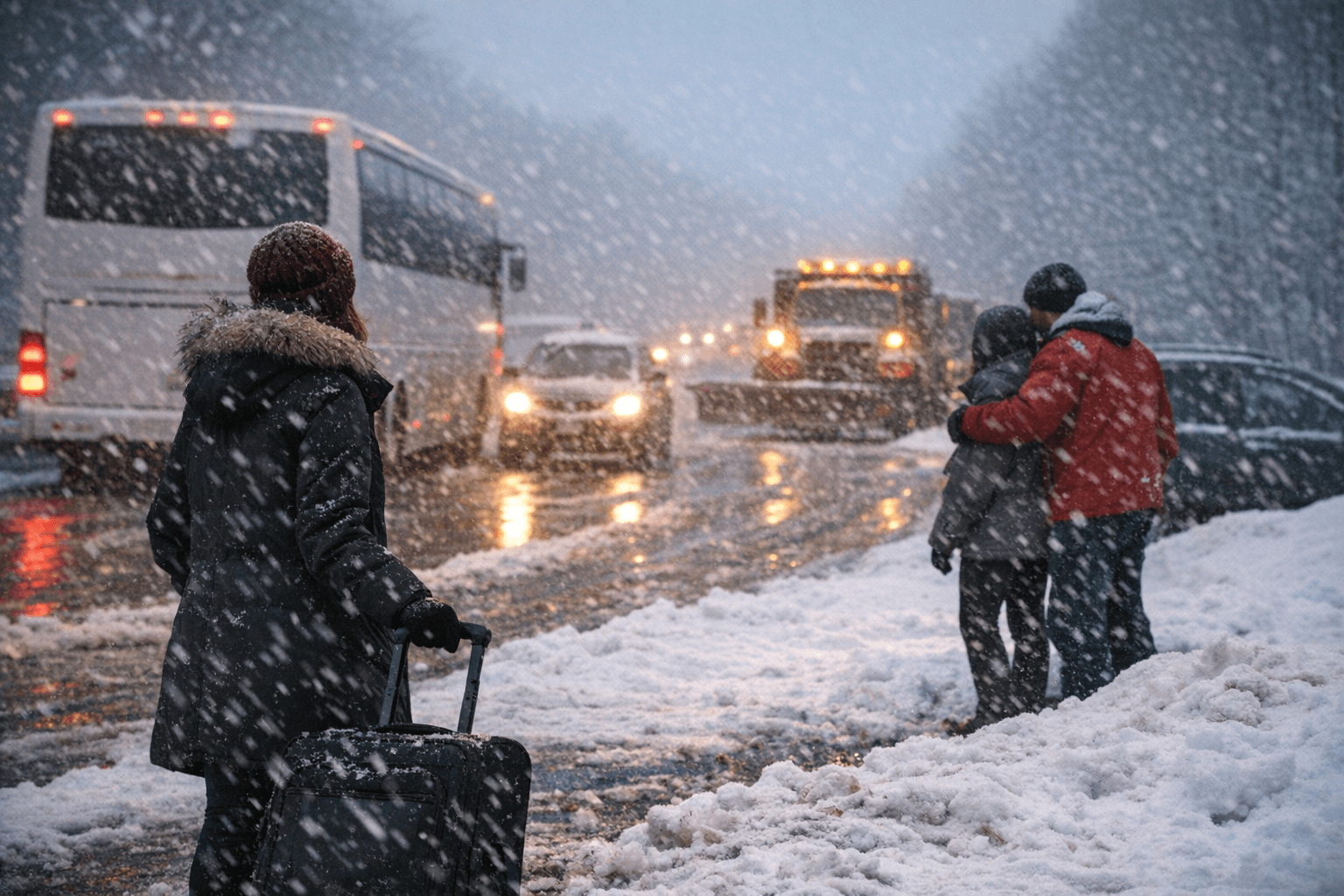
Two weekend storms that hit the region over the post-Christmas period produced a mix of snow, ice, and rain that complicated travel and tested municipal and state winter response systems. The first system produced its initial flakes in Western Massachusetts around 8 p.m. on Friday, December 26, and continued into Saturday morning before tapering off. Western parts of the state recorded roughly 1 to 3 inches of snow, while the Boston area was limited to only a coating. Portions of southern Connecticut and New Jersey saw heavier totals, up to 6 inches, as the storm tracked east.
Massachusetts Department of Transportation officials monitored the forecast closely and mobilized resources in anticipation of the event. State and vendor fleets totaled more than 3,000 pieces of equipment available to respond to snow-related emergencies across highways and state roads. That level of deployment illustrated the scaling decisions transportation agencies make when winter storms threaten travel flows that involve both local commuters and long-distance holiday drivers.
Automobile club AAA had projected heavy holiday travel and identified the worst travel window as roughly 11 a.m. to 8 p.m., when road congestion and deteriorating conditions combined to elevate risk. A second system arrived late Saturday night into Sunday, bringing an icy mix before changing to rain, which complicated cleanup efforts and raised concerns about ice on untreated surfaces before temperatures rose.
For residents of Suffolk County, the storms underscored how regional weather can ripple into local services. State-maintained highways were the focus of MassDOT deployments, while cities and towns were responsible for clearing local streets and responding to neighborhood-level hazards. The storms also highlighted dependencies on vendor contracts and equipment that state agencies rely on when staffing and fleet capacity are exceeded.
Policy implications are clear for municipal and state leaders. Winter preparedness requires transparent inventorying of equipment, clear coordination protocols between state and local governments, and review of vendor arrangements to ensure sustained capacity during consecutive storms. The pattern of closely spaced systems also reinforces the need to factor climate variability into budgets and emergency plans so that crews are not repeatedly strained in short order.
Civic officials and service providers should review after-action findings from these events and communicate timelines and priorities to the public. In the short term, verify travel plans, allow extra time for trips, and consult official MassDOT and municipal channels for road and transit updates. Long term, elected leaders and administrators must weigh investments in equipment, staffing, and intergovernmental coordination to reduce disruptions when New England’s winter weather returns.
This article was produced by Prism’s automated news system from verified source data, official records, and press releases, then run through automated quality and moderation checks before publishing. The system is built and supervised by the people who set the standards it runs under. Read our full AI policy.
Did this article answer your question?