Artist-in-Residence Programs Enrich Claremont’s Arts Scene, Downtown Life
Sarah Breisch's residency and new downtown arts spaces are turning Claremont into a place where Sullivan County residents can watch, learn and make art affordably.
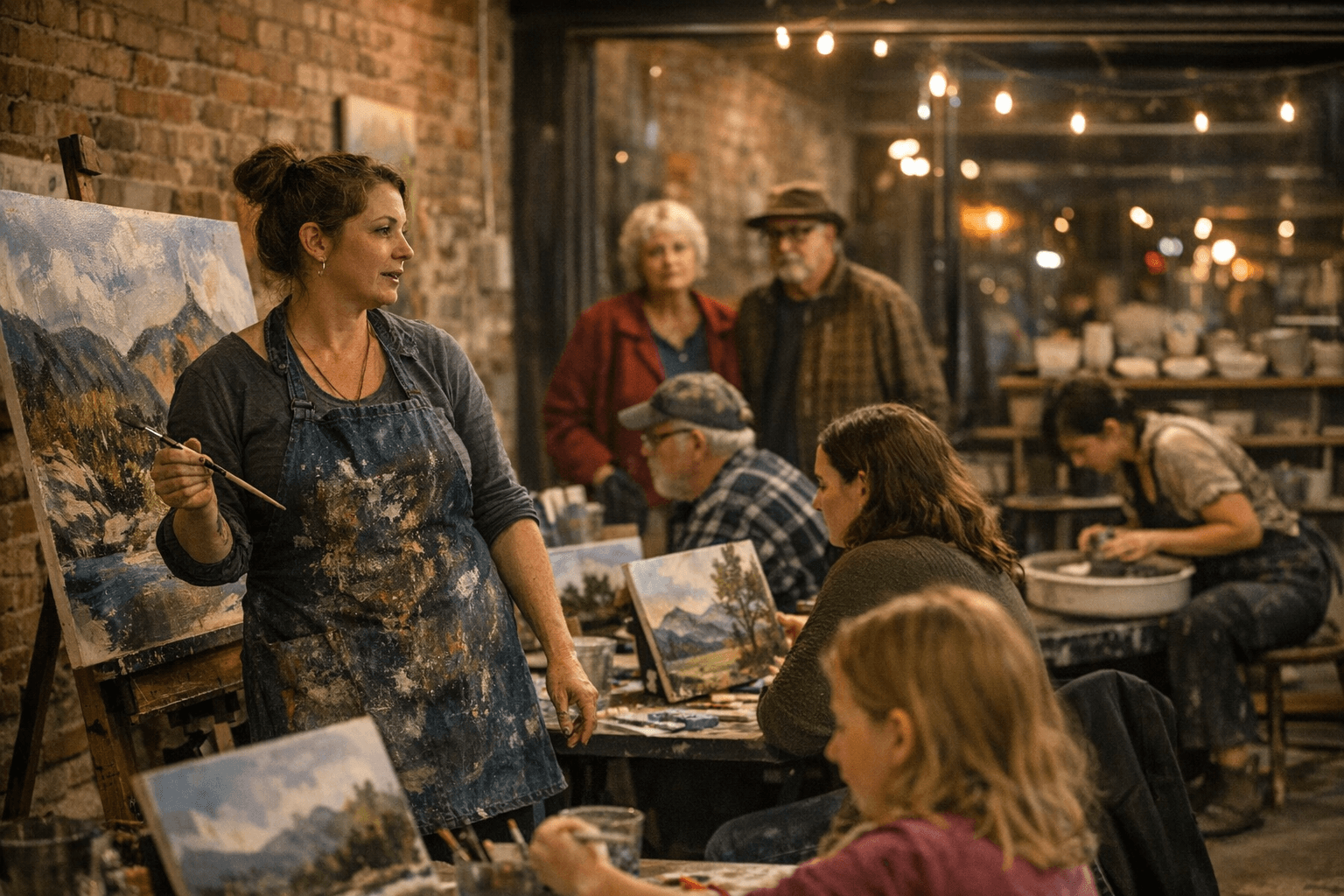
Sarah Breisch’s printmaking residency at Claremont MakerSpace gives Sullivan County residents more than a finished exhibit. It brings working artists into town, puts tools within reach, and creates free or low-cost ways for neighbors to learn, look and make.
What locals actually get from these residencies
At their best, artist-in-residence programs answer a simple question: what changes for the people who live nearby? In Claremont, the answer is visible in open studios, public workshops, gallery visits and foot traffic that spills into downtown. Instead of treating art as something reserved for a distant museum or a pricey private class, these programs make it part of ordinary civic life in Sullivan County’s only city.
That matters in a place where affordability can decide who gets to participate. The residency model lowers the barrier to entry by giving artists space to work and residents a reason to come through the door. Families, students and older adults can encounter art as a public experience, not a luxury purchase, while downtown businesses benefit from the extra movement and attention.
Why Claremont is leaning into arts-driven recovery
Claremont was settled in 1762, and its current downtown strategy builds on the same features that shaped the city in the first place: historic architecture and adaptive reuse. That makes the arts a natural fit for a city trying to turn older buildings and walkable blocks into reasons to linger rather than pass through.
The city’s revitalization effort is not just about facades and planning documents. It is also about filling spaces with activity, and arts programming does that in a way government meetings and routine commerce cannot. A residency can pull people downtown for a demonstration, an exhibition or a class, then keep them there long enough to shop, talk and reimagine what Claremont’s center can be.
The Claremont Creative Center is a clear example of that approach. It opened in 2024 at 56 Opera House Square, inside the former Claremont National Bank Building, and operators described it as part of the city’s broader revitalization effort. Its presence reinforces the idea that reused buildings can become active public assets instead of empty reminders of what was lost.
How Claremont MakerSpace turns creativity into access
Claremont MakerSpace has turned its artist-in-residence program into a structured opportunity, not a casual invitation to drop in. Each selected artist receives a $1,000 stipend toward new work, three months of unlimited membership, ten weeks of dedicated studio space and training on tools. The residency is open to artists from New Hampshire and Vermont, which gives Sullivan County access to a wider creative network without losing the local focus.
That structure matters because it supports both the artist and the public. A stipend and studio access let makers experiment with new ideas, while tool training and a dedicated workspace increase the chance that residents will see real process, not just finished pieces. For local viewers, that can mean demonstrations, conversation and a better understanding of how art is actually made.
The spring 2026 application window opened March 23 and closed April 6 at 5 p.m. EDT, with support from the League of NH Craftsmen. The recent lineup has included textile artist Berkley Heath, printmaker Sarah Breisch and woodworker Margo Dunlap, a range that signals the residency is designed to serve more than one medium or audience. That diversity gives residents a chance to encounter everything from fabric work to printmaking to woodcraft in one local program.
Artistree broadens the reach beyond downtown
Artistree Community Arts Center extends the same public-minded approach across the Upper Valley. It describes itself as a nonprofit community arts center offering classes, workshops, performances, gallery exhibits and events, and its outreach program says it brings arts programming to schools, seniors, rural residents and underserved communities. That makes it more than a venue in one town center. It is a regional access point for people who might not otherwise find affordable creative opportunities.
Artistree says it is now in its 22nd year, and that longevity matters in a region where short-lived programs often fade before they become part of daily life. It grew from a two-room space into a multifaceted arts center, which suggests steady demand for arts experiences that are approachable rather than exclusive. When those offerings reach schools and senior settings, the benefit extends beyond performance nights and gallery openings to education, social connection and community health.
For Sullivan County, that kind of outreach is especially important. Creative programming in rural areas can counter isolation, create low-cost intergenerational gatherings and give residents a place to learn without needing to travel far or spend much. In practical terms, it turns the arts into a local service, not a seasonal extra.
A regional arts network with local payoff
Claremont’s arts scene is gaining traction because these spaces are beginning to work together as a regional network. The MakerSpace residency, Artistree’s public programming and venues such as the West Claremont Center for Music and the Arts all contribute to a broader civic picture in which art is not hidden from daily life but woven into it. That gives the city a cultural identity that can complement its economic-development goals.
The payoff for ordinary residents is easy to see. There are more chances to stop into a studio, bring students to a workshop, see a maker at work or spend time downtown without needing a ticketed event or a big budget. In a county where public debate often centers on roads, schools and budgets, this quieter shift may be just as important: Claremont is making room for creativity as part of how the city functions, not just how it looks.
As these programs continue to grow, they are doing exactly what a strong local arts scene should do. They are keeping artists in front of the public, making downtown more active and giving Sullivan County residents affordable ways to participate in the cultural life of their own city.
This article was produced by Prism’s automated news system from verified source data, official records, and press releases, then run through automated quality and moderation checks before publishing. The system is built and supervised by the people who set the standards it runs under. Read our full AI policy.
Did this article answer your question?