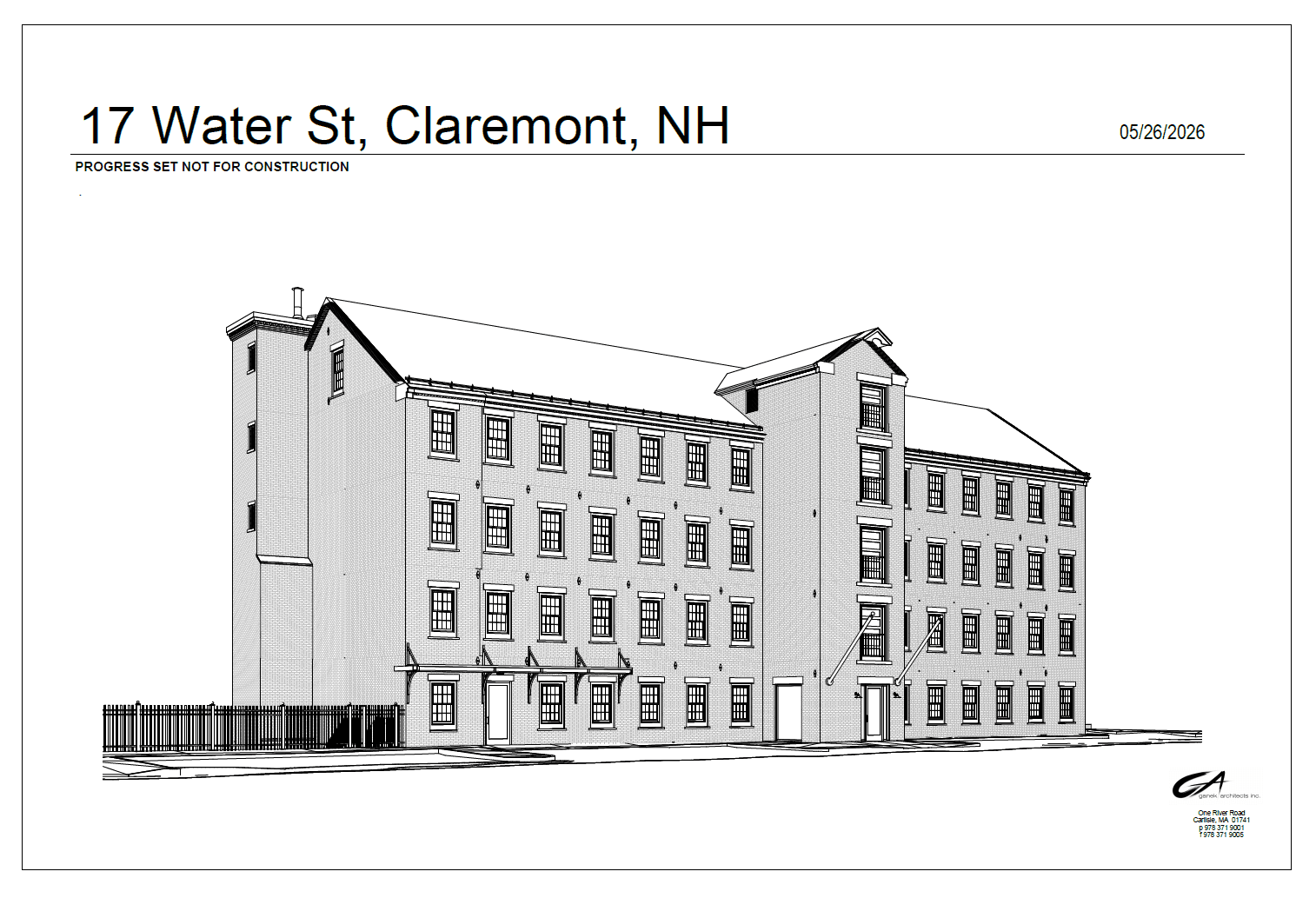
Claremont Sells Old State Office Building, Developer Plans 30 Apartments
The City of Claremont completed the sale of the long vacant state office building at 17 Water Street for $807,000 on December 28, 2025, with a Connecticut based developer planning to convert the four story, roughly 32,000 square foot mill into about 30 one and two bedroom apartments. The deal returns the property to private stewardship, reduces the citys carrying costs, and could add needed housing while preserving a historic riverside structure.

The City of Claremont finalized the sale of 17 Water Street on December 28, 2025, transferring the former state office building to 1852 MB Funds of Darien, Connecticut for $807,000. The brick structure, originally part of Monadnock Mills and roughly 32,000 square feet across four stories, had been largely vacant after housing state offices including the Department of Motor Vehicles and the Department of Health and Human Services until recent years.
The buyer plans to convert the building into approximately 30 one and two bedroom apartments, a scope that implies an average unit size of about 1,067 square feet. The developer engaged Ganek Architects to lead the historic mill renovation and intends to seek approvals for National Park Service historic tax credits while coordinating local permitting with the city. Franklin Savings Bank is providing project financing. The developer estimates occupancy around mid 2027.
A more thorough inspection conducted later in the sale process revealed additional repair needs, particularly on the river facing facade, which led to a reduction in the negotiated sale price from the earlier agreement. Those unanticipated repair costs are likely to increase overall rehabilitation budgets, and the developer is relying on a combination of bank financing and historic tax credit approvals to maintain project feasibility.
For Claremont the transaction has several immediate fiscal and economic implications. The city, which had previously acquired the property and borne carrying costs during its vacancy, will no longer be responsible for maintenance and insurance expenses on the building. Returning the structure to private ownership also means the property can be taken off municipal inventory and eventually return to the property tax rolls once rehabilitation is complete and units are occupied.
From a market perspective the conversion adds modest but meaningful housing supply to downtown Claremont. Thirty units in a central location can support downtown commerce by increasing foot traffic and demand for local services, and they represent an option for renters seeking proximity to the riverfront and municipal amenities. The use of historic tax incentives and local bank financing reflects a common redevelopment model in the region where preservation credits help bridge the gap between the elevated costs of rehabilitating old mill fabric and market rents.
Next steps include securing National Park Service historic tax credit approvals, completing city permitting, and executing the renovation under Ganek Architects oversight. If projections hold, residents could begin moving in by mid 2027, marking the reuse of a long vacant municipal asset and a step toward expanding housing options in Claremont.
This article was produced by Prism’s automated news system from verified source data, official records, and press releases, then run through automated quality and moderation checks before publishing. The system is built and supervised by the people who set the standards it runs under. Read our full AI policy.
Did this article answer your question?