Frank Fahey remembered for building Sugar River Valley technical center
Frank Fahey helped build the Sugar River Valley technical center, and generations of Sullivan County students still feel that work in Newport.

Frank Emery Fahey helped turn career training into a lasting Sullivan County institution. As assistant principal at Newport High School and later vocational director of the Sugar River Valley Regional Technical Center, he oversaw the center’s construction and opening, laying the groundwork for a program that still sends students into college, apprenticeships and the workforce.
Fahey died June 3 at 82, after a career that stretched from Millinocket, Maine, to Newport and then to Sanford, Maine. He grew up in Millinocket and worked in the timber industry as a young man before building his life around education, technical training and student support. That path made him a familiar figure in schools where hands-on learning mattered as much as classroom instruction.
In Newport, Fahey’s influence reached beyond administration. He was the club advisor for Distributive Education Clubs of America, better known as DECA, and took students to conferences in New Hampshire, Toronto, Washington, D.C. and New York City. Those trips widened the horizon for students from rural towns that often have fewer built-in opportunities to see how classroom skills connect to careers.
After his time in Newport, Fahey became vocational director at the Sanford Regional Vocational Center in Sanford, Maine, extending his work in career and technical education beyond New Hampshire. His career reflected a broader public mission that state education officials continue to emphasize: career and technical education is meant to connect students to high-wage, high-demand occupations while meeting workforce needs.
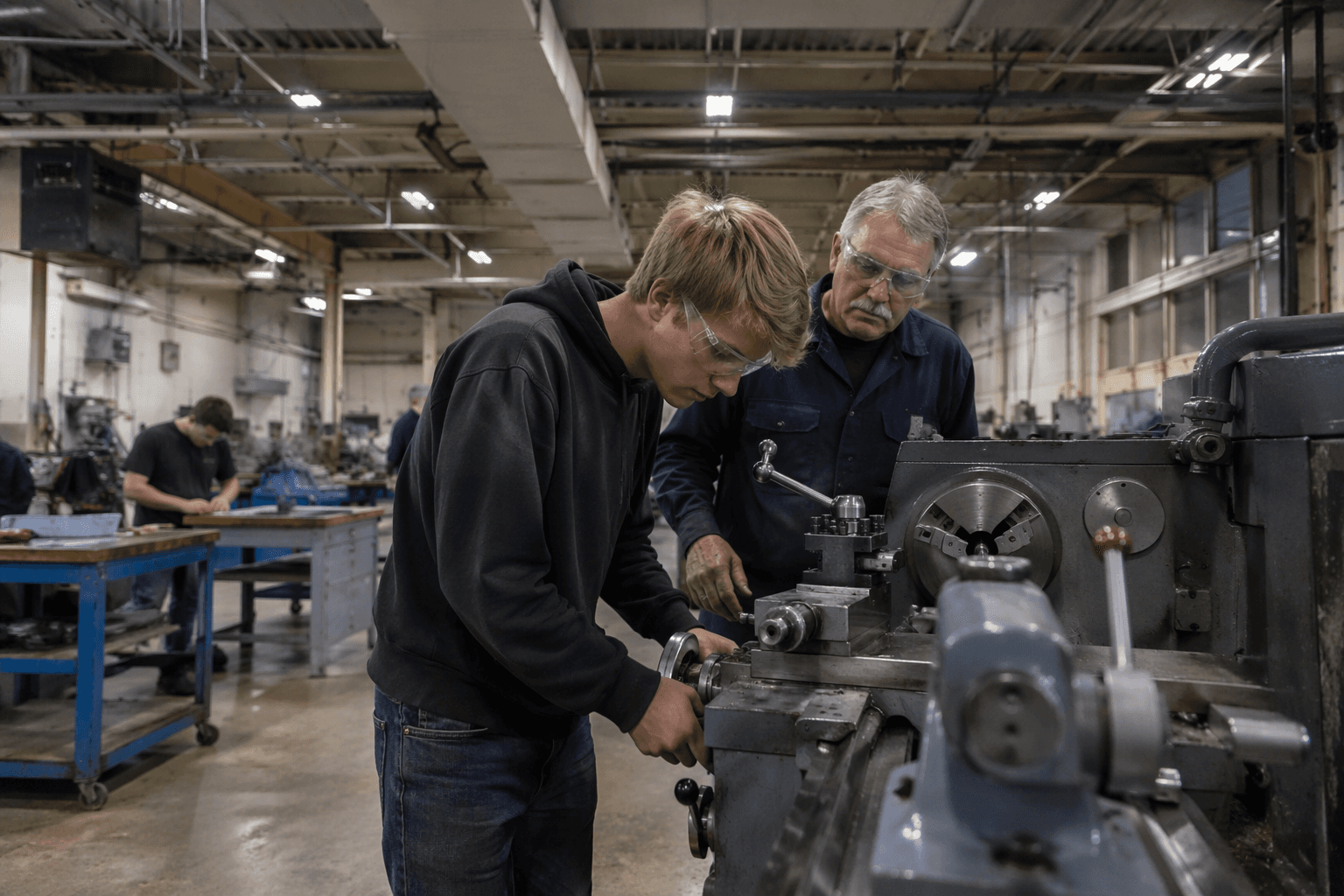
The Sugar River Valley Regional Technical Center remains central to that mission. Today it serves grades 9 through 12 in the Newport-area regional system, and its program page says graduates are prepared for colleges, technical training institutes, apprenticeships and direct entry into the workforce. A recent renovation and expansion addressed space constraints, enrollment waitlists, antiquated equipment and overburdened mechanical systems, and updated 100% of the center’s existing program offerings.
That reinvestment underscores how durable Fahey’s work proved to be. The center he helped bring to life did not fade into the background. It became a place the district still had to modernize because it remained essential to students, families and employers across Sullivan County.
Jean Fahey remembered her husband as wise and as someone who listened without judgment, a personal legacy that matched the public one. In Newport, where schools and workforce pathways are tightly linked, Fahey’s mark endures in a technical center that continues to shape how young people enter adult life.
This article was produced by Prism’s automated news system from verified source data, official records, and press releases, then run through automated quality and moderation checks before publishing. The system is built and supervised by the people who set the standards it runs under. Read our full AI policy.
Did this article answer your question?