Historic Newport Woolen Mill Reopens as 70-Unit Affordable Housing Community
The last surviving textile mill in Newport, vacant for 50 years, reopened in 2025 as 70 affordable apartments with rents starting at $947 a month.
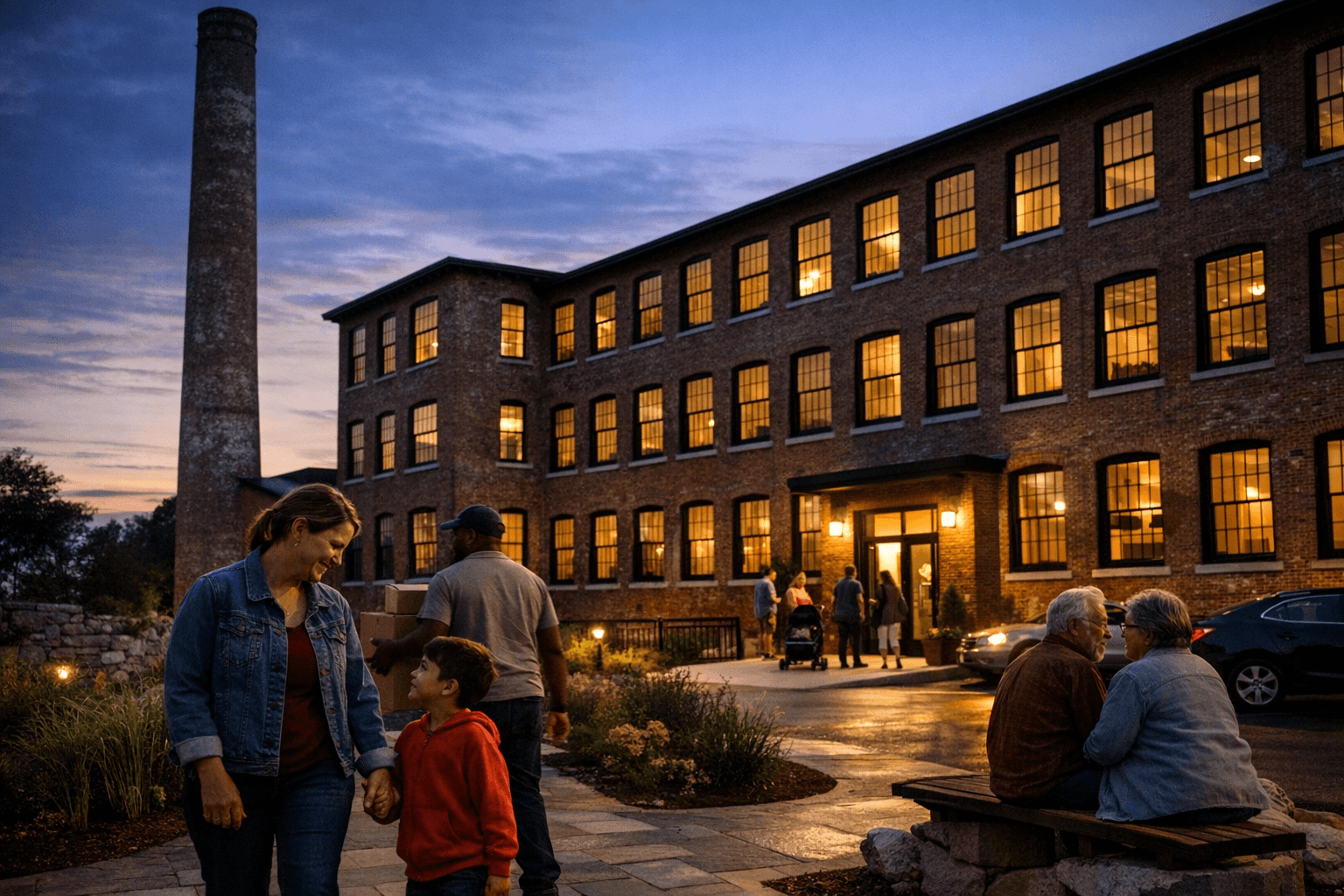
A brick mill that anchored Newport's industrial economy for decades, then sat empty for half a century, is housing families again. The Dexter Richards & Sons Woolen Mill at 169 Sunapee Street, built in 1905 and the last surviving textile mill in Newport, reopened in the spring of 2025 as Woolen Mills Apartment Homes: 70 affordable units spread across four floors on a nine-acre parcel along the Sugar River.
Developer Jon Livadas, working through DRSWM Limited Partnership, partnered with Vermont-based ReArch Construction and RODE Architects to complete the nearly 89,000-square-foot rehabilitation. Financing was assembled through Low-Income Housing Tax Credits administered by the New Hampshire Housing Finance Authority, the state's InvestNH program, federal historic rehabilitation tax credits, and support from the Town of Newport. The project was executed in full compliance with the Secretary of the Interior's Standards for the Treatment of Historic Properties, a requirement that shaped every design decision.
A ribbon-cutting was held June 9 at 10 a.m. on-site. "The Woolen Mill Apartments will provide vital affordable housing solutions in the local community, fostering stability and opportunity for residents," said Rob Dapice, CEO of New Hampshire Housing. "We commend Elm Grove, Jon Livadas, and their partners for their dedication to addressing the need for more homes in our state."
Elm Grove Companies, a Manchester-based firm that manages more than 600 workforce housing units across New Hampshire, handles day-to-day operations. Units range from studios to three-bedrooms, with studios starting at $947 a month. Income restrictions cap eligibility at $60,000 annually, or 60 percent of the area median income, with a minimum threshold of $40,000.
The renovation preserved the mill's defining architectural features: arched windows, exposed timber beams, and original hardwood floors. Where the building needed modernizing, crews added stainless steel appliances and brought mechanical, plumbing, and accessibility systems up to current code. The result is units with 12-foot ceilings and industrial character that new construction in Sullivan County cannot replicate.
The Richards family had been central to Newport's commercial development since the 19th century, helping establish the Newport Electric Company and bringing rail service to the region before Richards and Sons dissolved in 1926. The mill changed hands several times after, eventually going dormant. The entity that eventually sold to Livadas had held the property since 2016, assembling the financing and approvals that allowed construction to finally begin.
For Newport, Sullivan County's seat with a population of roughly 6,500, sixty new affordable rentals in a single building is a measurable shift in housing supply. The mill that once processed wool along the Sugar River is now the largest single addition to the city's rental market in recent memory.
This article was produced by Prism’s automated news system from verified source data, official records, and press releases, then run through automated quality and moderation checks before publishing. The system is built and supervised by the people who set the standards it runs under. Read our full AI policy.
Did this article answer your question?