Mount Sunapee Offers Year-Round Recreation for Sullivan County Visitors
NH State Parks owns the mountain; Vail operates it. Here's what Sullivan County visitors need to know about fees, trail rules, parking, and who to call in an emergency.
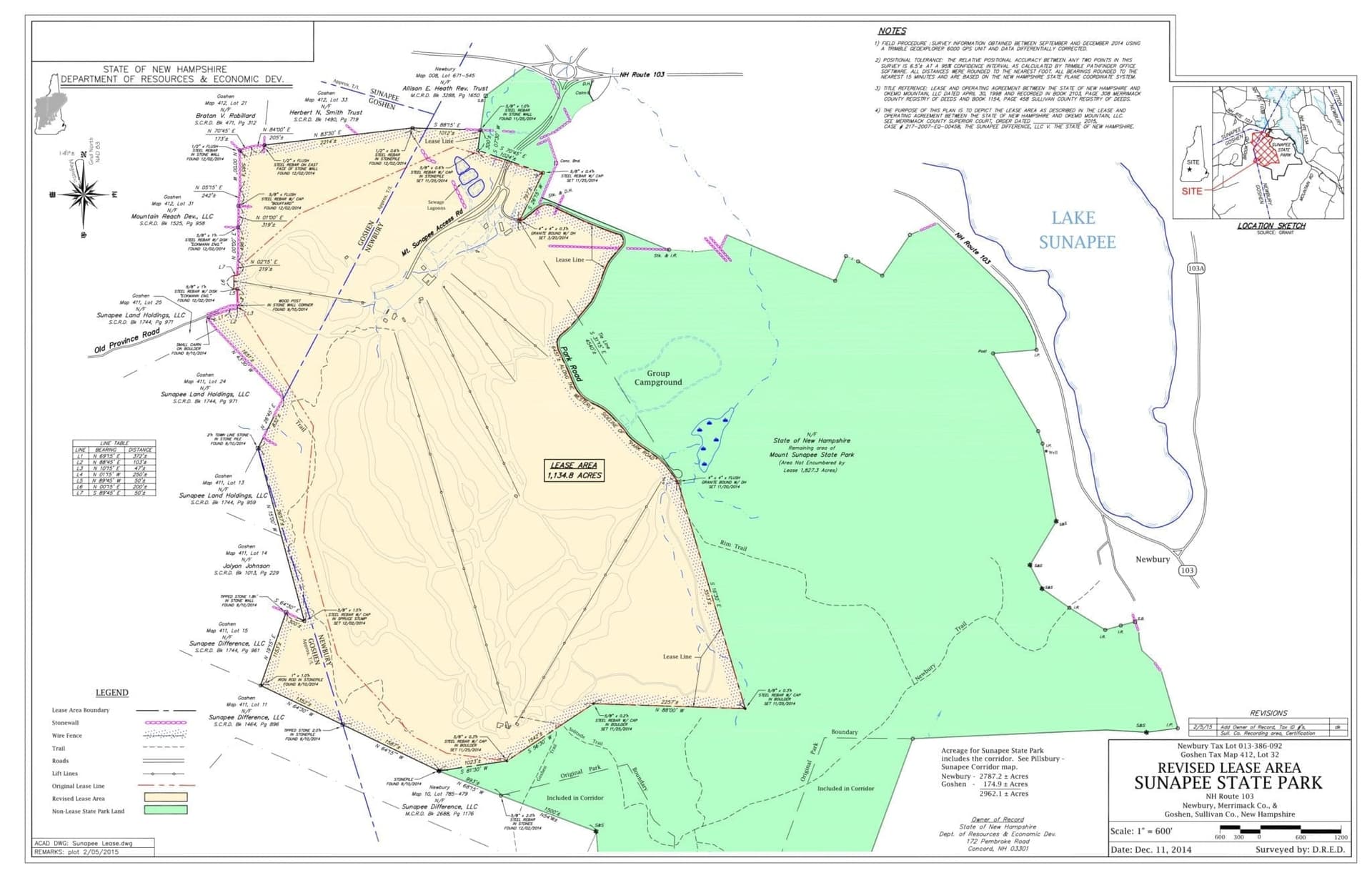
Mount Sunapee sits at the intersection of two governing authorities, and knowing which one controls what can save you money, a parking ticket, or worse. The state of New Hampshire owns the land, managed by the Department of Natural and Cultural Resources (NH DNCR). Vail Resorts, operating locally as The Sunapee Difference, LLC, holds a lease dating to April 30, 1998, and runs the resort's day-to-day ski and summer operations under an annual operating plan that DNCR Commissioner Sarah L. Stewart must approve each year. For Sullivan County residents in Claremont, Newport, or Sunapee, that split jurisdiction matters every time you plan a trip.
Who Runs What: State vs. Resort
NH DNCR retains authority over the state park land, including trail access, entrance fees, and environmental compliance. The resort, under Vail's management, controls lift tickets, lesson packages, terrain parks, and lodge hours. When those two spheres of authority affect your visit, knowing the difference is practical. Entrance fees to Mount Sunapee State Park are set by NH State Parks, not the resort, and annual passes are available through the state parks system. For summer hiking, you are entering a state park first and a ski resort second.
The governance arrangement has also been contested lately. In 2025, Vail's annual operating plan drew more than 200 people to a public meeting over concerns about the resort's wastewater spray fields on parking lot grounds. DNCR conditionally approved the plan while requiring Vail to develop an upgrade timeline for its wastewater lagoons. That is the regulatory backdrop as you plan your next visit.
Fees and Tickets: What You Will Pay
Lift ticket pricing for the 2025-2026 ski season varies based on whether you buy in advance or at the window, and the resort is direct: advance purchase saves money, particularly during holiday weekends and high-demand days when daily capacity is limited. The mountain offers 67 slopes served by 8 lifts, along with terrain parks, so demand on powder days or school-vacation weeks can push availability to zero at the gate.
Season pass options, sold through Vail's Epic Pass platform, range from multi-day flex products to full-season access. For a Sullivan County family skiing four or more days a season, the pass math often favors a multi-day product over single-day window rates. Lesson and rental packages for first-time skiers and young children must be booked ahead as well; walk-in availability in the designated learning areas is not guaranteed on busy weekends.
For summer hikers and mountain bikers, NH State Parks charges a separate entrance fee. If you plan to use the swim beach at Lake Sunapee, note that parking reservations for the swimming area are required through the NH State Parks reservation system. Showing up without one during peak summer weekends means turning around.
Trail Conditions and What to Check Before You Go
The resort publishes near-real-time mountain conditions, including lift and trail status, on its official website. Conditions can change with overnight temperatures, grooming schedules, or weather events, and the resort explicitly flags when hours or trail access have shifted. For hikers, the state park offers more than 10 miles of trails accessed from seven trailheads. The Summit Trail begins at the ski area parking lot and climbs through mixed woods on moderate to steep grades before breaking onto the grassy ledge adjacent to the summit lodge, where views extend north across southern New Hampshire.
Trail signage at Mount Sunapee is generally well-maintained, but seasonal and weather-dependent closures happen. The resort's conditions feed, updated regularly, is the single most reliable tool for avoiding a wasted drive from Newport or Claremont. Check it the evening before, not the morning of.
Before You Go: Practical Checklist
- Lift tickets: buy online before arriving; window sales close when daily capacity is reached.
- Lesson and rental bookings: reserve in advance, especially for children and first-timers.
- Summer swim beach: book parking through NH State Parks ahead of your visit.
- Trail conditions: check the resort's live conditions page the night before.
- Parking: arrive early on peak days; the resort's "Getting Here & Parking" page outlines lot locations and overflow guidance. Carpooling reduces both parking pressure and the congestion on Route 103 through Newbury.
- Gear: dress in layers for the summit, where temperatures drop significantly relative to the base; carry water and a fully charged phone regardless of season.
- Annual pass: if you are visiting multiple times, compare NH State Parks annual pass rates against per-visit fees for summer trips.
Emergency Preparedness: Cell Coverage and Who to Call
Cell coverage on the mountain and in the surrounding state park is inconsistent, particularly on the back side of the summit and in forested trail corridors away from the ski area. Carry a charged phone, but do not rely on it as your only safety tool. Download the trail map before you lose signal.
The primary emergency resource for the mountain and immediate vicinity is the Sunapee Fire/EMS Department, located at 9 Sargent Road in Sunapee. Their non-emergency line is (603) 763-5770, but for any active emergency on the mountain or trails, call 911. Do not call the fire station directly in a crisis; dispatch through 911 connects to the appropriate resources faster. On the ski slopes, resort ski patrol handles on-mountain emergencies and can coordinate with Sunapee Fire/EMS for evacuations.
Trailhead signage at the seven state park entry points includes trail names and distances; photograph the map at the trailhead before starting in case you lose service mid-hike.
Local Roads, Businesses, and the Tourism Economy
Route 103 through Newbury and the connector roads into Sunapee village carry the bulk of resort traffic on peak ski weekends and summer event days. On holiday weekends, the congestion pushes into the village and affects local businesses both positively in foot traffic and negatively in delivery logistics. Arriving before 9 a.m. on busy days, or after 3 p.m., cuts drive-time significantly.
For Sullivan County's broader economy, the resort's employment and pass information pages list seasonal and full-time job openings that represent a meaningful share of regional part-time income, particularly in Newport and Sunapee. The resort's summer programming, including theme weekends and pass-holder events, extends economic activity well beyond the ski season, a dynamic local lodging operators and restaurants along Route 11 depend on.
Understanding how the mountain is governed, what it costs to access, and who responds when something goes wrong turns a recreational outing into a genuinely informed one. The mountain will be here through the summer season and beyond; the prep work takes fifteen minutes.
This article was produced by Prism’s automated news system from verified source data, official records, and press releases, then run through automated quality and moderation checks before publishing. The system is built and supervised by the people who set the standards it runs under. Read our full AI policy.
Did this article answer your question?