Newport selectmen weigh wastewater, roads, budget, and facility spending
Selectmen are set to tackle the town's biggest cost drivers: wastewater, public works spending, and a firearms-range agreement that could shape daily services and bills.
Three decisions that matter most
Newport’s June 1 selectmen agenda puts the town’s most expensive and most practical choices on the same table. Residents will see an informational update on the wastewater treatment plant upgrade, a request to spend capital reserve money for a public works facility, and a license agreement for the Newport Municipal Firearms Shooting Range, all alongside budget planning that reaches into the next fiscal cycle.
That mix matters because it connects the board’s routine business to the issues that most directly affect daily life in Sullivan County’s county seat: sewer rates, road and equipment upkeep, municipal facilities, and the town’s ability to manage public assets without pushing costs too sharply onto taxpayers.
Wastewater is still the big-ticket issue
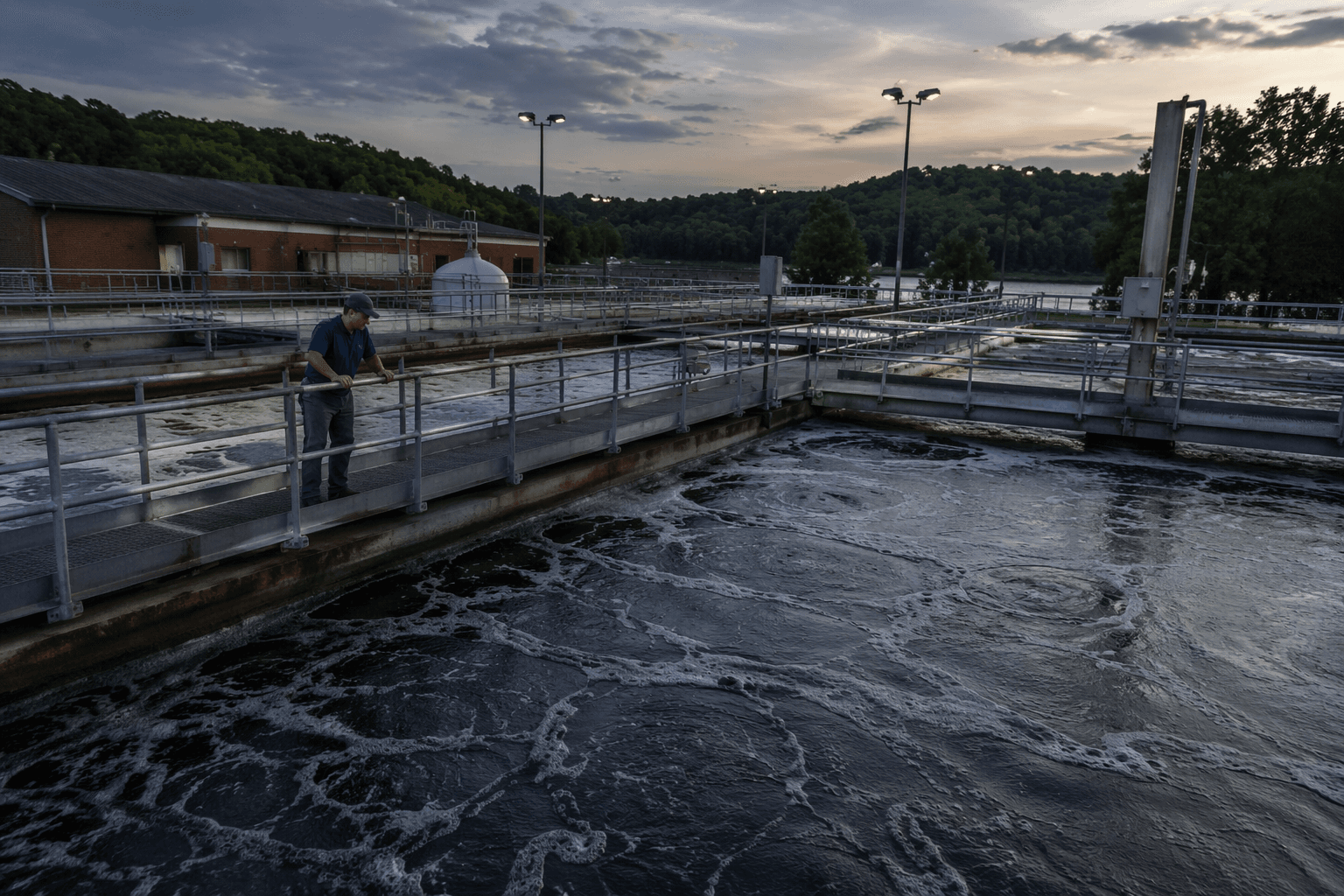
The wastewater item is not just a presentation piece. Newport’s treatment plant has been tied up in years of regulatory pressure and litigation, and a New Hampshire court order in Penta Corp. v. Town of Newport said the facility needed upgrades to comply with EPA requirements, never reached substantial completion, and was ultimately declared a total loss in 2015. That background explains why the town is still talking about the plant years later, and why a timelapse video of the upgrade belongs on the agenda now.
The project has also been expensive enough to shape the town’s finances. Newport said in 2022 that the wastewater facility update would cost about $24 million, with roughly $6.1 million in federal funding, $9.9 million in federal low-interest loans, and about one-third paid locally through user fees. A Wright-Pierce project page later put the engineer’s estimate at $23.4 million and listed the bid opening as April 2, 2024. A state document says the proposed upgrade would build new secondary and tertiary treatment systems to bring Newport into compliance with current NPDES permit conditions.
For residents, the practical impact is already visible in monthly bills. Newport’s water-and-sewer rate page lists a sewer rate of $20.09 per 1,000 gallons effective November 18, 2024, with a minimum combined water-and-sewer bill of $88.50 for 3,000 gallons. A November 2024 report said the town’s 1,200 sewer customers had already faced another rate increase to help pay for part of $33 million in federally mandated wastewater upgrades. That makes the June 1 presentation more than a status update, because it sits directly beside the question of how much more the town can afford to spend, borrow, or pass through to ratepayers.
Public works spending reaches beyond the garage
The capital reserve request for a public works facility may sound narrower than wastewater, but it lands in the same category of basic municipal infrastructure. Newport’s Public Works Department covers the garage, highway division, water and sewer division, wastewater treatment facility, and cemeteries and buildings-and-grounds functions, so any facility spending can affect road maintenance, fleet storage, equipment upkeep, and the town’s ability to keep crews working efficiently.
Town Meeting already sent a small but telling signal on this front. Newport’s 2026 meeting materials show voters approved transferring $15,000 to the Public Works Garage Capital Reserve Fund, with $5,000 coming from the school district and an estimated tax impact of $0.02. That figure is modest on its own, but it shows the town has already been building a capital reserve framework for public works needs rather than waiting for a larger emergency expense later.
The June 1 request to spend reserve money will show whether selectmen are ready to keep building on that approach. For taxpayers, the key question is not only what the facility costs, but whether the spending helps avoid more expensive repairs, delays, or service disruptions on roads and in the rest of the public works system.
The firearms range agreement has its own public-safety stakes
Another action item asks selectmen to approve the town’s license agreement for use of the Newport Municipal Firearms Shooting Range and authorize Town Manager Kyle Harris to sign related documents. The range, listed by the Newport recreation system at 1060 John Stark Highway, has a capacity of 150 and is identified as a facility for the Newport Area Shooting League.
That makes the agreement important for more than recreation. New Hampshire Fish and Game says many rifle and pistol ranges in the state are private and membership-based, so a town license agreement can carry real weight for access, operations, and liability. In Newport’s case, the town is managing an asset that sits at the intersection of recreation, public safety, and land-use oversight.
Because the range is town-owned, the board’s decision may also affect how clearly responsibilities are divided between the municipality and the user group. A clean agreement can reduce friction later, while a vague one can create problems if there are complaints, maintenance issues, or questions about who pays for what.
Budget season is already in motion
The agenda also signals that Newport is looking ahead to the next budget cycle, not just the next meeting. Selectmen will be asked to approve 2026-2027 Board of Selectmen meeting dates through Town Meeting, and the agenda also lays out the 2027-2028 budget schedule. It also references tax bills and the 2026-2027 budget, a reminder that this is the point in the year when policy choices start to turn into spending plans and, eventually, tax implications.
That timing matters in a town governed by five elected selectmen and administered day to day by Town Manager Kyle Harris. The current board roster lists Chair Rachel E. Dilger, Vice Chair Jeffrey F. Kessler, James C. Burroughs, Jeffrey S. North, and Benjamin S. Bartlett. The June 1 vote on liaison and board-and-committee assignments may sound procedural, but it can determine which members take the lead on the town’s highest-stakes issues, including budgets, infrastructure, and facility planning.
The meeting also includes a non-public session under RSA 91-A:3, II(a) for personnel and II(d) for real estate, which means some of the discussion will move behind closed doors for legally permitted reasons. That is another signal that the board is dealing not just with public presentations, but with staffing and property matters that can shape how the town operates.
What to watch next
Newport’s 2026 Town Meeting cycle already included a deliberative session on April 7 and voting on May 12, and the next regular selectmen meeting after June 1 is scheduled for June 15 at 6:30 p.m. That puts the June 1 session squarely between the election cycle and the next round of budget and capital decisions.
For residents watching taxes, infrastructure, and neighborhood impacts, the biggest takeaway is straightforward: wastewater remains the largest financial burden, public works spending is the most immediate test of how the town maintains roads and equipment, and the firearms-range agreement shows Newport is also managing specialized municipal property with ongoing operational consequences.
This article was produced by Prism’s automated news system from verified source data, official records, and press releases, then run through automated quality and moderation checks before publishing. The system is built and supervised by the people who set the standards it runs under. Read our full AI policy.
Know something we missed? Have a correction or additional information?
Submit a Tip