NH House Approves Manufacturer-Funded Battery Recycling Program Statewide
Sullivan County's Rep. Judy Aron of Acworth drove a 244-112 NH House vote to strip battery disposal costs from town budgets and charge manufacturers instead.
Every Sullivan County transfer station that accepts household batteries absorbs a cost the property-tax base quietly covers: staff handling time, fire-safety protocols for lithium cells, and the liability of a material that can incinerate a garbage truck if it overheats in the wrong bag. A Boston transfer-station fire in March 2025 produced an estimated $4 million in damage from exactly that failure mode. House Bill 1602, which the New Hampshire House passed 244-112 on March 26, is built around one premise: those costs should not belong to municipalities.
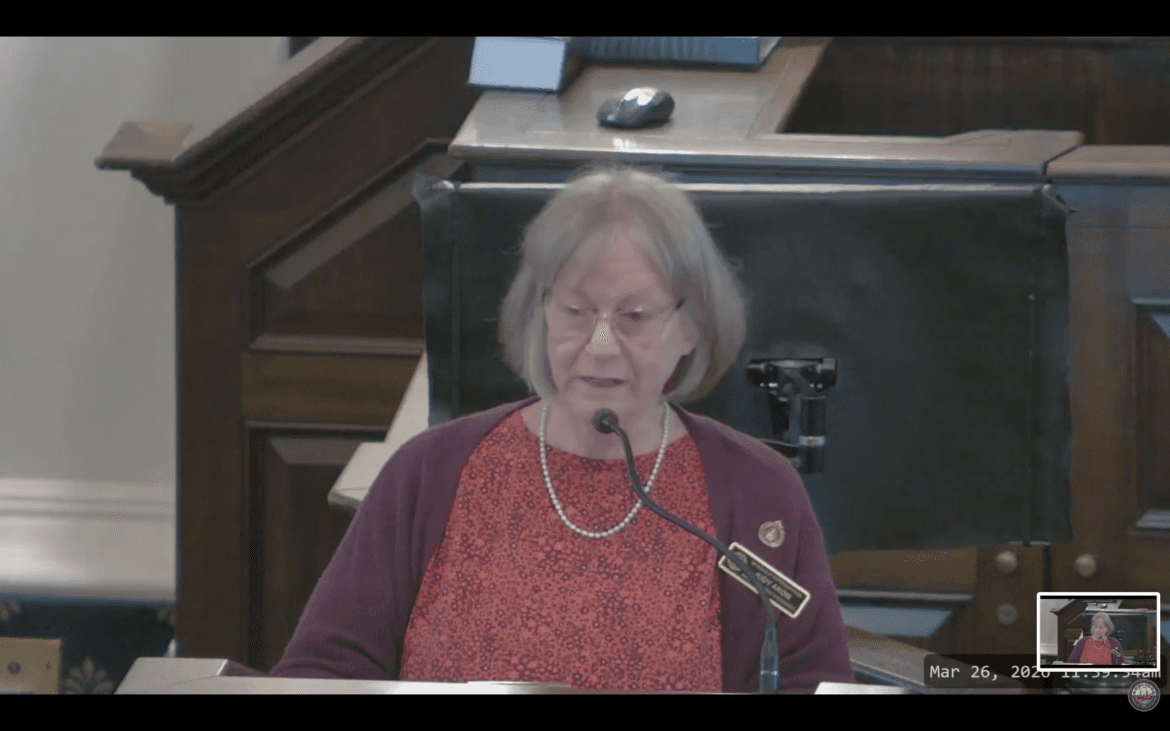
The lawmaker most responsible for that outcome on the House floor was Rep. Judy Aron, R-Acworth, the chair of the House Environment and Agriculture Committee and a Sullivan County resident. Aron argued the program "would save cities and towns money, reduce the threat of fires in landfills and create a reserve of rare minerals that would help the U.S. capture more of that market." Her committee's endorsement, combined with backing from the New Hampshire Municipal Association, the Business and Industry Association of New Hampshire, and waste-disposal companies, assembled a coalition large enough to override GOP leadership, which had recommended sending the bill to interim study.
The mechanism driving the NHMA's support is direct: the association stated the bill's purpose as transferring "the burden and costs associated with disposing batteries from municipalities and solid waste districts onto manufacturers." Under HB1602, battery producers would fund and operate a statewide stewardship program, placing collection points at transfer stations, retailers, and other locations; costs would be recovered through manufacturer pricing rather than any municipal line item. The model mirrors a paint-stewardship program the House and Senate both approved this session, though that bill was subsequently vetoed by Gov. Kelly Ayotte. The battery bill's 244-112 margin is notable precisely because it exceeds the threshold needed to override a veto.

Opponents frame that cost shift differently. Americans for Prosperity-New Hampshire Deputy State Director Sarah Scott called HB1602 "a blatant cash grab dressed up as 'recycling,'" contending that manufacturers will pass fees to consumers at the register. "AFP-NH is disappointed that lawmakers just voted for a hidden tax on batteries, one that won't show up as a line item but will hit Granite Staters all the same," Scott said after the vote.
The bill now heads to the Senate's Ways and Means Committee, where the central question for Sullivan County will be structural rather than philosophical. The county's towns are spread across a wide geographic area, and a stewardship network designed around population density could concentrate drop-off sites in larger communities while leaving smaller ones with few options. Municipal officials in the county, including transfer-station and solid-waste managers, would be well-positioned to weigh in early on service-area maps and collection-site requirements before any contract language is finalized. Aron's own town of Acworth, one of the smallest communities in the county, is a reminder of how much rural access planning will determine whether the program delivers the municipal savings she promised or simply relocates the inconvenience.
This article was produced by Prism’s automated news system from verified source data, official records, and press releases, then run through automated quality and moderation checks before publishing. The system is built and supervised by the people who set the standards it runs under. Read our full AI policy.
Did this article answer your question?