NH Legislature Hits Midpoint, Advancing Bills That Could Affect Sullivan County Services
The NH House shelved a child care scholarship transparency bill on crossover day and scaled back workforce grant funding this session, leaving Sullivan County providers tracking what advances next.
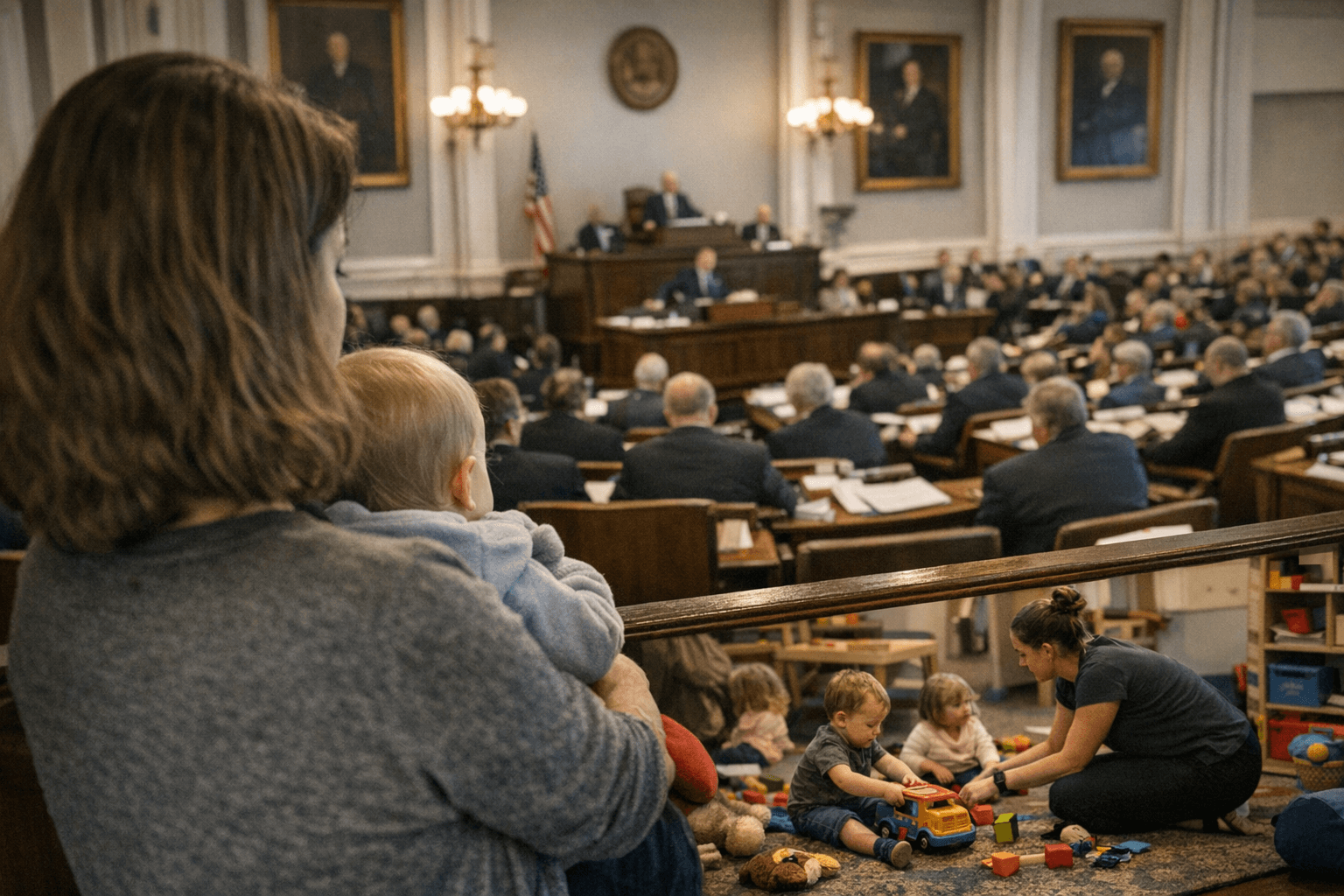
A child care transparency measure was effectively killed at the State House on March 26 when the New Hampshire House tabled House Bill 1720, one of several early-care and education bills decided on crossover day, the statutory midpoint that determines which legislation survives into the second half of the session.
HB 1720 would have required the Department of Health and Human Services to notify child care programs within three days of receiving a scholarship application listing them as a provider. The House moved it to the table citing funding concerns, a procedural step that leaves the bill dormant unless the chamber acts again before the session ends, which rarely happens.
Crossover day is the last day to vote on bills in the originating chamber, and any legislation placed in interim study, retained in committee, or tabled is, for practical purposes, dead. For Sullivan County providers, advocates, and families who had been following the scholarship notification question, that window has closed.
The tabling of HB 1720 fits a broader pattern from this session. The House voted 170-153 to pass House Bill 1515, which in its amended form repeals the requirement for DHHS to fully fund the child care workforce grant program. That shift from a mandate to a discretionary funding structure has drawn concern from early-childhood advocates across the state, particularly in lower-wage communities like Claremont and Newport where workforce shortages have kept child care wait lists stubbornly long.
On the Senate side, Senate Bill 645 cleared the chamber's consent calendar earlier this session. SB 645 would increase the income eligibility threshold for the Child Care Scholarship Program, a change that could open access to more working families in Sullivan County who currently fall just above the cutoff.
The practical stakes for county-level services are straightforward. When state scholarship access narrows or workforce incentives erode, the pressure shifts to municipal and county-supported programs. School districts in Charlestown and Newport absorb more children arriving in kindergarten without prior preschool experience; county social services see increased demand. Selectboards working through already tight fiscal year 2027 budgets are watching Concord closely for exactly that reason.
Bills that cleared crossover now move to the opposite chamber, where committee hearings will shape any amendments before floor votes. That process gives local officials, school board members, and community organizations in Sullivan County a remaining window to register testimony or contact state legislators directly. That window closes faster than most people expect.
This article was produced by Prism’s automated news system from verified source data, official records, and press releases, then run through automated quality and moderation checks before publishing. The system is built and supervised by the people who set the standards it runs under. Read our full AI policy.
Did this article answer your question?