State approves study for aging Mount Sunapee sewage lagoons
State approval of a $237,978 study opens the first formal path toward replacing Mount Sunapee’s aging sewage lagoons and deciding who pays for the fix.

State approval of a $237,978 engineering contract has opened the first formal path toward deciding what happens next with Mount Sunapee’s aging sewage lagoons, a system that sits in the Lake Sunapee watershed and reaches far beyond the resort. The study now moves the issue from years of warning and public pressure into a process that could determine whether the lagoons are modernized, the spray fields are upgraded or the whole wastewater setup is replaced.
The Executive Council approved the contract with Weston & Sampson Engineers of Portsmouth to conduct the feasibility study, with the work paid for entirely through state park operations funds. Officials have also described the study as a prerequisite for future funding through the federal Clean Water State Revolving Fund, with a potential $100,000 award also attached to the project. That means the study is not the end of the conversation. It is the gatekeeper for the money and engineering needed if the state decides the resort’s wastewater infrastructure must be rebuilt.
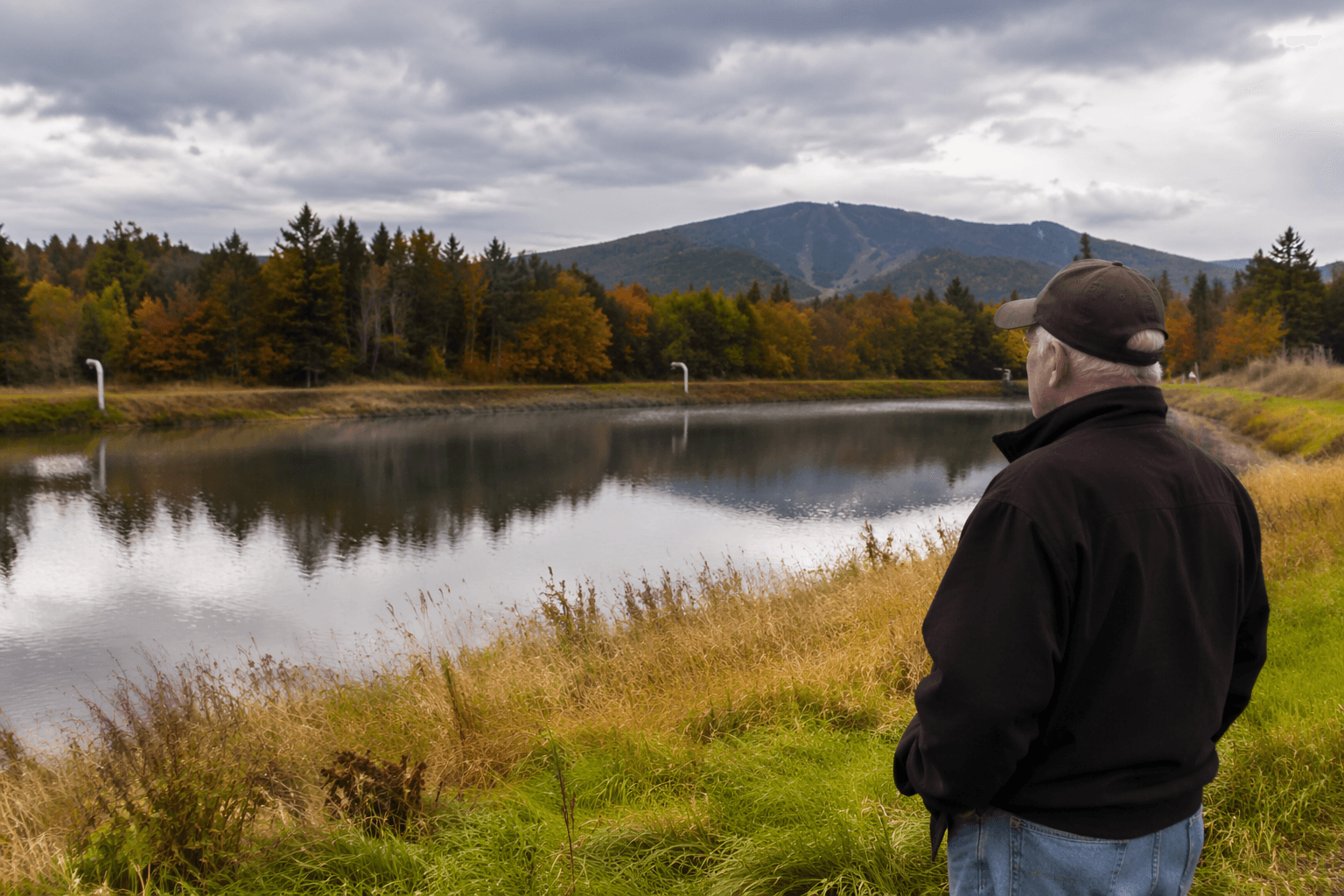
The question has become more urgent because the current system dates to the late 1960s and early 1970s, making it more than 50 years old and near the end of its useful life. Valley News reported the system uses three unlined sewage lagoons and adjacent spray fields. The state owns the land at Mount Sunapee Ski Area, but Vail Resorts operates the mountain under lease, putting the responsibility for any future fix at the intersection of public ownership, private operation and long-term environmental accountability.
Executive Councilor Karen Liot Hill of Lebanon said the lagoons are an open-air setup near Beck Brook, which flows toward Lake Sunapee and ultimately affects drinking water for the Town of Sunapee. She said Newbury and New London are also in the watershed and noted that many people have argued for years that the system needs replacement for public safety and water-quality reasons. At the same time, she acknowledged that state testing has not identified problems with the current lagoons, even as the Newbury Conservation Commission has reported troubling results in its own testing.
The state’s decision follows a formal request for qualifications issued by the New Hampshire Department of Natural and Cultural Resources in October 2025. That solicitation asked consultants to consider modernization of the lagoons, upgrades to the spray fields and possible replacement with other technology. It set a Nov. 21, 2025 qualifications deadline and directed questions to DNCR staffer Seth Prescott.
Local pressure has not let up. In June 2025, conservation groups urged the state to require replacement of the wastewater system before the 2025-26 season, estimating a new system could cost about $1.5 million. In February 2025, the Newbury Conservation Commission asked for a public meeting, and state Rep. Karen Ebel of New London warned that failure could be catastrophic to water quality around Lake Sunapee State Park and beach.
The Mount Sunapee Advisory Commission is scheduled to meet June 23, 2026 at Mount Sunapee Resort, where the 2026-2027 annual operating plan remains under department review. The commission is advisory only, but the feasibility study now gives state officials a concrete path to sort out costs, alternatives and who will bear the bill if the aging system has to be replaced.
This article was produced by Prism’s automated news system from verified source data, official records, and press releases, then run through automated quality and moderation checks before publishing. The system is built and supervised by the people who set the standards it runs under. Read our full AI policy.
Did this article answer your question?