Sullivan County Voters Guide: How to Navigate Town Meeting Season
Newport's deliberative session lands April 7, five days away, and the decisions made there will shape Sullivan County tax bills, school budgets, and road funding for years.
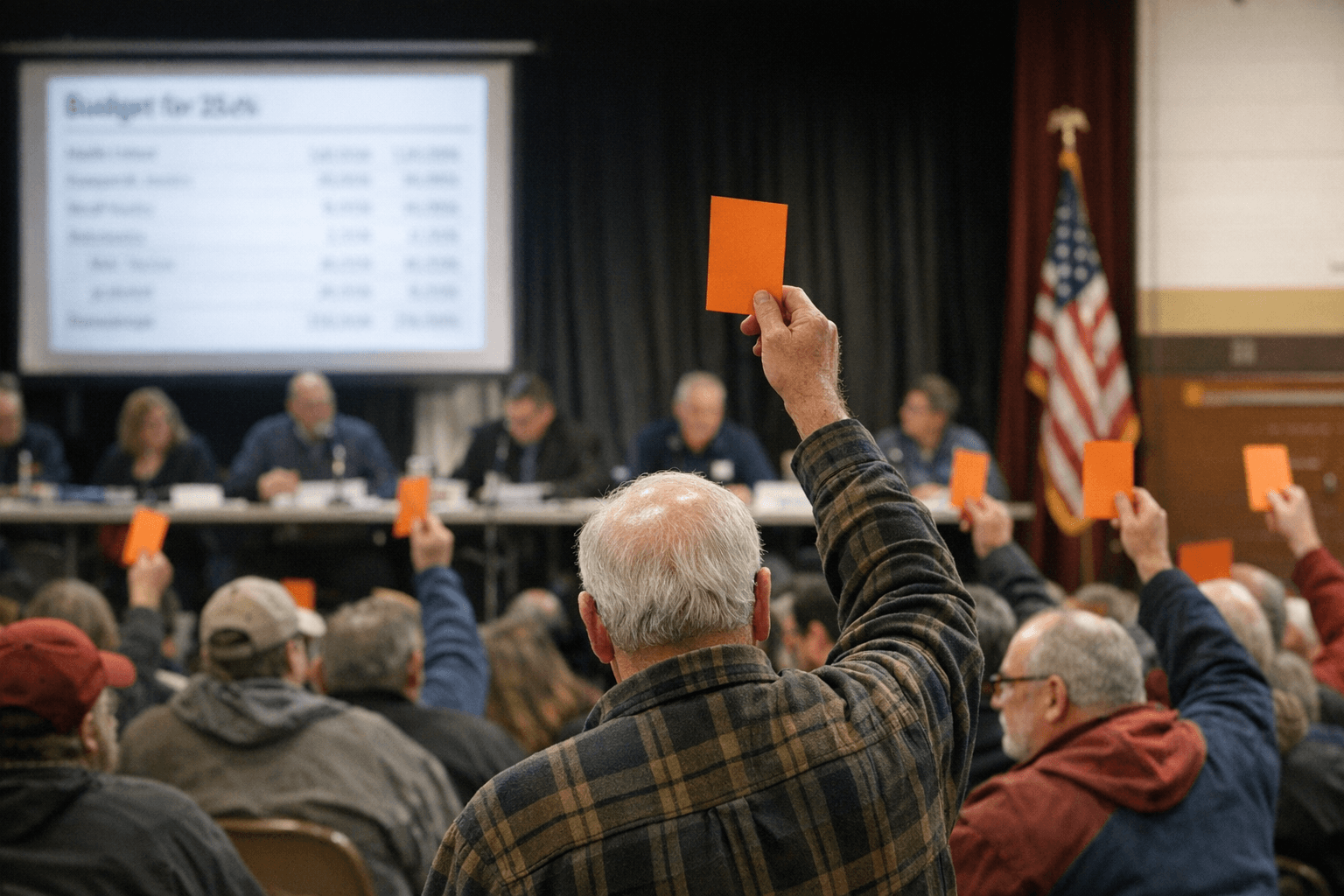
Every spring, Sullivan County towns hand direct governing power to the people who show up. In Claremont, Newport, Charlestown, Sunapee, and Grantham, residents vote on municipal budgets, elect local officials, and decide warrant articles that shape everything from road maintenance and school spending to land purchases and zoning changes. Most of those decisions are final within weeks, locked in by secret ballot. What follows is a step-by-step guide to making sure your voice is counted before the window closes.
What Town Meeting Season Actually Decides
Town meeting is not a ceremonial event. The warrant articles residents vote on determine how local tax dollars are collected and spent, whether a capital project moves forward, and what land or infrastructure the town acquires or maintains. The process is governed by state statute and follows a consistent structure across New Hampshire: a warrant is posted, a deliberative session is held for public debate and potential amendments, and a second session or voting day follows for the final, binding secret-ballot vote. The Secretary of State's Town Meeting Guide outlines these statutory procedures in full. Understanding each phase is the difference between watching decisions get made and actually influencing them.
Step 1: Find the Warrant and Read It Carefully
The warrant is the operative legal document. It lists every article the town will consider, including the precise wording of each proposal, the date and location of the deliberative session, and the voting day schedule. Warrants are posted on town and city websites and physically at town offices and designated public posting places.
Newport posted its 2026 warrant on March 31 and scheduled its deliberative session for April 7. Residents who have not yet reviewed that PDF should do so before showing up to deliberate. If your town provides a warrant packet, which may include explanatory reports and budget worksheets, review those materials as well. Pay close attention to the dollar figures on budget and capital articles, and note the stated purposes of any bond requests or special-appropriation items. The warrant's language is exactly what voters will be deciding on, so reading it in advance is not optional if you want to participate meaningfully.
Step 2: Know Your Town's Two-Session Timeline
Sullivan County towns that use the SB2 format, the official two-session process, divide authority between two distinct public events. The first session, the deliberative session, is where citizens debate articles and may propose amendments. Any resident in attendance can move to amend language before it goes to a final vote. The second session, voting day, is when the final, legally binding decisions are made by secret ballot.
Dates vary by town, so consult your specific local website and the Secretary of State's Town Meeting Guide for exact scheduling. Newport's voting day for 2026 is scheduled for May 12. If you want to influence the language of an article or challenge a budget figure, the deliberative session is your only opportunity to do that. If you cannot attend but still want your vote counted, plan your calendar around the second session date and make absentee arrangements in advance if needed.
Step 3: Confirm Your Voter Registration and Polling Place
New Hampshire allows registration at the clerk's office and, in many cases, at supervisors-of-the-checklist meetings. You can also register at your polling place on election day if you meet residency and identification requirements. Use the Secretary of State's voter lookup tool, listed on the Secretary of State's elections page as "My Voter Information," to confirm your registration status, polling place, and access to sample ballots.
First-time voters registering by mail should be aware that New Hampshire requires proof of identity and domicile; review the Secretary of State's registration guidance well ahead of any deadlines. If you plan to vote absentee, the application process and required paperwork are available through the Secretary of State's website. Do not wait until the week of voting day to start this process.
Step 4: Prepare for the Deliberative Session
Arriving at a deliberative session without preparation means you are watching, not participating. Before you attend, identify the specific articles you care most about and write out your questions. For budget articles, focus on the dollar figure and the financing method: is this an operating budget line, a warrant article, a bond, or a trust-fund withdrawal? Each has different tax implications and different processes for future modification.
For land purchases and capital projects, ask about lifecycle costs including maintenance and debt service. If a warrant article is contested, with a petitioned article competing against a selectboard recommendation, review both versions and, if possible, speak with sponsors or town officials before the session begins. Both NHPR and the Secretary of State's office have noted that last-minute amendments can be moved by residents during debate, which means an article you read online may look different by the end of the session. Showing up informed protects you from being caught off guard by a floor amendment that changes what you planned to vote on in May.
Step 5: Voting Day Logistics and Absentee Ballots
On voting day, ballots present the final versions of warrant articles and operating budgets, as amended during the deliberative session. Polling hours vary by town; confirm exact hours and your polling place before you go. Newport's 2026 voting day is May 12, but do not assume hours are the same as prior years.
Absentee voting is available under defined circumstances: travel, disability, employment obligations, and other qualifying reasons spelled out in state law. To vote absentee, follow the Secretary of State's guidance and contact your local town clerk for the specific application and return procedures. Absentee ballots are processed by local clerks and accounted for in the state's election systems. Request the ballot early enough to complete and return it within the clerk's stated window.
Where to Go for Authoritative Information
Three sources cover virtually every question a Sullivan County voter will have:
- Your town or city website for warrants, meeting notices, agendas, and posted schedules
- The New Hampshire Secretary of State's Town Meeting Guide and voter registration pages for procedural rules, absentee-ballot forms, and the My Voter Information lookup tool
- Local news outlets and municipal bulletins for meeting updates, town-manager summaries, and last-minute schedule changes
For specific legal questions about article wording or voting procedures, contact your town clerk directly. Town clerks are the statutory officials responsible for election administration and serve as the official point of contact for registration, absentee ballots, and polling-place questions. They are not gatekeepers; they are resources, and a five-minute call before the deliberative session can clear up ambiguity that no website will resolve.
The Five-Day Window
Newport's deliberative session opens April 7, and that timetable is not a soft deadline. Once the deliberative session closes, the article language on the May 12 ballot is fixed. Residents who read the warrant, show up to deliberate, confirm their polling place, and understand the absentee rules are the ones who shape what Sullivan County looks like next year. The process is statutory, transparent, and open to anyone who takes it seriously.
This article was produced by Prism’s automated news system from verified source data, official records, and press releases, then run through automated quality and moderation checks before publishing. The system is built and supervised by the people who set the standards it runs under. Read our full AI policy.
Did this article answer your question?