Sunapee fire responds to propane leak after storm topples tree
A thunderstorm toppled a tree onto a large propane tank on Garnet Hill Road, sending Sunapee crews to a first-alarm leak and closing the road to traffic.
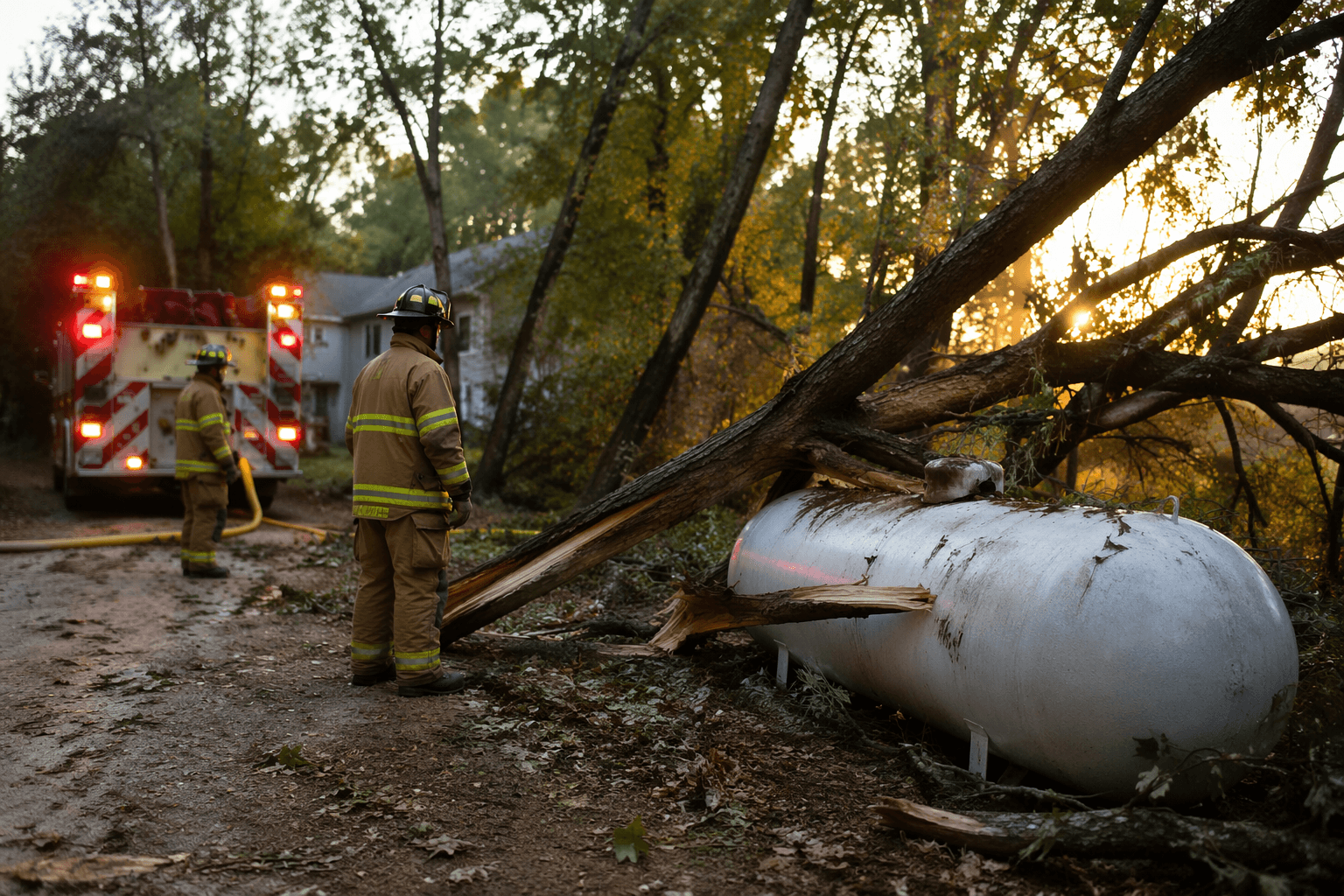
Sunapee firefighters were dispatched at 5:21 p.m. Friday, June 26, to Garnet Hill Road after a severe thunderstorm brought down a tree that struck a large propane tank, triggering an active leak in a wooded residential area.
The Sunapee Fire Department classified the call as a 1st Alarm Propane Leak and sent Engine 2, Tanker 4, Forestry 6 and Utility 2 to the scene under Acting Chief Matthew Pollari as incident commander. The Town of Sunapee posted an active-incident warning telling the public to avoid Garnet Hill Road while crews worked, a move that reflected the potential for ignition and the need to keep bystanders away from the leak area.
The response unfolded during a narrow severe-weather window. The National Weather Service issued one severe thunderstorm warning at 4:47 p.m. EDT, with another following at 5:12 p.m. EDT, both on June 26, as storms moved east across western New Hampshire. In Sunapee, that timing meant the propane emergency was not an isolated utility issue but part of a live storm response, with wind, falling trees and damaged infrastructure all arriving at once.
The fire department’s recent-incidents page notes that it only lists larger calls, not medicals, fire alarms, service calls or minor accidents, which makes the propane leak stand out as a major response rather than a routine stop. No injuries were reported in the department’s notice, but the apparatus on scene and the first-alarm designation show how quickly a single tree can create a hazardous fuel leak and force multiple responders to secure a property.
New Hampshire’s Department of Environmental Services says propane tanks are dangerous to move and should be reported immediately to police or fire departments. The agency also warns that storm cleanup can create additional environmental and safety hazards, a reminder for residents on similar wooded lots to check for fallen trees, damaged tanks and other storm debris before stepping back into a cleanup scene. Around Garnet Hill Road, the emergency response turned one storm-damaged property into a public-safety operation, and it did so in the middle of a severe-weather alert that had not yet cleared the region.
This article was produced by Prism’s automated news system from verified source data, official records, and press releases, then run through automated quality and moderation checks before publishing. The system is built and supervised by the people who set the standards it runs under. Read our full AI policy.
Did this article answer your question?