Christie Babalis touts conservation-first approach in Summit County race
Christie Babalis is pitching open-space protection in District 4 as Summit County weighs a 7,600-unit housing shortfall and a $3.2 million land purchase.

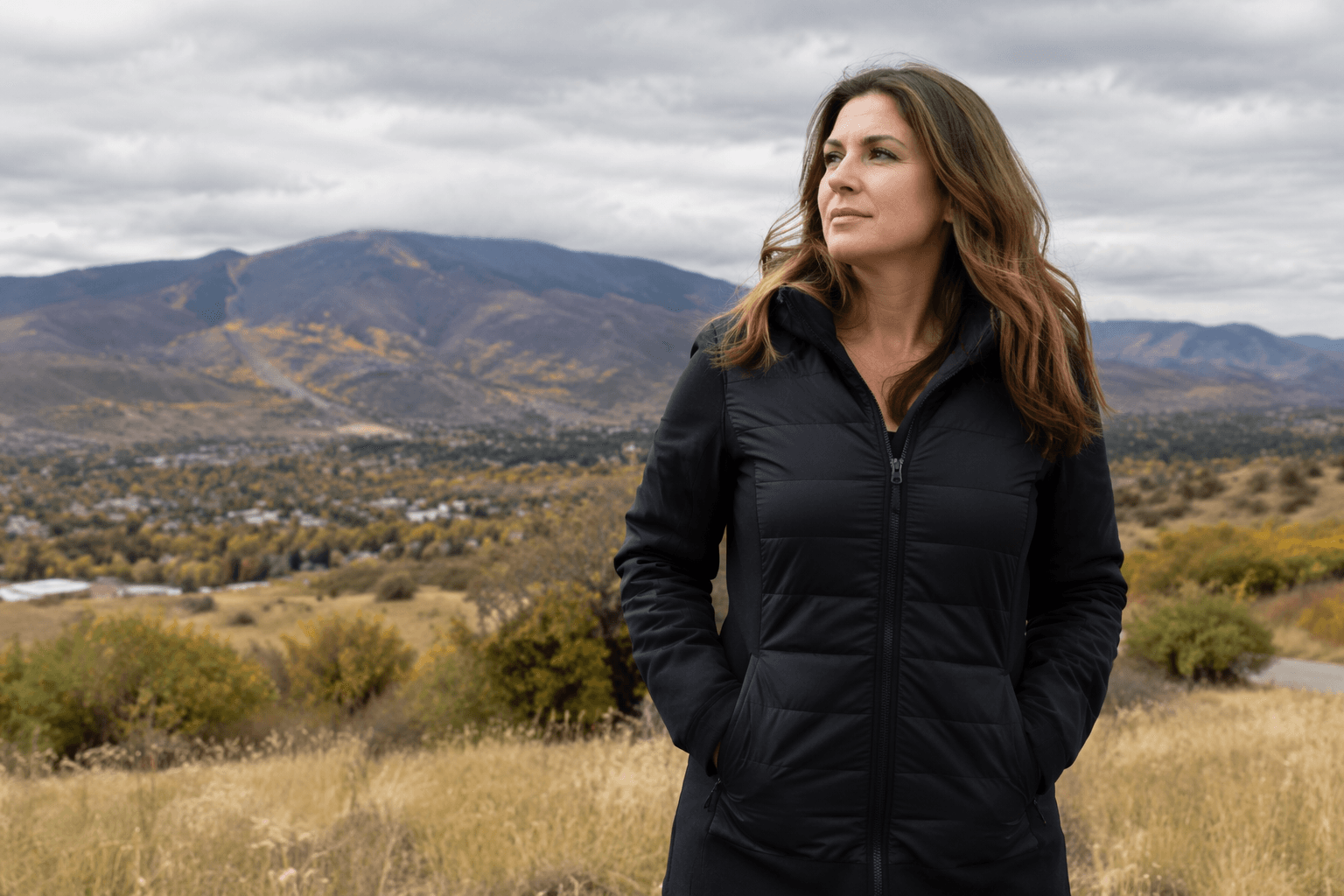
Christie Babalis is asking voters in central Summit County to trust a conservation-first voice at a moment when every acre and every housing decision feels connected. In District 4, which includes Kimball Junction and the heart of the Snyderville Basin, the June 23 Democratic primary is effectively a choice over how Summit County balances open space, growth and attainable housing.
Babalis brings a long local backstory to that argument. She grew up near Parley’s Canyon and said her teenage trips into Park City to hike and ski helped spark an early interest in environmental policy. That interest led her to a master’s degree in public administration, then to the University of Utah’s S.J. Quinney College of Law, and later to a clerkship with the Park City Attorney’s Office in the 1990s. That job brought her permanently to the Wasatch Back, where she has now lived for roughly three decades.
She now works as corporate legal counsel for Pacific Group Resorts and has spent years in local service through boards and volunteer work with Recycle Utah, Park City Ski and Snowboard, the Image Reborn Foundation, Rotary and Leadership Park City. Babalis has described herself as deeply focused on water conservation, the Colorado River and sustainability, and she was already speaking up on environmental issues before state lawmakers while still in high school. Her campaign centers on a resident-first approach to protecting open space, smart growth and long-term planning for Summit County’s future.
The race is the county’s first council election by district rather than countywide, the result of a 2025 Utah law that forced counties with fewer than 260,000 residents and a county-manager government to move away from at-large voting. Summit County drew five districts of about 8,500 residents each, and District 4 sits in the county’s most development-pressure-heavy corridor. Babalis is facing former Snyderville Basin planning commissioner John Kucera in a contest made more important by the absence of Republican candidates in either council race.
Housing numbers explain why the stakes are so high. Summit County’s population reached an estimated 43,141 by July 1, 2025, while the median owner-occupied home value stood at $1,067,700 and median gross rent at $1,987. A draft Summit County Housing Authority strategic plan says the county had a shortfall of about 7,600 units as of early 2025 and needs roughly 600 more units a year for the next decade, while the county’s goal is 1,500 affordable units over 10 years.

Public comments on the draft plan pushed county leaders to think beyond workforce housing alone and address deeper affordability, transitional housing and supportive housing. At the same time, Summit County is still buying land for preservation, including the June 4 purchase of the 25-acre Highland Flat parcel near the U.S. Highway 40 and Interstate 80 gateway for $3.2 million using voter-approved bond money for open space and community-serving land. For Babalis, that is the governing question now: how to protect the county’s open lands without letting the people who work there get priced out.
This article was produced by Prism’s automated news system from verified source data, official records, and press releases, then run through automated quality and moderation checks before publishing. The system is built and supervised by the people who set the standards it runs under. Read our full AI policy.
Did this article answer your question?