Cox, U.S. energy secretary discuss nuclear push at Park City summit
Utah’s nuclear push landed in Park City as Cox and Energy Secretary Chris Wright outlined next steps, raising questions for Summit County on siting, water, safety and local input.
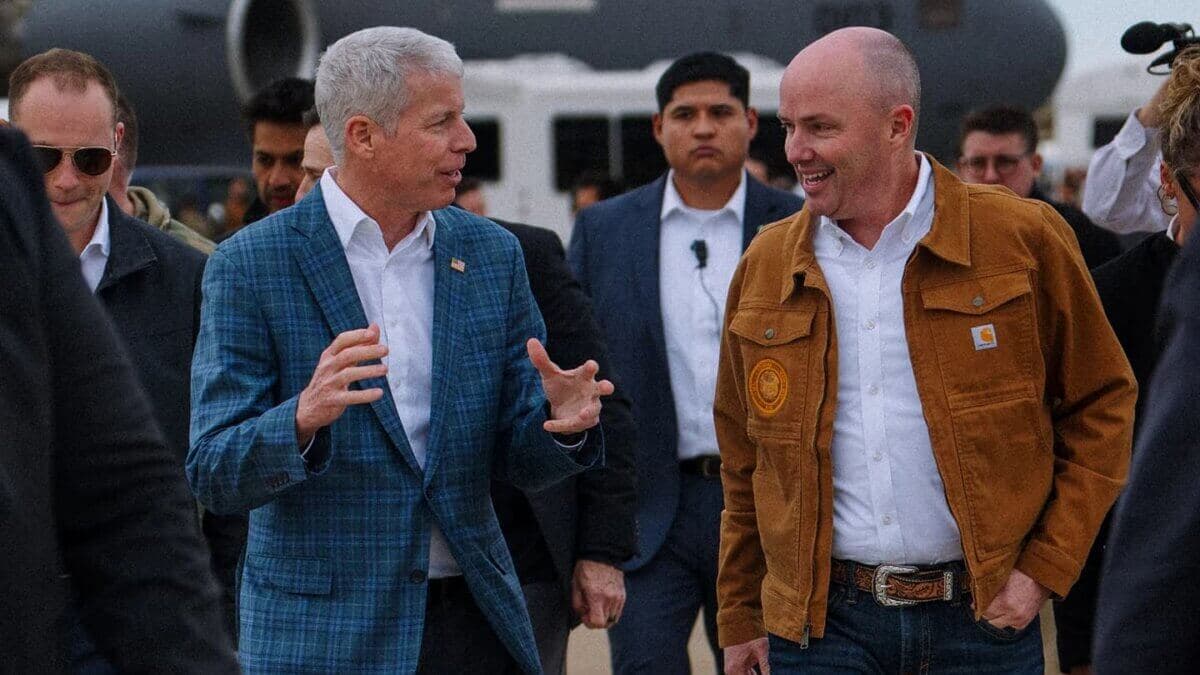
Summit County got a front-row seat to Utah’s nuclear ambitions when Gov. Spencer Cox met with U.S. Energy Secretary Chris Wright at the Operation Gigawatt Summit at the Grand Hyatt Deer Valley in Park City. For residents watching a statewide energy push move closer to concrete projects, the central question is no longer whether Utah wants more nuclear power, but how that ambition will affect local land use, water demand, grid reliability, emergency planning and who will have a voice if proposals move forward.
Cox’s schedule for May 22 also included a fireside chat with Ho Nieh, chairman of the U.S. Nuclear Regulatory Commission, before his conversation with Wright. The sequence put Utah’s governor in direct conversation with the federal regulator and the Trump administration’s energy chief as state officials pressed ahead with Operation Gigawatt, Cox’s Oct. 8, 2024 plan to double Utah’s power production over 10 years.
The Park City summit came as the federal government is moving in the same direction. President Trump signed four nuclear-focused executive orders on May 23, 2025, and the U.S. Department of Energy has said the orders are meant to modernize nuclear regulation, streamline reactor testing, speed deployment for national security and rebuild the nuclear industrial base. The department has also said the broader goal is to increase U.S. nuclear capacity from about 100 gigawatts in 2024 to 400 gigawatts by 2050.
Utah has already shifted from broad energy goals to specific nuclear planning. In late 2025, state leaders announced a nuclear power plant and manufacturing and training hub near Brigham City, with officials describing a project that could include four to 10 small modular reactors and come online in the early 2030s. Utah also signed a memorandum of understanding in 2025 with TerraPower and Flagship Companies to support future nuclear development.

The state has paired that pitch with a public campaign. By spring 2026, Utah had begun putting up billboards promoting its energy expansion and nuclear emphasis, a sign that the project has moved from policy talk to a coordinated public message. Supporters say the effort could build a nuclear manufacturing ecosystem in Utah and the Mountain West.
Cox has repeatedly tried to reassure skeptical communities that developers will not be allowed to bypass oversight, saying they “don’t get to skip any steps.” That message matters in Summit County, where Park City hosted the summit but could also find itself watching a much larger debate over whether Utah’s nuclear future becomes a statewide economic strategy or a set of projects with local consequences that residents are expected to absorb.
This article was produced by Prism’s automated news system from verified source data, official records, and press releases, then run through automated quality and moderation checks before publishing. The system is built and supervised by the people who set the standards it runs under. Read our full AI policy.
Did this article answer your question?