Ecker Hill ski jump put Summit County on the world stage in the 1930s
Ecker Hill helped launch Summit County’s ski identity, from 1930s world-class jumping to today’s Olympic Sports Park, where history still shapes tourism and preservation.
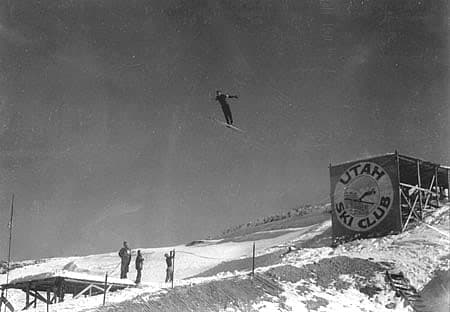
Ecker Hill put Summit County on the world stage long before the 2002 Salt Lake Olympic Winter Games. The ski jump above Park City was the site of international competition in the 1930s, and its legacy still reaches into the county’s identity, tourist appeal, and preservation debates through Olympic Sports Park.
A hill built by a fledgling ski club
The story begins in the late fall of 1928, when members of the fledgling Utah Ski Club started planning Ecker Hill. The hill was completed in 1929, at a time when ski jumping in Park City was still taking shape as a local sport rather than a regional brand. Park City Nordic Ski Club history materials tie ski jumping in the area back to that 1928 period, linking the hill to the earliest organized winter-sports activity in the canyon communities.
That early date matters because it places Ecker Hill at the start of Summit County’s ski timeline, not at the end of it. Park City later reinvented itself as a ski resort town after silver mining declined, and the first lifts on Treasure Mountain were built in 1963. Ecker Hill predates that resort era by decades, which makes it a rare surviving marker from the county’s pre-resort winter identity.
When Ecker Hill became a world venue
By the 1930s, Ecker Hill had become one of the premier ski jumping hills in the world, according to the Utah History Encyclopedia. The Summit County page says it was the site of international competition in that decade, which is the kind of detail that explains why a hill in Utah could matter far beyond the Wasatch Back. A 2021 KUTV 2News post went even further, describing it as the biggest ski jump in the world at the time in the 1930s.
The same post said the legendary Alf Engen broke five world ski jumping records at Ecker Hill. That record-setting history is part of why the site still carries weight in local memory. Ski jumping may be a niche sport, but at Ecker Hill it produced results that drew attention from well outside Summit County and helped define the region as a serious winter-sports destination.
The J. Willard Marriott Digital Library’s ski and snow sports photo archives also preserve that era in a historic image identified as Pete Ecker jumping Ecker Hill in the early 1930s. That image adds a visual record to the written history and reinforces that the site was not a fringe curiosity. It was documented, photographed, and remembered as a place where skiing history was made.
How Ecker Hill fits the larger Park City story
Ecker Hill should be read as the first chapter in a longer local transformation. Park City Museum history materials note that the town later remade itself after the mining economy declined, while the Park City Chamber’s history summary says the first ski lifts on Treasure Mountain went up in 1963. Together, those details show a sequence: mining town, early ski jumping site, resort development, then the Olympic era.
That sequence helps explain why Summit County’s Olympic identity did not begin overnight. The Park City Nordic Ski Club says the Olympic Park was constructed in the early 1990s with an eye on an upcoming Olympic Games bid, tying the old Ecker Hill tradition to the infrastructure that followed. In that sense, Ecker Hill was part of the county’s long runway toward the global attention that came later, rather than a separate historical footnote.
Why the site still matters now
The county’s Olympic Sports Park page keeps the old jump alive in the public imagination by saying the ski jumps are open to anyone with the courage to jump. Even for people who never launch off a ski jump, that framing makes the site more than a relic. It is a public-facing piece of Summit County’s landscape, where recreation, memory, and heritage overlap in a place that still carries the Olympic brand.
That matters for tourism because Summit County sells more than scenery. Visitors come for skiing, but they also come for the story of how this place became synonymous with winter sport. Ecker Hill gives that story a specific location, a set of names, and a timeline that begins in 1928, peaks in the 1930s, and echoes into the present day through Olympic Sports Park.
It also matters for land-use memory and preservation. The National Register of Historic Places inventory nomination form for Ecker Hill Ski Jump was received by the National Park Service in May 1986 and entered on June 4, 1986, formalizing the site’s historic standing. That recognition turns Ecker Hill into more than a nostalgic landmark. It marks the hill as part of the county’s built heritage, one that still informs how Summit County balances recreation, development, and the protection of places that built its identity.
Seen that way, Ecker Hill is not just where ski jumping happened in the 1930s. It is one of the sites that explains why Summit County still trades on winter sport, why Olympic imagery carries local authority, and why a hill above Park City remains a meaningful piece of civic memory.
This article was produced by Prism’s automated news system from verified source data, official records, and press releases, then run through automated quality and moderation checks before publishing. The system is built and supervised by the people who set the standards it runs under. Read our full AI policy.
Did this article answer your question?