House District 59 Republicans debate key issues before convention
At a Wasatch High School forum, Luke Searle pressed property-tax reform while Mark Allen pitched continuity with Mike Kohler and Jeffrey Pierce stressed planning experience before the April conventions.
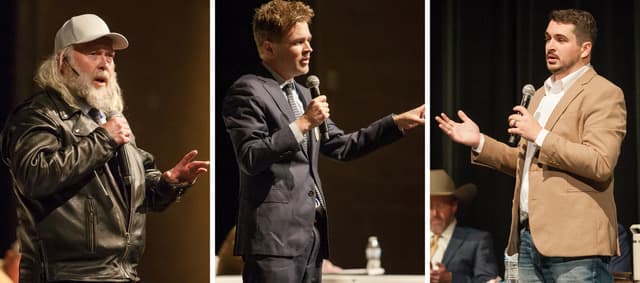
At a crowded forum at Wasatch High School, Republican candidates Mark Allen, Jeffrey Pierce and Luke Searle converged in a pointed clash over property-tax relief and local growth, with Searle advancing tax reform as a priority and Allen framing his campaign as a continuation of outgoing Rep. Mike Kohler’s record. The April 1, 2026 debate, organized by Dr. Neysa Holmes and the Wasatch County Republican Women’s Club, forced candidates to move from broad talking points to concrete positions on education, transportation and land use that affect Park City, the Snyderville Basin and Wasatch County.
Luke Searle, a Wasatch County councilmember and Heber City resident, repeatedly highlighted property tax reform, cost-of-living pressures and school curricula aimed at career preparation, a lineup of priorities he has emphasized since announcing his run. Mark Allen, 64, described himself as a political newcomer who wants to build on Kohler’s legacy, casting his approach as stability for constituents across the multi-county District 59. Jeffrey Pierce, an Old Town Park City resident who has sought city council and planning commission seats in the past, brought his planning and development background into the debate’s land-use exchanges.
District 59’s geography and stakes framed much of the confrontation: the seat covers Park City, parts of the Snyderville Basin and Wasatch County under the post-2021 lines, and delegates and activists pressed candidates on Kimball Junction traffic, resort development and local infrastructure needs. With incumbent Mike Kohler not seeking another term, the open-seat dynamic has sharpened attention on how a new representative would influence state decisions that filter back to local planning boards and county budgets.
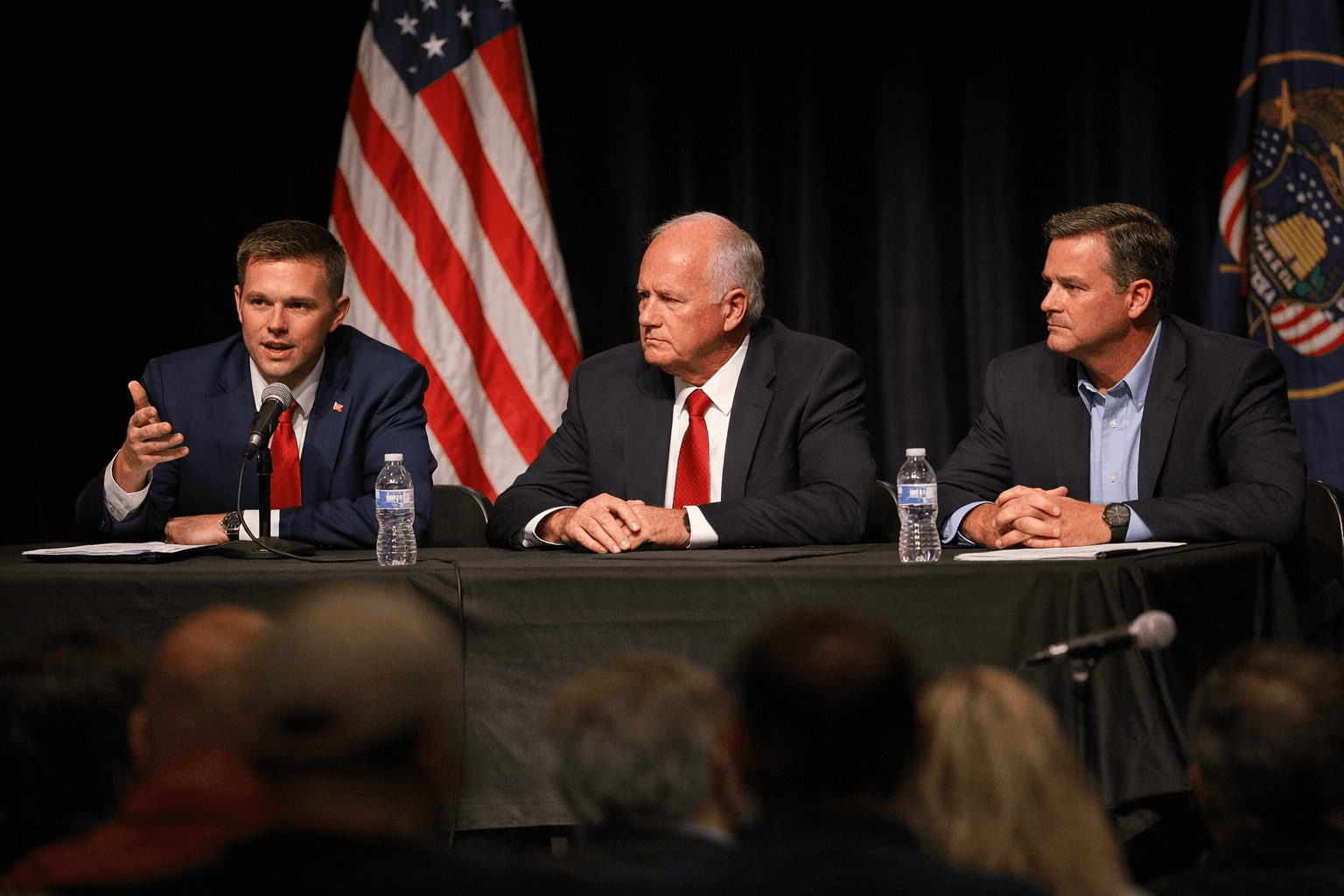
Scoring candidates’ debate responses against Summit-facing stakes yields a constrained reading based on what was reported at the April 1 forum. On property taxes, Searle addressed reform directly and therefore scores highest for specificity; Allen offered a continuity pitch with no specific tax plan reported at the forum; Pierce did not offer a detailed tax proposal at the event but his planning background suggests an interest in development-linked fiscal issues. On public lands and recreation access, candidates discussed land use generally, with Pierce’s prior planning commission interest giving him the clearest procedural experience; Allen and Searle spoke to growth and conservation in broader terms. On transportation and Kimball Junction congestion, all three were pressed for answers at the forum though no single, detailed corridor plan emerged from the candidates’ remarks.
Fact check: candidates raised property tax reform and school funding at the April 1 debate, but state-level change requires legislation; Utah House members serve two-year terms, and any law altering tax rates or school finance would need passage in the Utah Legislature and appropriation action, not a delegate vote. The next delegate decision points are the HD59 Republican convention on April 18, 2026 and the statewide Utah GOP convention on April 25, 2026, scheduled for 9:00 a.m. in the South Suite at the UCCU Center, where delegates will weigh these competing priorities for District 59.
This article was produced by Prism’s automated news system from verified source data, official records, and press releases, then run through automated quality and moderation checks before publishing. The system is built and supervised by the people who set the standards it runs under. Read our full AI policy.
Did this article answer your question?