How Coalville became Summit County’s civic center
Coalville won Summit County’s courthouse, and with it the county’s records, memory, and civic identity. That legacy still shapes where government sits today.
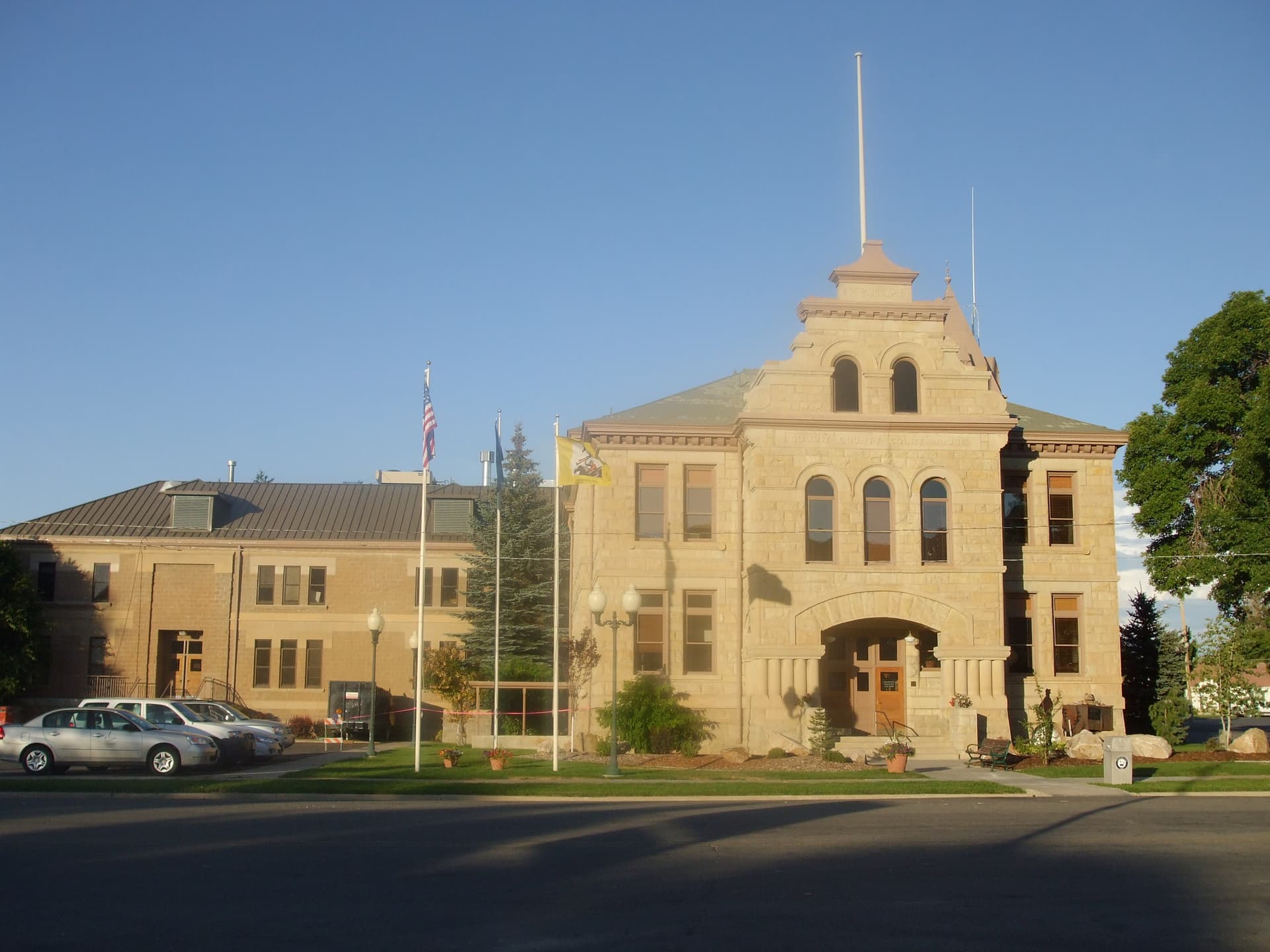
Coalville still holds Summit County’s paperwork, courthouse history, and public memory at 60 North Main, even as much of the county’s visible growth has shifted elsewhere. The town’s role is not accidental: it became the place where county government gathered, and that choice still shapes how Summit County organizes itself, spends money, and explains its own identity.
How Coalville got the seat
Summit County was created in 1854 from Green River and Great Salt Lake counties, and Coalville was chosen as the county seat. That decision made the town more than a settlement in the upper county. It became the place where local government, court business, and the county’s public identity were meant to converge.
Coalville’s beginnings were practical rather than romantic. In 1858, William Henderson Smith reportedly noticed wheat growing near Chalk Creek, a sign that the area could sustain a permanent community. By 1859, several families had arrived, and the settlement began to take shape in the mountain valley east of today’s Park City growth corridor.
From Chalk Creek to Coalville
The town first carried the name Chalk Creek, then changed after coal was discovered nearby. The new name, Coalville, reflected the resource that helped define the settlement’s early economy and identity. By 1867, the town was incorporated, giving it a formal civic structure before it became the enduring administrative center for the county.
History to Go places Coalville at about 5,600 feet above sea level, which helps explain why its development followed the rhythms of mountain travel, valley settlement, and resource extraction rather than a single urban boom. The town’s location mattered because Summit County sat between the Wasatch and Uinta mountains and sat on travel lines that connected communities through the county’s narrow corridors.
Wanship first, then Coalville
Coalville has not always been Summit County’s seat. Official county history says the first courthouse was in Wanship, and the county courthouse history page says Wanship served as the county seat from 1861 to 1872 before the center moved to Coalville. That shift matters because it shows the county seat was not fixed by geography alone; it moved with county politics, transportation, and settlement patterns.
Once the seat settled in Coalville, the courthouse became the county’s anchor. The current Summit County Courthouse was built in 1903 and 1904, and the county describes it as the third courthouse for Summit County. That building carries forward a chain of public institutions that tied the town to county business long before modern growth pushed development toward other parts of Summit County.
The courthouse made the town durable
Summit County built a courthouse in Coalville in 1871, and contemporary descriptions treated it as a substantial and attractive public building for a town of its size. That was a signal that the county intended Coalville to function as more than a waystation. The courthouse made the town a durable administrative hub for the county’s east-west geography and for the communities that depended on it.
The broader transportation history explains why. Summit County’s growth followed the route through Echo Canyon, and the county’s history page notes that major transportation lines later crossed the area, including the Union Pacific railroad, the first transcontinental telegraph line, the Lincoln Highway, and Interstate 80. Coalville sat inside that network, which made its county-seat status strategically useful, not just symbolic.
Religion, schools, and business followed government
Coalville’s civic role widened in July 1877, when the formation of the LDS Summit Stake made the town the center of religious, political, and commercial life. By the turn of the century, Main Street and the blocks around it held a diverse mix of businesses, reinforcing Coalville’s place as the county’s old center of gravity.

Education deepened that role. In 1892, Wilford Woodruff issued a charter for the Summit Stake Academy, which opened in an upper chamber of the co-op building on Main Street. In 1912, the public school district built a school. Those institutions show that Coalville’s importance was built through overlapping public systems, not only through county government.
What remains at 60 North Main
Coalville’s civic footprint is still visible in a very literal way. The Summit County clerk’s office is listed at 60 N. Main in Coalville, and the Summit County Historical Museum is listed at the same address. That is a compact reminder that the town still houses both the county’s day-to-day administration and the institutions that preserve its memory.
Coalville City is also pushing a “Making Main Street” revitalization plan tied to transportation, economic development, and connections to key destinations. The plan links neighborhoods, schools, city parks, the fairgrounds, Echo State Park, and the Historic Union Pacific Rail Trail. In practice, that means Coalville is trying to stay legible and connected, not just historic.
Why the split still matters now
Coalville’s history helps explain Summit County’s modern split: Park City and the Snyderville Basin carry much of the county’s growth, visibility, and tourism economy, while Coalville remains the place where county government, records, and civic memory are concentrated. The two parts of the county serve different functions, and the difference is rooted in the county seat decision made long before present-day land-use fights.
That matters whenever Summit County decides where to place infrastructure, how to distribute public investment, and which communities get connected to county services first. Coalville’s courthouse, clerk’s office, and Main Street projects show that the historic core is still part of the county’s functioning center, even when the county’s economic momentum sits elsewhere.
This article was produced by Prism’s automated news system from verified source data, official records, and press releases, then run through automated quality and moderation checks before publishing. The system is built and supervised by the people who set the standards it runs under. Read our full AI policy.
Did this article answer your question?