Judge Rules for Deer Valley, Clearing Path for Snow Park Development
Judge tosses HOA lawsuit against Snow Park redevelopment; parking at the base area will drop 75% to 400 spaces this summer as Deer Valley moves toward a $1.6B build.
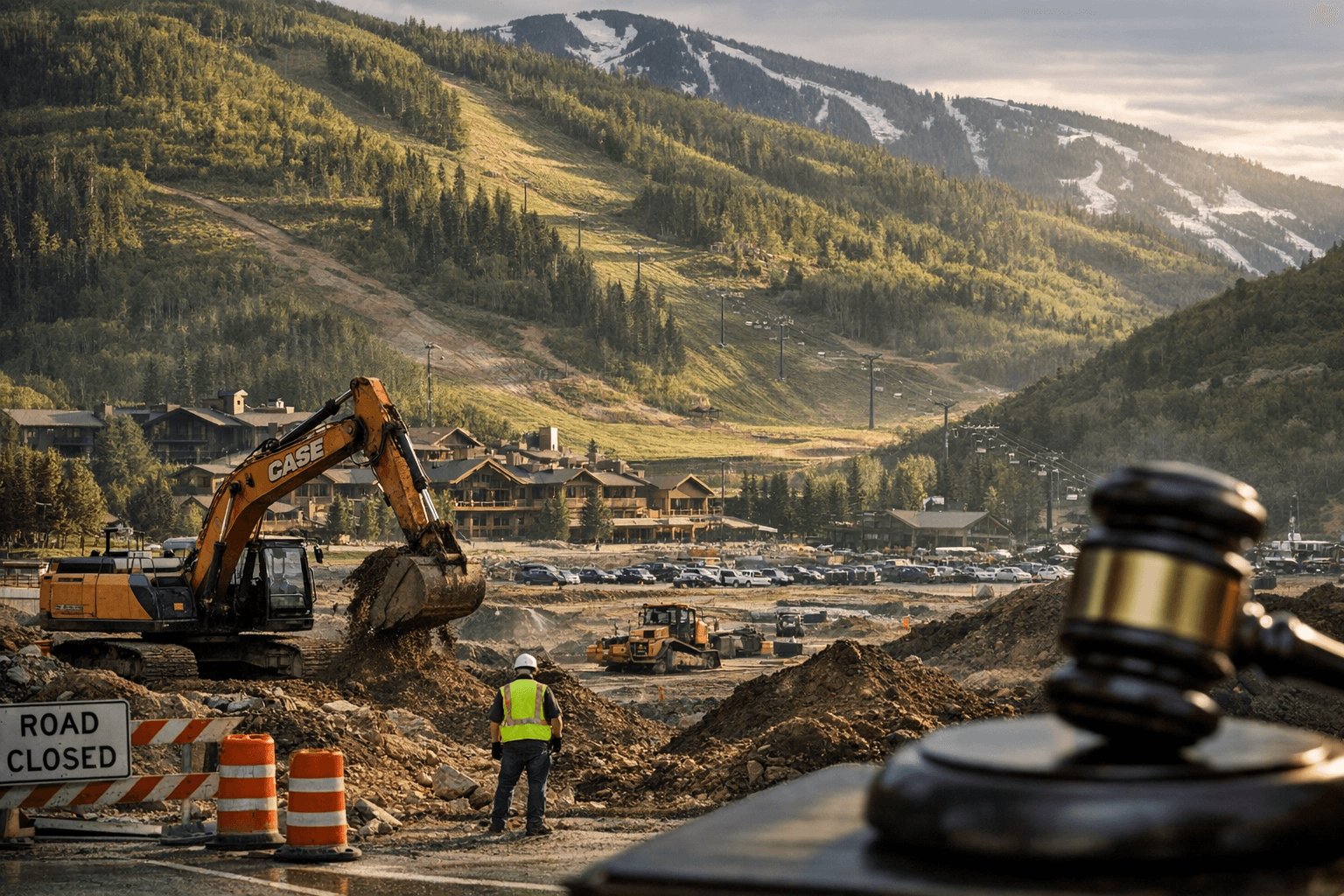
Third District Court Judge Richard Mrazik ruled April 2 in favor of Deer Valley Development Company, dismissing the last remaining legal obstacles to the resort's Snow Park Village project after more than two years of litigation brought by five neighboring homeowners associations.
Mrazik found that the HOAs, representing American Flag, Pinnacle, Morning Star Estates, Hidden Meadows, and The Oaks at Deer Valley, could not establish their final due process claims under the state constitution. The decision builds on his December 2024 ruling, which dismissed the HOAs' statutory arguments with prejudice after finding the groups did not qualify as "adversely affected parties" under Utah law. Together, the two rulings effectively end the legal challenge.
The lawsuit traced to a December 14, 2023 City Council vote adopting Ordinance No. 2023-56, which vacated portions of Deer Valley Drive West and Deer Valley Drive South as part of a public-private partnership with the resort. The five HOAs, representing hundreds of property owners in lower Deer Valley, argued Park City failed to follow Utah law in removing those roads, which they characterized as critical bus routes. HOA attorney Eric Lee also raised concerns that two council liaisons involved in the negotiations had predetermined the outcome, a claim both councilmembers denied.
With the ruling in hand, Deer Valley can advance a construction schedule it spent two years assembling permits to support. The Park City Planning Commission unanimously approved Phase 1 permits on February 26, 2025, covering the parking garage and road infrastructure. The Park City Council gave its final required authorization on November 18, 2025, approving an offsite capture parking lot. Phase 2, covering the buildings themselves, still requires a separate planning commission review.
Construction is expected to begin in 2026 with utilities and infrastructure work. The project will replace approximately 15 acres of Snow Park surface parking with a mixed-use village featuring luxury hotel rooms, condominiums, retail and commercial space, a transit hub, and underground parking. Total estimated cost runs between $1.5 and $1.6 billion, and the full buildout is projected to take five years.
The disruption arrives this summer. Parking at the Snow Park base drops to roughly 400 spaces during summer 2026 and the 2026–27 ski season, a 75% reduction from current capacity. The Snow Park summer concert series, a longstanding fixture on Park City's warm-weather calendar, will be canceled in both 2026 and 2027. Deer Valley attorney Wade Budge has told the planning commission he expects skiers to migrate toward the resort's East Village base in Wasatch County during the construction window.
The public-private partnership at the center of the case commits both Park City and Deer Valley to contribute up to $15 million each toward transportation infrastructure along state Route 248, with a gondola linking Snow Park to a new transit hub included in the arrangement.
Snow Park Village is part of Deer Valley's "Expanded Excellence" initiative, which has already more than doubled the resort's skiable terrain since December 2024 to 4,300 acres across 31 chairlifts. Deer Valley President and COO Todd Bennett has noted the resort may need to complete certain East Village work before fully redirecting construction crews to Snow Park.
Whether the five HOAs will appeal Judge Mrazik's ruling has not been publicly addressed.
This article was produced by Prism’s automated news system from verified source data, official records, and press releases, then run through automated quality and moderation checks before publishing. The system is built and supervised by the people who set the standards it runs under. Read our full AI policy.
Did this article answer your question?