Kimball Hotel marks Summit County’s shift from stage route to suburbs
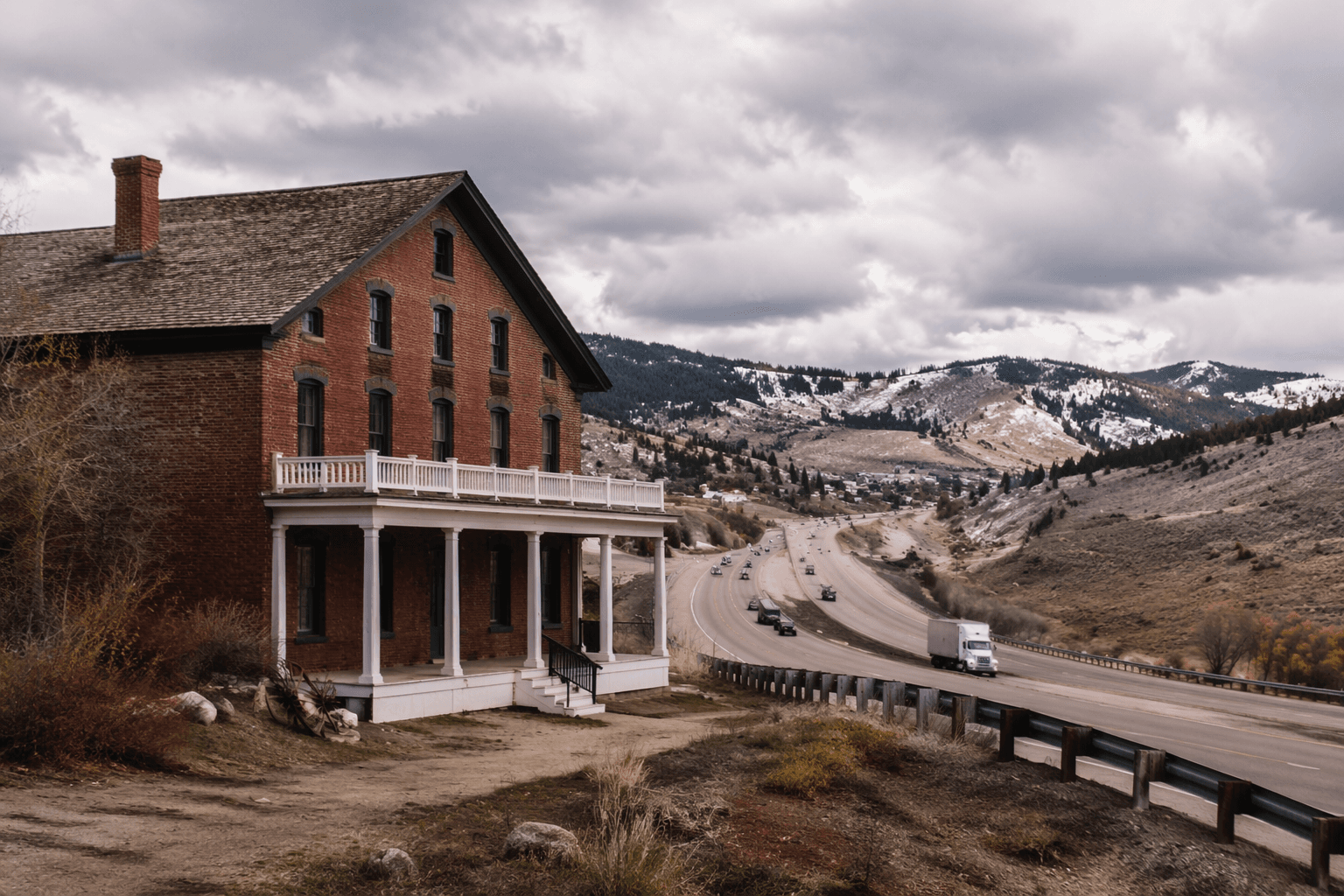
The Kimball Hotel still maps Summit County’s shift from wagon road to resort county, with 1860s stage-era details visible beside Interstate 80.
The Kimball Hotel still sits where Summit County’s older economy is easiest to see: between Kimball and Silver Creek Junctions on the north side of Interstate 80, surrounded by ranch land in the Snyderville Basin. As the county’s oldest historic structure, it is more than a preserved building. It is a marker of how a remote travel corridor became a place shaped by settlement, rail, commuting, and tourism.
From stage route to Summit County landmark
The site’s story begins before the hotel itself. Parley P. Pratt explored the area in 1848, then opened a toll road through Parley’s Canyon in 1849-50, putting this slice of Summit County on the transportation map well before Interstate 80 and the ski-era growth of the basin. When the Civil War broke out in 1861, the Overland Stage company shifted its main southern stagecoach and wagon route through Utah and established new stations along the way. One of them became the Kimball Hotel.
William H. Kimball, born April 10, 1826, in Mendon, New York, came to Utah with his father in 1848 and built the hotel in 1862. The county says the building had 11 rooms and ranked among the finest stops along the Overland Route. That detail matters because it shows the hotel was not a rough shelter on the edge of the trail. It was a competitive business built to capture traffic moving through the county, and it reflects the value of hospitality in an economy built on movement.
The hotel also depended on the local landscape around it. Summit County notes that travelers ate Spring Creek trout, sage grouse, beef, and mutton while staying there. Those foods tie the site to the ranching and hunting economy that supported early travel through the basin. The building’s setting, on land that still reads as open country, helps explain why this stop existed here in the first place: it sat on a corridor where food, freight, animals, and people all had to be supplied.
A transportation business that kept changing
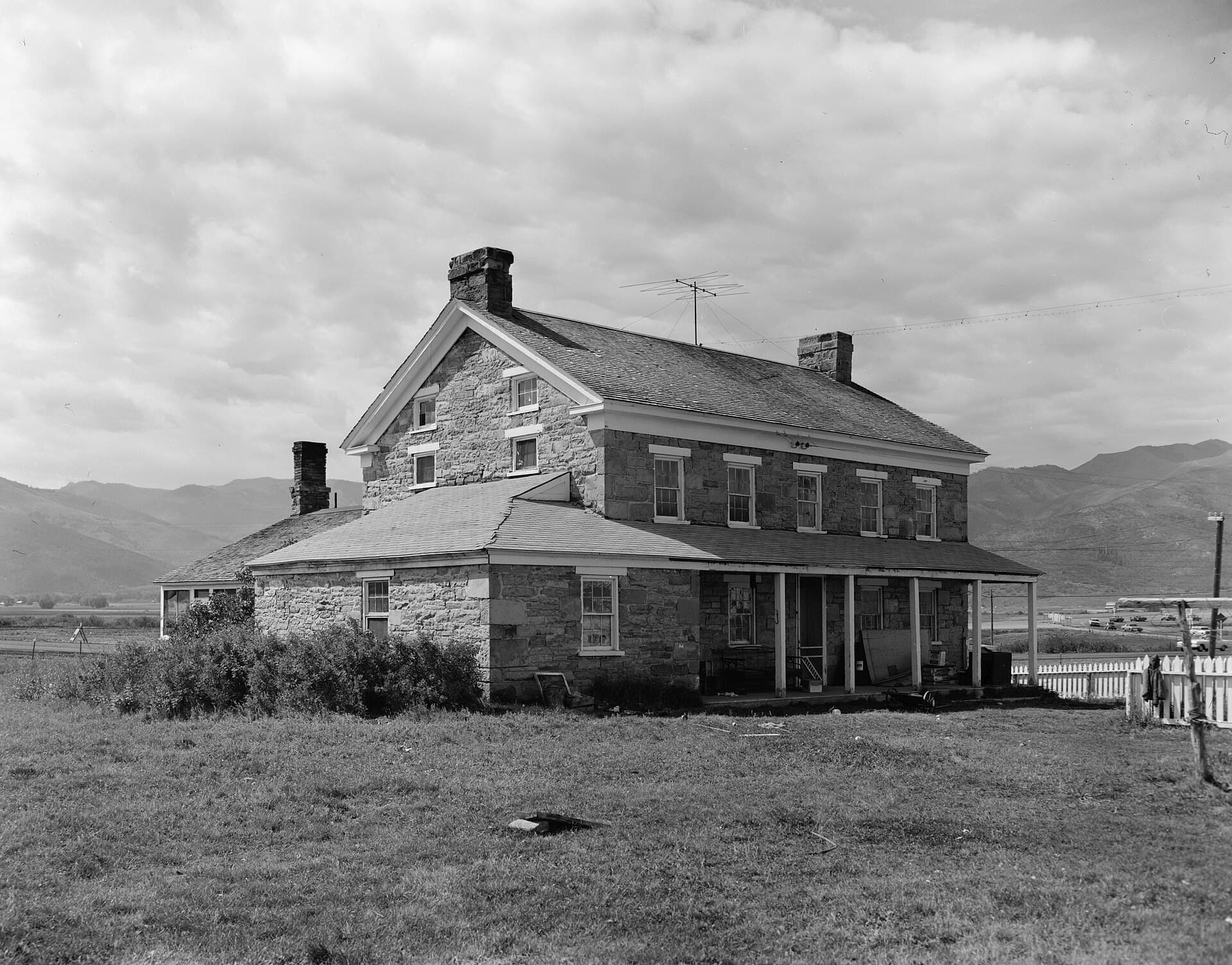
What makes the Kimball Hotel especially useful as a local-history guide is that it was never just an inn. The Kimball family operated an express stagecoach between Salt Lake City and Park City and handled local U.S. mail service, turning the site into part of the county’s communications network as well as its lodging network. The Historic American Buildings Survey also records that the complex served the Holladay Stage Line and the Wells Fargo Express Company, which places it squarely inside the larger system that moved passengers, mail, and freight across Utah.
The east wing once held a post office and a bar, two functions that underline how practical the place was. A stage stop had to do more than offer beds. It had to serve as a point where riders changed horses, letters changed hands, news spread, and business transactions were completed. In that sense, the Kimball Hotel was an early multimodal hub for Summit County, long before the county’s roads, resorts, and neighborhoods became linked by a daily commuter economy.
That adaptability continued after rail arrived. The Kimball family later opened a livery stable in Park City, showing how quickly transportation businesses had to adjust when stage traffic faded and new travel patterns took over. The shift is a useful economic lesson for Summit County now: local enterprises that once survived by serving overland travelers had to reinvent themselves when the technology of movement changed. Today’s version of that transition runs through tourism, second homes, and bedroom-community growth in the Snyderville Basin, but the logic is the same. Infrastructure changes, and businesses either adapt or disappear.
Why the preservation date matters
The Kimball Hotel was listed on the National Register of Historic Places on April 16, 1971. That federal recognition, created under the National Historic Preservation Act of 1966, matters because it places the building inside a formal preservation framework rather than leaving it to memory alone. For Summit County, the listing signals that this is not just an old structure beside the highway. It is a documented piece of the county’s transportation and settlement record.
That record is especially important in the Snyderville Basin, where the landscape once defined by stage routes and ranch land now includes resort development and residential growth. The hotel stands out because it gives that change a physical reference point. Without places like this, the story of the county’s growth can flatten into a simple tale of expansion. With the hotel still visible on-site, residents can see the older geography underneath the newer one.
The county’s description of the Kimball Hotel as its oldest historic structure makes the preservation argument even stronger. A community that grows quickly can lose the landmarks that explain how it got there. The Kimball Hotel keeps that history legible at the roadside, where a sandstone building still sits between junctions named for a transportation era that has largely passed. It shows Summit County not as a place that forgot its past, but as one where the past still helps explain the present.
This article was produced by Prism’s automated news system from verified source data, official records, and press releases, then run through automated quality and moderation checks before publishing. The system is built and supervised by the people who set the standards it runs under. Read our full AI policy.
Did this article answer your question?


