Summit County explains how vote-by-mail and drop boxes work
A ballot can go wrong in Summit County if you miss a drop box schedule, a registration deadline, or a signature check. The county spreads return sites from Coalville to Park City so your vote has a shorter trip.
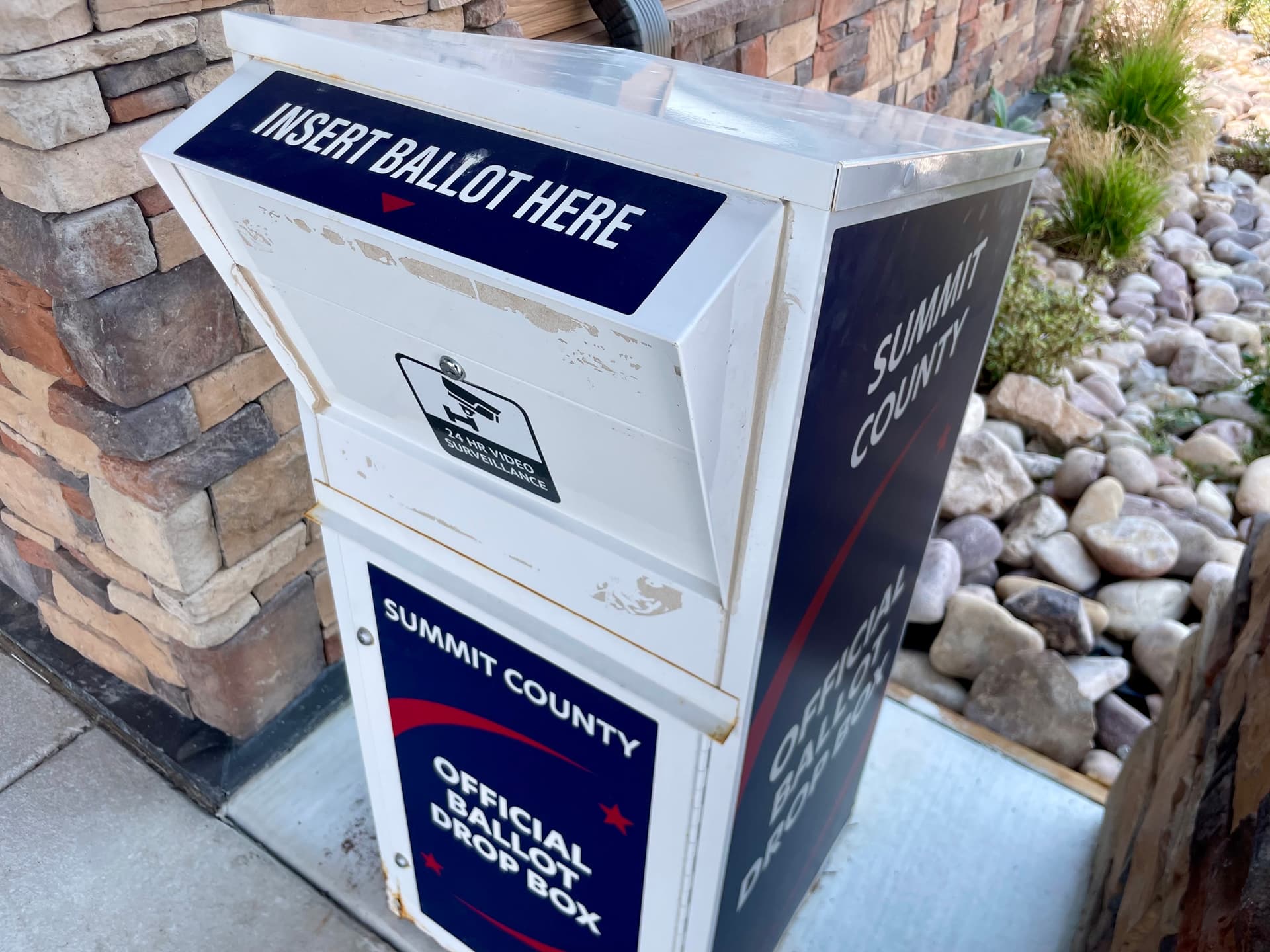
A ballot can go wrong in Summit County if you miss a drop box schedule, a registration deadline, or a signature check. The county spreads return sites from Coalville to Park City so your vote has a shorter trip, but the rules still decide whether it gets counted. That is why the mechanics matter here as much as the campaign signs.
How vote-by-mail works in Summit County
Utah’s election system sends ballots to active registered voters 21 days before an election, and a voter has to be registered no later than 11 days before Election Day to receive a mail ballot. In a county like Summit, where residents are split between Coalville, Kamas, Oakley, Park City and the Snyderville Basin, that timeline can determine whether a ballot arrives in time to return it without a scramble.
The Summit County Clerk’s Office sits at the center of that system. Its election pages cover voter registration, candidate information, election results archives, precinct maps and voter privacy information, which is the practical toolkit voters use when they need to check a status, find a location or understand what happens next.
Where Summit County says to drop a ballot
For the 2025 General Election, Summit County listed ballot drop boxes at the Summit County Courthouse in Coalville, the Summit County Library Coalville branch, Coalville City Hall, Oakley City Hall, the Summit County Library in Kamas, the Marsac Building and Park City City Hall, and The Market at Park City. That spread is not accidental. It gives East Side voters, Park City core voters and residents in the middle of the county a way to return a ballot without driving to one central office.
The schedules are not the same at every site. Some drop boxes are available 24/7, while others follow business hours or retail hours, which matters if you work late, commute through town at odd hours or live far from a town center. A voter in Coalville may have several nearby options, while someone in Oakley or Kamas may be looking for the most direct route to a box that matches their schedule.
A Park City voter has a different set of choices than someone on the East Side. The Marsac Building and The Market at Park City serve the resort side of the county, while the courthouse, city halls and libraries give people in Coalville, Oakley and Kamas local return points that fit the county’s geography.
What the clerk’s office actually handles
The clerk’s office is not just a mailbox with a seal on it. In Utah’s county-run system, local clerks are the front line for mailing ballots, receiving them, checking signatures, canvassing results and posting election notices. That is the office that keeps the process moving from voter registration to the final count.
That work is visible in the county’s own numbers. In the June 25, 2024 primary, Summit County had 18,255 registered voters and 5,074 ballots cast, for 42.91% turnout. In the November 5, 2024 general election, the county reported 29,718 registered voters and 26,482 ballots cast, for 89.11% turnout. Those numbers show why the clerk’s office has to manage volume, not just paperwork.
The county’s election pages also matter when something goes wrong. If you need precinct information, registration help, candidate details or election results, those are the places the county maintains. For voters trying to avoid a missed deadline or a wrong drop-off point, that is the first stop.
Where ballots get rejected, and why that matters
Small errors can still keep a ballot out of the count. In the June 25, 2024 primary, Summit County reported 191 ballots not counted. The rejection categories included 95 ballots postmarked or received after the deadline, 61 signature mismatches and 29 unsigned ballots.
Those numbers are the clearest reminder that returning a ballot is not just about getting it into an envelope. A voter in Park City who drops a ballot at a convenient site but waits until the last minute can still lose time if the box closes before the ballot is accepted. A voter in Kamas or Oakley who forgets to sign the envelope can also lose the vote entirely.
The county’s turnout records make that risk concrete. Summit County can produce high participation, but high turnout does not erase process failures. It only raises the stakes for people who miss a step.
Why the process runs from dawn to dusk and beyond
Ballot return is only one part of the workload. Park Record described the Summit County Clerk’s Office as running ballot counting from dawn to dusk and beyond during the 2024 election cycle, and the county received nearly 20,000 ballots ahead of Election Day. That is the behind-the-scenes pressure that explains why drop boxes, signature checks and canvassing matter so much in a mountain county with multiple population centers.
When a county processes that many ballots, logistics become a civic issue. The placement of drop boxes at libraries, city halls, a courthouse and even The Market at Park City reflects a system designed to keep ballots moving without forcing every voter through one bottleneck.
Privacy can be part of the voting decision
Summit County also maintains a voter privacy page, and county election materials note that voters can seek private status protection for registration records. That is an important option for anyone concerned about the visibility of an address or other registration details.
In 2026, the deadline for protecting those records fell on May 6, which shows that privacy protection has its own timeline, separate from ballot return. The county’s privacy process sits alongside the public parts of election administration, a reminder that transparent elections still have to protect sensitive voter information.
What Summit County voters should keep in mind
If you live in Coalville, Kamas, Oakley, Park City or the surrounding county, the main question is not ideological, it is logistical: where does your ballot go, how fast do you need to act, and what does the clerk’s office need from you to make sure it counts? Summit County has built a system of libraries, city halls, a courthouse and a grocery-adjacent drop box to make that easier, but the deadline rules and signature requirements still decide the outcome.
This article was produced by Prism’s automated news system from verified source data, official records, and press releases, then run through automated quality and moderation checks before publishing. The system is built and supervised by the people who set the standards it runs under. Read our full AI policy.
Did this article answer your question?