Summit County Snowpack Hits Lowest Level Since 1930, Raising Fire and Water Fears
Summit County's snowpack is the lowest since 1930, Frisco's marina is closed for the summer, and Commissioner Mamula says wildfires aren't a risk — they're a certainty.

Summit County's snowpack has dropped to its lowest measured level since 1930, pushing the area into "extreme" and "exceptional" drought designations simultaneously and setting the stage for what officials describe as an unavoidable wildfire season.
Commissioner Eric Mamula was direct after meeting with Red White and Blue Fire leaders. "It's not if, it's when," he said. "We will have fires this summer, it will happen. We just need to be ready for it. You can't be lax about it."
By late January, Summit County's snowpack sat near the 0-5th percentile, meaning that 95 to 100% of winters on record produced more snow. A March heat wave brought temperatures more typical of June, with 2026 responsible for the top three or more highest March temperatures in many areas. The snowpack peaked around March 9, nearly a month ahead of the normal early-April peak. Colorado state climatologist Russ Schumacher concluded this is the worst snowpack year in the state's recorded history.
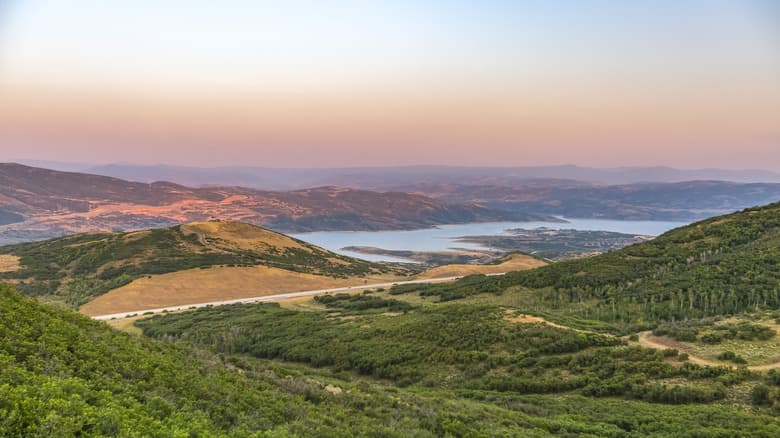
The impact on Dillon Reservoir was immediate enough to reshape summer plans. Frisco Bay Marina announced it would close its boat ramp and slips for the entire 2026 boating season, based on extreme drought conditions and guidance from Denver Water. The loss of slips is projected to reduce town revenue by $315,000, with seasonal staffing expected to be reduced by about 17%.
The urgency prompted Summit County to bring together fire departments, law enforcement, and state and federal partners to begin planning before any fire starts. "We have roads closed, Swan Mountain Road will be closed for the majority of the summer," Mamula said, a complication emergency planners are already factoring into evacuation scenarios.
With statewide snowpack sitting at just 36% of median, Summit County and Park City joined a subsidized rain barrel program, with officials pointing to both the severity of current drought conditions and the need for proactive solutions. It is a small countermeasure against a large, converging set of threats: lower snowpack means reduced streamflow into Dillon Reservoir through summer, while drier vegetation accelerates how fast a fire can move through terrain that surrounds Breckenridge, Silverthorne, and Frisco. Summit County experienced "extreme" and "exceptional" drought status through the winter, the two most severe ratings on the U.S. Drought Monitor scale.
Snow course data, collected manually at monitoring sites since the 1930s, makes 1930 the baseline for historical comparison. By that measure, no winter in nearly a century left Summit County this dry heading into fire season.
This article was produced by Prism’s automated news system from verified source data, official records, and press releases, then run through automated quality and moderation checks before publishing. The system is built and supervised by the people who set the standards it runs under. Read our full AI policy.
Did this article answer your question?