Goodwell and Oklahoma Panhandle State University grew together over time
Goodwell and OPSU are one local system: the railroad town, campus, museum, and county identity all grew around the same 120 acres and the same water well.
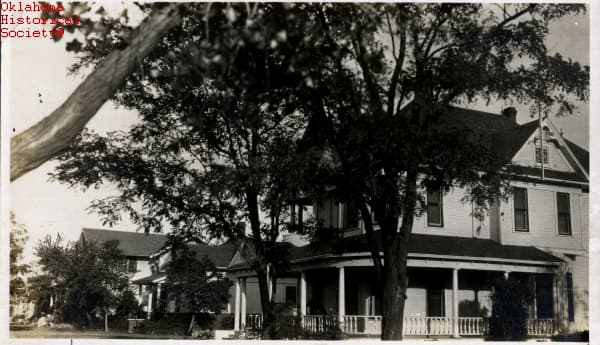
Goodwell did not become a college town by accident. It began as a railroad settlement built around a well, and Oklahoma Panhandle State University arrived just as the town was taking shape, tying the county seat of local memory to the campus on the west edge of town. More than a century later, the two still function as one ecosystem, with the university shaping housing, daily traffic, student life, and the civic identity that Texas County carries across the Panhandle.
A town named for water, then organized around rail traffic
Railroad workers gave Goodwell its name because of the good water drawn from a well dug on the townsite for railroad use. The Chicago, Rock Island and Pacific reached the area around 1902, and the post office opened on June 16, 1903, giving the settlement a formal foothold before it had much else. Early life still looked improvised, with dugouts, tents, and boardwalk sidewalks marking a place that was growing faster than its infrastructure.
By 1908, though, Goodwell already had the practical bones of a working community: a grocery store, coal and feed store, two hotels, a telephone company, a real estate office, an implement store, two general stores, a physician, a blacksmith shop, a butcher shop, a feed mill, and livery stables. There were no saloons, a detail that says as much about the town’s social order as its size. The Goodwell News, a weekly newspaper, first appeared that same year and ran until 1919, giving the town a public voice while the campus idea was still only beginning to mature.
The railroad mattered in more than one way. At its peak, it carried as many as six passenger and mail trains a day through town, linking Goodwell to the rest of the region and making it easier for students, workers, and visitors to move in and out of the Panhandle. In a county as large and spread out as Texas County, that level of connection shaped how the town fit into the broader landscape.
How the school became the town’s anchor
OPSU began in 1909, the same year the state created district agricultural schools under a 1908 law that authorized secondary-grade instruction in agriculture, mechanics, domestic science, and economics. The school opened as Pan-Handle Agricultural Institute with an annual operating budget of just $5,000, and it occupied a 120-acre campus in Goodwell. That modest start matters, because it shows how quickly education became part of the town’s basic economy, not just an added amenity.
The school’s early growth helped pull Goodwell upward with it. By 1918, the town’s estimated population had reached 350, a number that reflects the school’s influence on local life even in its first decade. Students came not just from the Oklahoma Panhandle but from surrounding states, making the campus a regional destination rather than a purely local institution. OPSU’s own recent history materials say that reach continues today.
The school’s name changes track its academic expansion. It became Panhandle Agricultural and Mechanical College in 1921, began upper-division college courses in 1925, and added junior- and senior-level work in summer 1926. In 1967 it was renamed Oklahoma Panhandle State College of Agriculture and Applied Science, and in 1974 it took the current name, Oklahoma Panhandle State University. Each change marked a bigger mission, but the location never moved: the university remained rooted in Goodwell.
That is the core of the campus-town relationship. OPSU brought students, faculty, staff, and outside attention into a community that was already built to move goods and people across the plains. Goodwell, in turn, supplied the daily setting the university needed, from housing and stores to churches, local services, and the kind of social network that makes students feel the town is theirs too.
Buildings that tell the story in plain sight
The campus itself reads like a timeline. Hesper Hall was the first constructed building and remains a symbol of early education on the High Plains. The architectural firm of Sorey, Hill, and Sorey designed it as a 36-by-170-foot, three-story building with a full basement, and the J. B. Bolinger Company won the construction bid in 1948 for $16,000. The old building no longer stood by 1948, but the No Man’s Land Museum in Goodwell preserves the cornerstone, its contents, and one of the four stars from the façade. That preservation turns a lost structure into a local exhibit of memory and institution-building.
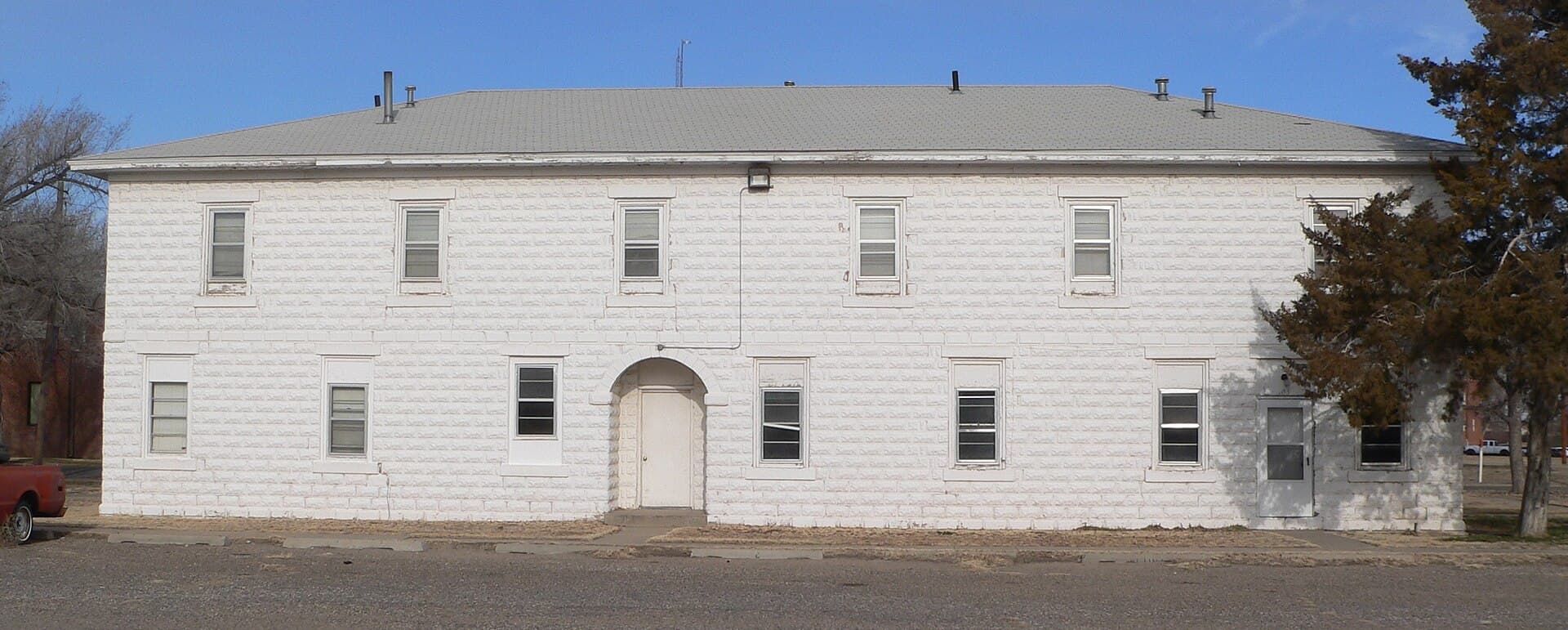
Anna Jarvis Hall carries a different kind of campus history. Planned during World War I and built in 1922 as the former Girls’ Dorm, it was renamed by students in July 1924 for Anna Jarvis, the Philadelphia woman who founded Mother’s Day. The building also shows how student life was physically constrained in the early years: rooms were so small that residents kept storage trunks in the hallways before the building was remodeled to enlarge them. That detail says more about early campus life than any brochure language ever could.
The University Farm is another reminder that OPSU was designed for a specific region and a specific economy. Agricultural training required a working farm from the beginning, not as decoration but as part of the curriculum and the town’s wider purpose. The 1990 bell tower, sponsored by alumni and friends, adds a later layer of shared ownership, showing how the campus became something the community helped maintain across generations.
A county identity that runs through the campus
Goodwell’s churches and community groups helped create a durable support network for students, which is one reason the town and university still blur into one another in daily life. In a county where Texas County is Oklahoma’s second-largest by area, institutions matter because distances are real and local anchors are few. Goodwell also hosts the No Man’s Land Historical Museum, adding another layer of cultural memory just a short distance from the university.
That combination is what makes Goodwell more than a college town in the usual sense. The town’s early railroad economy, the school’s agricultural mission, the museum’s preservation work, and the campus buildings themselves all point to the same truth: OPSU and Goodwell were built into each other from the start. What survives now is not just a university beside a small town, but a shared civic system that still shapes how Texas County remembers itself and how it stays connected to the Panhandle around it.
This article was produced by Prism’s automated news system from verified source data, official records, and press releases, then run through automated quality and moderation checks before publishing. The system is built and supervised by the people who set the standards it runs under. Read our full AI policy.
Did this article answer your question?