No Man’s Land Museum in Guymon preserves Texas County history
No Man’s Land Museum in Goodwell gives Texas County a compact place to understand settlement, ranching, the Dust Bowl, and the county’s larger Panhandle story.
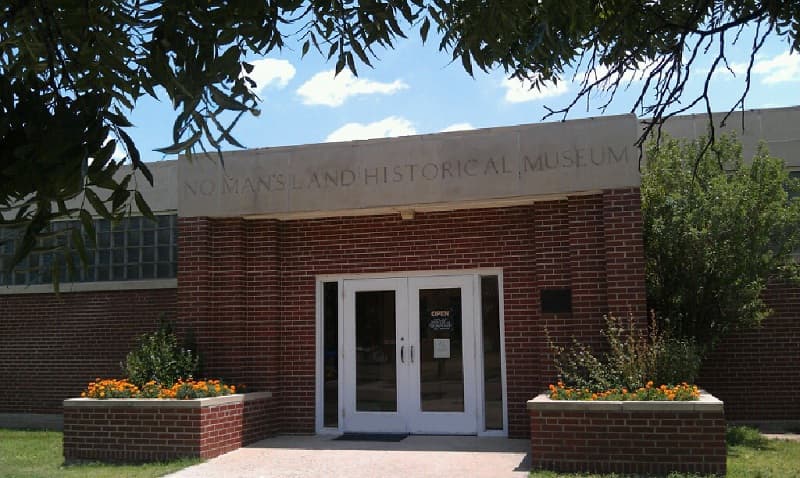
The No Man’s Land Museum gives Texas County something more practical than a quick stop on the way through Guymon and Goodwell: a compact way to understand why this county developed the way it did. In one visit, the museum connects early Oklahoma settlement, Panhandle farming, Native history, and the Dust Bowl to the pressures that still shape the region today, from agriculture and drought to small-town change.
Why the museum matters to Texas County
Texas County does not read like a place with one easy story. It is the second-largest county in Oklahoma, created at statehood in 1907, and its identity has been shaped by land, weather, transportation, and the people who settled, worked, and weathered hardship here. The museum helps make that history legible for visitors, new residents, school groups, and local families who want a shared reference point for the county’s past.
That value is especially clear in a county where Guymon serves as the county seat and a transportation hub, while Oklahoma Panhandle State University anchors Goodwell nearby. The museum ties those institutions together with the broader Oklahoma Panhandle story, giving context to the roads, farms, classrooms, and civic debates that define daily life in Texas County.
A museum built to preserve the Panhandle’s memory
No Man’s Land Museum is operated in partnership with Oklahoma Panhandle State University, but its roots go much deeper than a campus arrangement. The No Man’s Land Historical Society says it has preserved the Oklahoma Panhandle’s heritage since 1934, when its founders were surviving pre-territorial pioneers determined to save historical documents and pioneer relics for future generations.
The push to create a museum was recognized even earlier. Dr. Claude Fly, head of the science department at Panhandle Agricultural and Mechanical College, identified the need in 1931, and the museum was dedicated on October 3, 1951. That timeline matters because it shows the museum was not built as a decorative attraction. It was built as a response to the fear that the region’s early records, artifacts, and stories could be lost.
The result is a long-running local institution that has outlasted many of the people and conditions that produced its collections. For a county where family lines often run deep and agricultural life still shapes identity, that permanence gives the museum unusual weight.
What you will actually find inside
The museum’s strength is not just in what it says, but in what it holds. Admission is free, the museum is open Tuesday through Saturday from 10 a.m. to noon and 1 p.m. to 4 p.m., and groups are welcome by appointment. That makes it accessible for school trips, visiting relatives, and anyone trying to orient themselves quickly to local history.
Inside, the collections are broad enough to cover several different ways of understanding the Panhandle. Permanent exhibits include the Baker and Duckett collections, and the museum has rooms devoted to paleontological, geological, historical, economic, and ecological displays. That range helps explain why the museum works as a county guide rather than a narrow heritage display: it shows how the land, the economy, and the people all fit together.
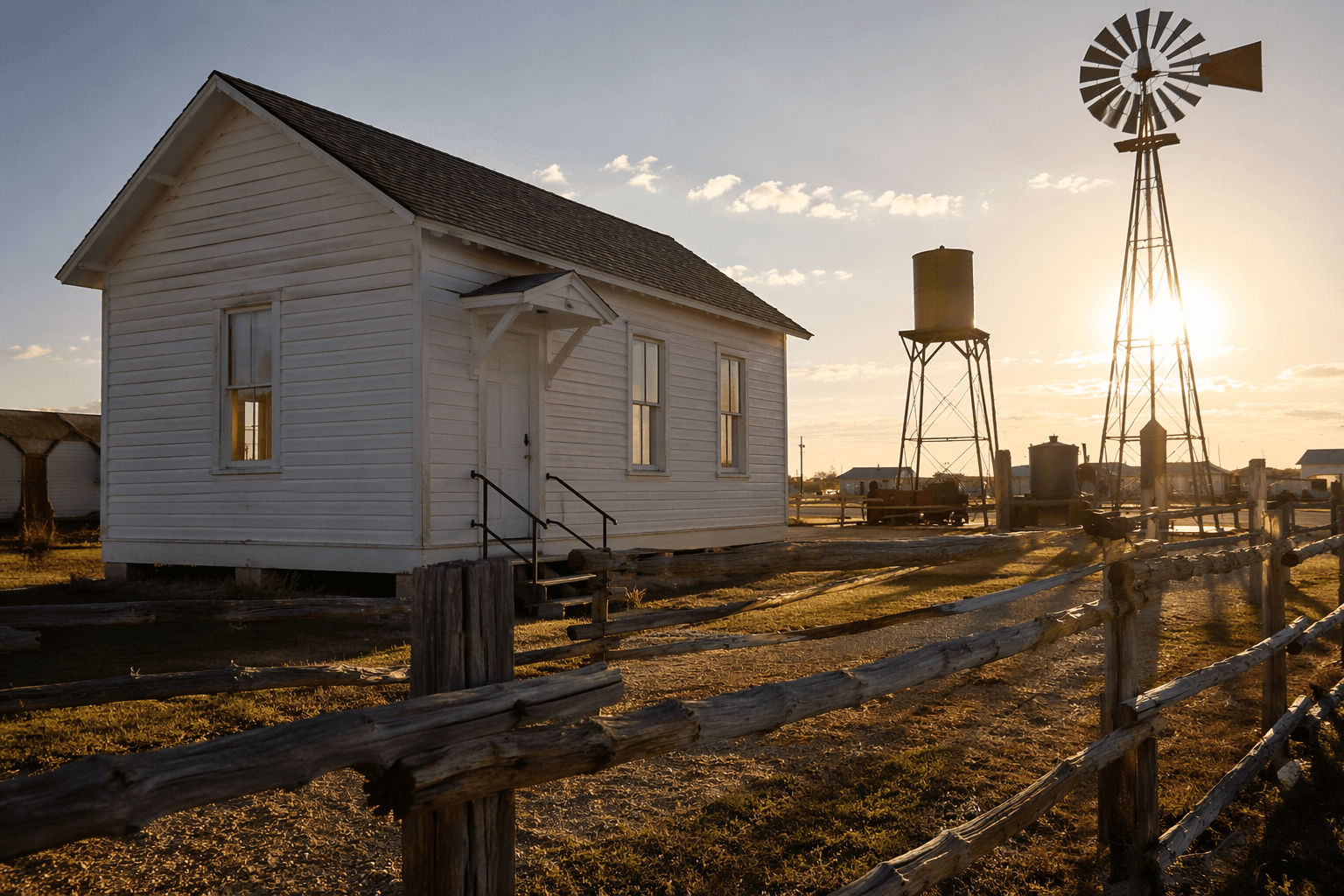
TravelOK says the museum also includes American Indian artifacts such as Plains arrowheads, a peace pipe from Blackfoot Chief Two Guns Whitecalf, beadwork, and porcupine quillwork. Those pieces put Native history at the center of the region’s story rather than at its margins. Other displays include casts of dinosaur footprints from the Kenton area, desks used by delegates at the 1906 Oklahoma Constitutional Convention, and 19th-century tools, giving visitors a broader picture of how deep the area’s timeline runs.
The archive makes it useful, not just interesting
For families, students, and researchers, the archive may be the museum’s most practical asset. The No Man’s Land Museum contains a large archive available for research, with materials that include 1908 tax rolls, 1920 and 1960 plat maps, area newspapers, photo collections, and some family history files. Those records turn the museum into a place where you can trace how land was divided, how towns took shape, and how local names and properties changed over time.
That matters in a county like Texas County, where the past is not abstract. Land use, settlement patterns, and economic shifts still shape local discussion, and the archive gives those conversations a paper trail. If you are trying to understand why a farm sits where it does, how a community grew, or where a family line fits into the county’s story, the museum offers evidence, not just memory.
Why the Dust Bowl story still carries weight here
No Man’s Land Museum also remains one of the clearest places to understand the Dust Bowl as a lived local event, not just a chapter in a textbook. The Oklahoma Historical Society notes that April 14, 1935, Black Sunday, began as a clear day in Guymon before one of the worst dust storms in area history. That detail matters because it locates a national disaster in a specific place people still know.
In Texas County, where agriculture and weather have always shaped the economy and culture, the Dust Bowl is not distant history. It is part of the county’s identity, and the museum’s exhibits help explain why drought, soil, migration, and farming remain such important subjects in the Panhandle. The museum preserves the local evidence of hardship alongside the artifacts of settlement and statehood, which is exactly what makes it useful to residents trying to make sense of present-day challenges.
Planning a visit
A visit is straightforward, which is part of the museum’s appeal as a local resource. It is free, open Tuesday through Saturday, and set up to receive groups by appointment. Its location in Goodwell places it close to Oklahoma Panhandle State University, while Guymon remains the county’s main population and transportation center, making the museum easy to fold into a day of errands, school visits, or family hosting.
If you are looking for one place in Texas County that can explain the county’s roots quickly and clearly, this is it. No Man’s Land Museum does more than preserve objects. It preserves the record of how the Panhandle was settled, how it survived disaster, and why those experiences still shape Texas County’s identity today.
This article was produced by Prism’s automated news system from verified source data, official records, and press releases, then run through automated quality and moderation checks before publishing. The system is built and supervised by the people who set the standards it runs under. Read our full AI policy.
Know something we missed? Have a correction or additional information?
Submit a Tip