No Man's Land Museum Preserves Oklahoma Panhandle History in Goodwell
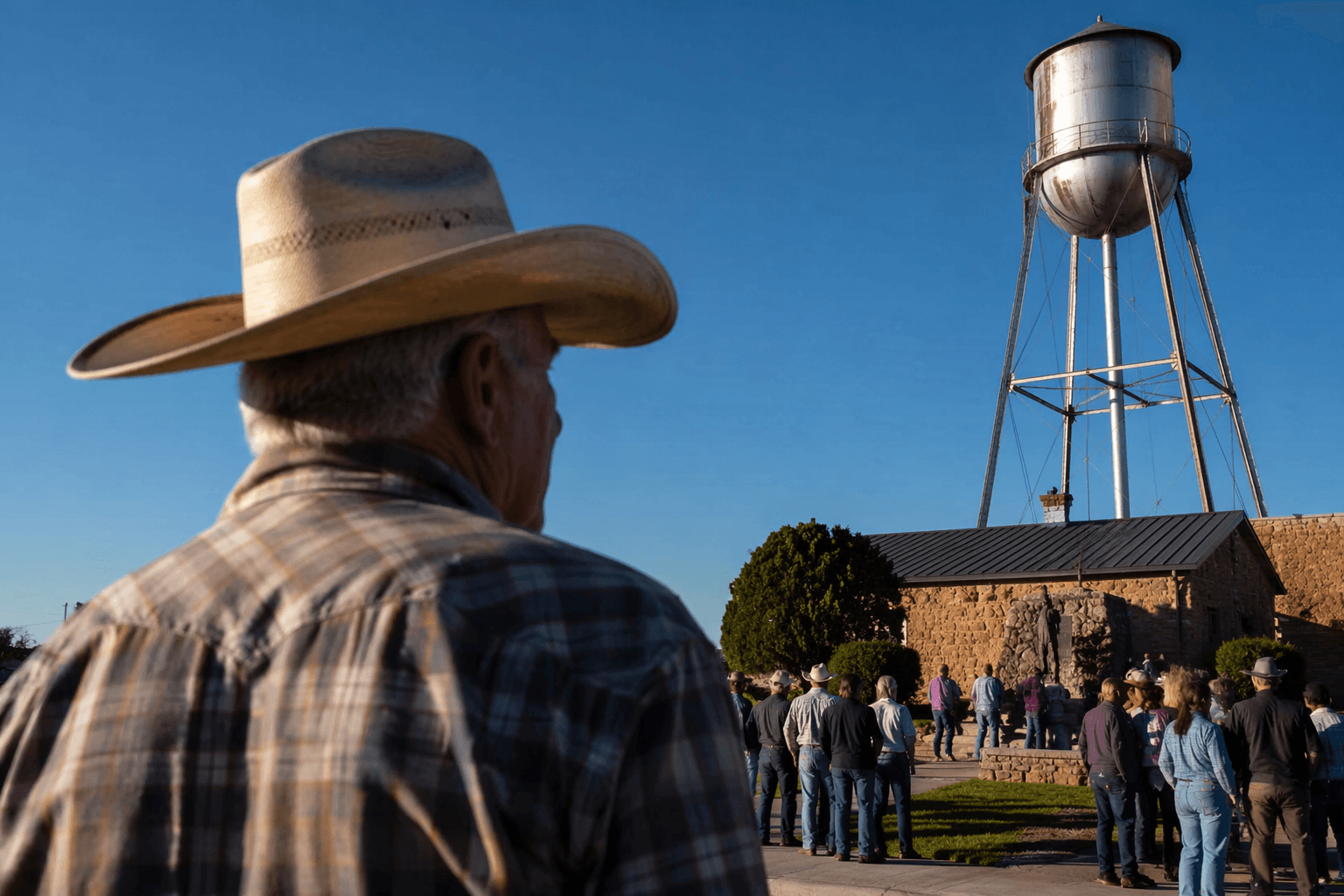
Tucked beside Oklahoma Panhandle State University in Goodwell, the No Man's Land Museum stands as the region's primary keeper of Panhandle prehistory and pioneer life.
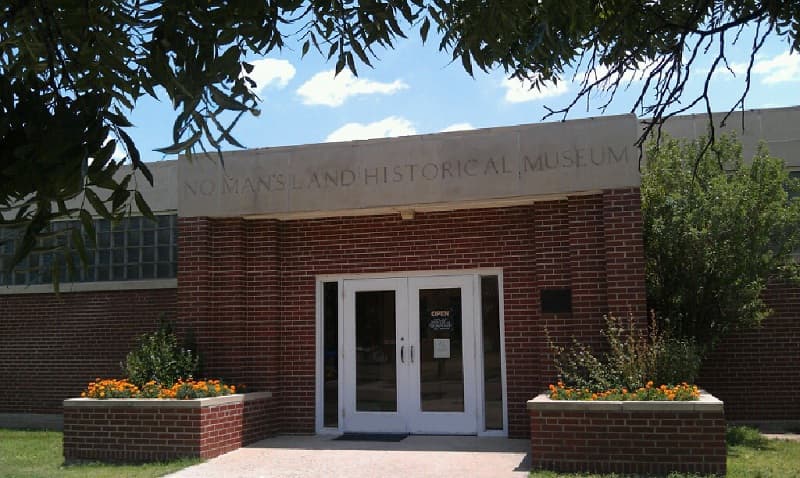
Tucked just off the campus of Oklahoma Panhandle State University in Goodwell, not far from U.S. 54, the No Man's Land Museum holds a distinction that no other institution in the region can claim: it is the principal local museum preserving the history, archaeology, and cultural memory of the Oklahoma Panhandle and Texas County communities. Operated by the No Man's Land Historical Society in partnership with Oklahoma Panhandle State University, the museum functions as both a civic anchor and a scholarly resource for one of the most geographically and historically distinctive corners of the American interior.
Roots in the Agricultural College
The museum did not appear from nowhere. It grew out of the same institutional soil that produced OPSU itself, originating as an outgrowth of the Agricultural College that eventually became Oklahoma Panhandle State University. That origin story matters because it frames the museum's identity: this was never conceived as a tourist attraction first. It began as an educational endeavor tied to the land-grant tradition of practical knowledge, and the partnership between the No Man's Land Historical Society and OPSU reflects that dual commitment to scholarship and community service that has defined the institution across generations.
What the Museum Preserves
Museum volunteers have described the core purpose plainly: "the purpose of the museum is to provide the pre-history of Oklahoma's panhandle and the pioneer life therein." That framing captures the sweep of what the collection attempts. The Oklahoma Panhandle, sometimes called No Man's Land for the decades it spent as an unorganized strip of territory claimed by no state government, carries a layered history that moves from Indigenous habitation and prehistoric archaeology through the brutal displacement of the frontier era, the homestead boom, the Dust Bowl, and into the agricultural communities that persist today. Texas County sits at the center of that geography, and Goodwell's proximity to OPSU makes the campus-adjacent museum a natural repository for artifacts, images, and documents that might otherwise scatter or disappear.
The breadth of the collection, spanning history, archaeology, and cultural memory, reflects a deliberate effort to tell the full arc of Panhandle life rather than focus narrowly on any single period or demographic. Archaeology in particular signals a commitment to pre-contact and early-contact history that many county-level museums overlook in favor of the 19th- and 20th-century pioneer narrative.
Staffing and Operational Context
Reporting has noted that at the time volunteers were interviewed, the No Man's Land Historical Museum was operating without a curator. That detail carries weight for understanding how the institution functions and what it needs. Volunteer-driven preservation is a reality for many rural museums across the Southern Plains, and the Goodwell museum is no exception. The formal partnership with Oklahoma Panhandle State University provides institutional scaffolding that many comparable museums lack, but visitors and researchers planning a trip should contact the museum directly to confirm current staffing, hours, and access arrangements before making the drive out to Goodwell.
Finding the Museum
The museum sits just off the OPSU campus in Goodwell, within easy reach of U.S. 54, the main east-west corridor through the Oklahoma Panhandle. For visitors coming from Liberal, Kansas, or from Guymon to the east, U.S. 54 is the natural approach. Goodwell is a small community, and the OPSU campus provides the most useful landmark for orienting yourself once you arrive. The museum's proximity to the university means it shares a physical and intellectual neighborhood with the college's agricultural and academic programs, reinforcing the sense that history and education remain intertwined here in a way that feels organic rather than institutional.
A Wider Network of Panhandle Memory
The No Man's Land Museum is the region's flagship, but it is not the only institution doing this work. About 70 miles to the northeast, at the eastern edge of the small town of Gate, the Gateway to the Panhandle Museum stands directly on U.S. 64, positioned three miles west of the Harper-Beaver county line. The name is not incidental: Gate sits at what the museum describes as the literal gateway to No Man's Land, and the institution has built its identity around that geographic identity.
One of the more striking stories connected to that wider network involves the late Dr. Ed Calhoon, a local doctor and rancher whose 60-saddle collection now occupies a dedicated room built specifically to house it. The Calhoon family chose the Jones and Plummer Trail Museum as the home for that collection, passing over the National Cowboy and Western Heritage Museum in Oklahoma City in favor of keeping the saddles in the region where Calhoon lived and worked. The result is a display that rewards the drive for anyone interested in ranching culture and Western material history. That kind of decision, a family declining the prestige of a major metropolitan institution to keep a collection rooted in its home geography, says something about how seriously Panhandle communities take the act of local preservation.
Why This Museum Matters to Texas County
Texas County is not a place with abundant institutional resources for cultural memory. There is no large urban center nearby, no major research university with a dedicated regional history program beyond what OPSU itself provides, and no state capital to funnel funding toward preservation. The No Man's Land Museum fills a gap that would otherwise leave the Panhandle's archaeological record and pioneer heritage underdocumented and underprotected.
The name itself carries civic meaning. No Man's Land was the name applied to the Panhandle strip precisely because federal and state governments could not agree on its status, leaving the people who settled it without legal governance for years. That residents eventually built a museum to honor that specific chapter of American territorial ambiguity reflects a local pride that runs deeper than nostalgia. The museum is an argument, made in artifacts and archives, that this place and its people deserve to be remembered on their own terms.
For anyone in Texas County, or anyone passing through Goodwell along U.S. 54, the No Man's Land Museum is the most direct way to encounter that argument in full.
This article was produced by Prism’s automated news system from verified source data, official records, and press releases, then run through automated quality and moderation checks before publishing. The system is built and supervised by the people who set the standards it runs under. Read our full AI policy.
Did this article answer your question?