Texas County commissioners weigh emergency management, fire aid, broadband access
A 2022 firetruck, new fiber routes and emergency management dominated the July 13 agenda in Guymon, with real stakes for response times, broadband access and county spending.

A 2022 firetruck, new fiber routes and an emergency-management report shared the July 13 agenda in Guymon, tying together Texas County’s most immediate service questions: how it responds to fires and disasters, how broadband reaches rural stretches, and how much money moves through the books. The Board of County Commissioners met at 10 a.m. in a regular public session, and the county’s meetings page says agendas are posted in advance under the Oklahoma Open Meeting Act.
Emergency management sits at the center of county response
Texas County Emergency Management was set to give a report, and that item carries weight in a county where storms, flooding, wildfire conditions and long rural runs can all test response time. The emergency-management office says its mission is to minimize the effects of attack, technological and natural disasters by preparing and exercising preparedness plans, helping cities with training and mitigation, and coordinating disaster response and recovery.
That matters because the county’s emergency system is not just a courthouse function. It is the coordination point for cities and responders across the Oklahoma Panhandle, where one weather system can hit multiple communities at once and where recovery often depends on how quickly county and municipal teams can work from the same playbook.
Fire aid reaches Guymon, Goodwell, Hooker and Texhoma
The agenda also included Apollo group memberships for firefighters in Goodwell, Hooker and Texhoma, which points to support for departments in three towns that depend heavily on local protection. Texas County’s fire and EMS directory lists Goodwell Fire Department, Hooker Fire Department and Texhoma Fire Department as active departments with named chiefs and contact information, underscoring that these are not symbolic line items but working service providers.

At the county’s largest department, commissioners were also set to declare surplus a 2022 firetruck for the Guymon Fire Department. That department operates from two stations, covers about 7 square miles inside the city plus a larger county mutual-aid area, protects a population of more than 12,000 and has 24 paid personnel supported by 30 volunteers.
A surplus declaration is the kind of action that can precede transfer, sale, replacement or retirement of apparatus, so the vote could affect how the department stages equipment and plans its next truck rotation. That is especially relevant in Guymon, where the city department also serves as a mutual-aid resource for nearby areas, not just the city core.
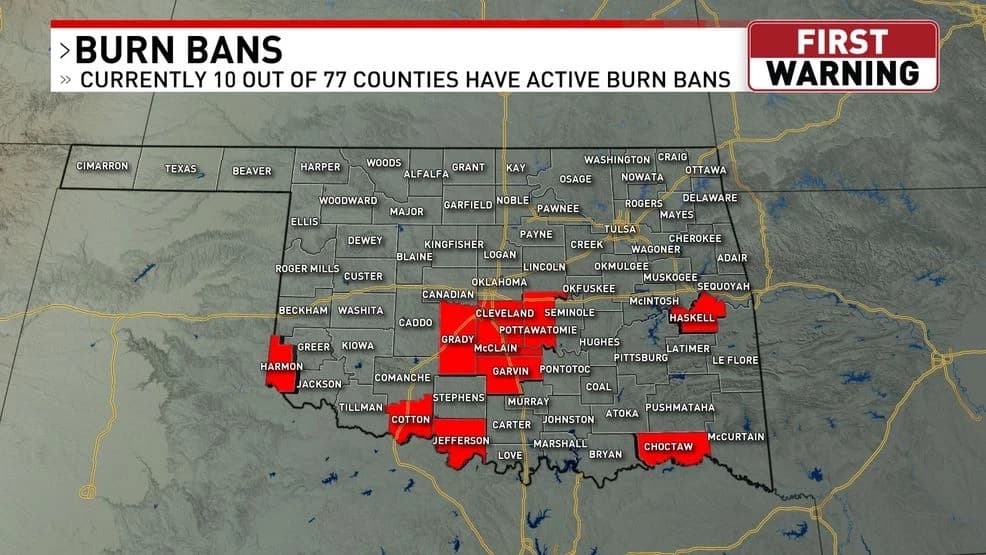
The fire agenda landed soon after commissioners ended the county burn ban on June 8, 2026, after hearing from area fire chiefs, reviewing weather forecasts and recent fire activity. Guymon Fire Chief Grant Wadley said at the time that the county had received some rainfall, a reminder that fire policy in Texas County follows changing ground conditions, not calendar dates.
Fiber permits point to a broader broadband buildout
The most infrastructure-heavy part of the agenda involved NextCity Networks Oklahoma LLC, which sought permission for multiple fiber optic cable routes across sections of Texas County. County records show NextCity Networks Oklahoma LLC had already received multiple fiber optic cable approvals on June 8, 2026, so the July agenda looks like part of an ongoing buildout rather than a one-time request.
For residents outside the larger towns, these right-of-way decisions are where broadband plans turn into actual construction. County approval determines where lines can run across township-range sections, which in turn shapes whether rural homes, farms and businesses can be reached by new service.
The Oklahoma Broadband Office says its broadband map is designed to maximize grant funding by showing current service availability and approved expansion projects. That makes county permit decisions part of a larger state funding picture, because the map helps show where service exists now while local approvals help determine where providers can build next.
Routine finance work still drives county operations
Beyond the higher-profile service items, the agenda included claims, purchase orders, blanket purchase orders, minutes, transfers of appropriations, monthly officers’ reports, the sheriff’s report on county prisoners and the treasurer’s quarterly report for the quarter ending June 30, 2026. Those items are the backbone of county oversight, because they show how money is moving, how departments are reporting and whether spending stays within approved limits.
Commissioners also planned to consider canceling an ADM grant that Texas County had been sponsoring, which suggests an older grant arrangement was being cleaned up. Two other agenda items, an ACH origination agreement with Anchor D Bank and a services agreement with Circuit Engineering District No. 8, point to the less visible machinery of county government, from electronic payments to intergovernmental coordination.
Taken together, the July 13 agenda shows a county government balancing paperwork with operations that residents feel in real time. If commissioners advance the firetruck surplus, the emergency-management update and the fiber permits, the clearest effects will show up in response readiness, broadband access and the county’s ability to manage public money without losing sight of frontline service.
This article was produced by Prism’s automated news system from verified source data, official records, and press releases, then run through automated quality and moderation checks before publishing. The system is built and supervised by the people who set the standards it runs under. Read our full AI policy.
Did this article answer your question?