Texas County Court Clerk in Guymon preserves district court records
Custody, probate, eviction and protective-order records in Texas County run through one office in Guymon, where the clerk keeps the permanent district court file.

Texas County’s district court paper trail lives in one place: the Court Clerk office in Guymon, at 319 N. Main Street, Suite 301. For residents dealing with custody disputes, probate, evictions, protective orders or small-business litigation, that office is where the case record is filed, preserved and pulled back out when a hearing date, judgment or transcript needs to be verified.
What the clerk keeps
M. Renee Ellis has served as Texas County court clerk since 2013, with Martha Aviles listed as 1st Deputy and Cost Administrator. The office records, files and keeps the permanent records of District Court proceedings, including civil, criminal, probate, juvenile, domestic relations and small claims matters.
It also maintains the appearance docket for each filed case and word-for-word transcripts filed by the court reporter. If you need to see when a case was filed, what happened at a hearing, or how a judgment entered the record, the appearance docket is the paper trail. The office is the local gatekeeper for verifying what happened in a district court case, even when the courtroom itself is no longer in session.
Why Guymon is the hub
Guymon is the county seat, and that makes it the natural center for the county’s court records. Texas County is the second-largest county in Oklahoma by land area, spread across a wide stretch of the Panhandle, so a central records office keeps the system workable for people coming from towns, farms and rural roads across the county.
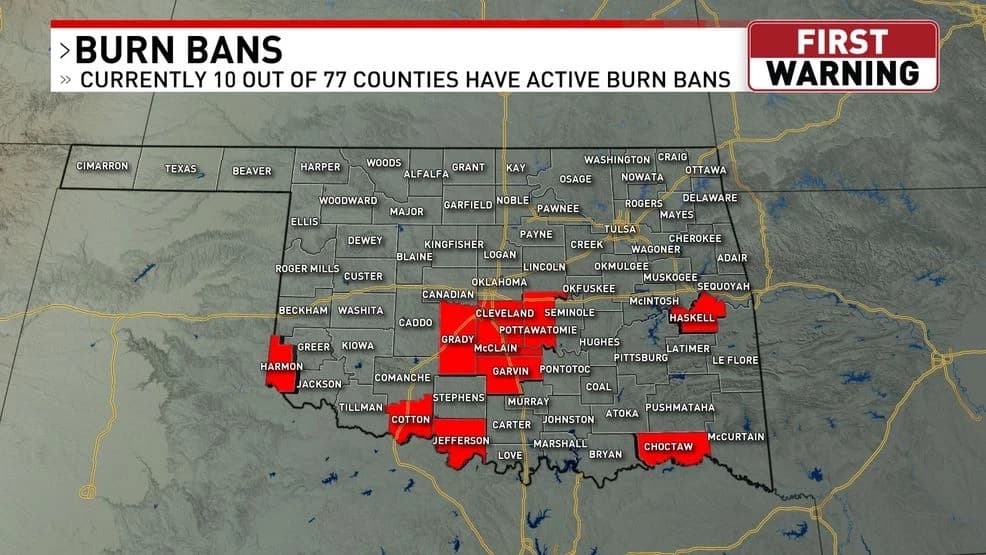
Texas County was created at Oklahoma statehood in 1907 from Beaver County, and it is one of the three Panhandle counties. That left Texas County with a large geography and a single county seat, so the clerk’s office in Guymon serves as the main public stop for district court records. The county’s official web pages also carry local notices, including a burn ban notice.
How to search a case before you go to the courthouse
Oklahoma’s court system is made up of the Supreme Court, the Court of Criminal Appeals, the Court of Civil Appeals and 77 district courts. For people trying to track a Texas County matter, the first online stop is often OSCN, which provides a court-records search for OSCN dockets.
When a county is not covered in OSCN, the state directs users to On Demand Court Records, or ODCR, for participating non-OSCN counties. ODCR provides public court records from participating courts and keeps updated information on which courts are current. Those tools are useful for a quick check, but they do not replace the Guymon clerk’s office. Texas County court docket records are managed there, and the clerk remains the local source of the permanent record.
A practical way to use the online tools is simple: confirm the case exists, note the court activity you need, then turn to the clerk’s office if you need the underlying file, a transcript reference or confirmation that the docket entry matches the official record. For residents sorting out a custody dispute, a probate filing, an eviction timeline or a small-claims judgment, that sequence can save a trip and narrow the request before you arrive in Guymon.
What is public and what stays sealed
Most district court records in Oklahoma are public unless a judge has made them confidential or sealed. The clearest exception is juvenile court material. Oklahoma juvenile records law allows confidential juvenile records to be inspected and disclosed without a court order only to specific authorized people performing official duties. Sealed portions of the record must be separated from the rest of the file, and the materials are to be marked confidential.
Family and juvenile files do not sit in the same open lane as ordinary civil or criminal dockets. Civil matters, family divorce, small claims actions, protective orders and probates are filed in the court clerk’s office, while adoptions, guardianships, mental health and juvenile matters are handled separately and kept confidential. For anyone trying to understand a case file, the key question is whether the record is open, partially sealed or entirely confidential under court rules or statute.
What to expect when you ask for files
The Texas County clerk office is built to preserve the permanent file, not just show a docket entry. That means a docket lookup may be quick, but pulling a file or transcript can require clerk handling. Oklahoma district courts operate under a uniform fee schedule, so copying and certification requests can carry fees that vary by the type and volume of records you want.
The best approach is to be specific about the record you need, then ask the clerk what portion of the file is public and what, if anything, is sealed or confidential. If the matter involves a juvenile file or another protected category, expect the clerk to separate the public record from the restricted material. If you only need to confirm whether a case was filed, the appearance docket may be enough. If you need a complete paper trail, the permanent record in Guymon is the office that holds it.
On Facebook, the Texas County Court Clerk’s Office says it was created to “help inform and educate the citizens of Texas County regarding Court proceedings, jury duty, office closings, and passport applications.”
For residents who need the record, the office phone is (580) 338-3003, and the listed email is e.ellis@oscn.net.
This article was produced by Prism’s automated news system from verified source data, official records, and press releases, then run through automated quality and moderation checks before publishing. The system is built and supervised by the people who set the standards it runs under. Read our full AI policy.
Did this article answer your question?