Texas County newspaper archive offers a rich frontier history trail
Texas County’s digitized newspapers can help pin down fires, business changes, and family names. The archive is a public-records tool, not just local nostalgia.

A fire in Hooker, a newspaper merger in Guymon, and a 70-page run of the Goodwell News can still help prove when a business opened, when a town changed hands, or when a family name first surfaced in print.
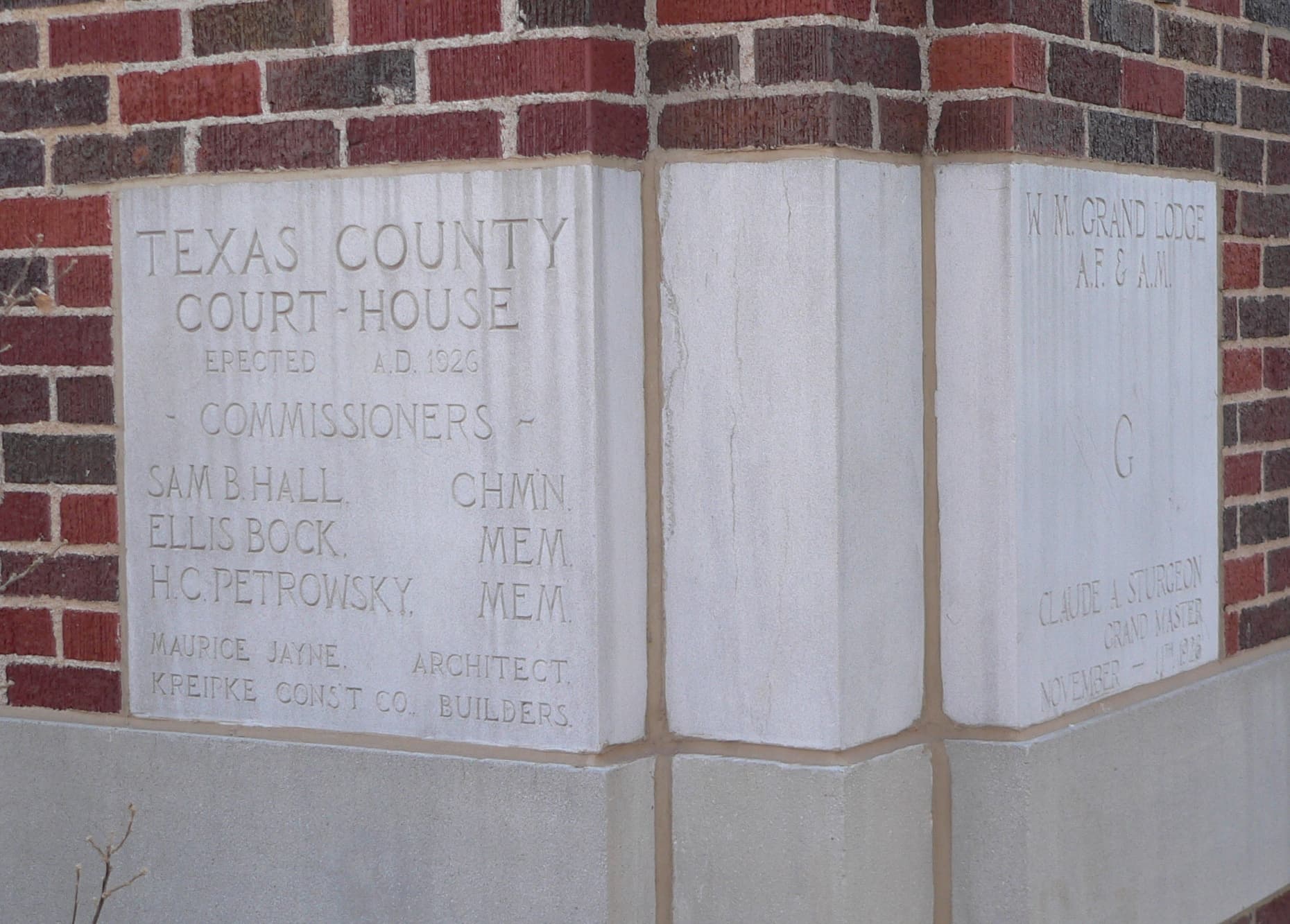
Texas County’s newspaper trail is unusually rich because the county itself was built late and fast. Texas County was one of three Oklahoma Panhandle counties created at statehood in 1907 from Beaver County, then known as the Public Land Strip. Guymon has served as the county seat since that year. As Oklahoma’s second-largest county, it spans incorporated towns such as Goodwell, Hardesty, Hooker, Optima, Texhoma and Tyrone, along with a long list of ghost towns that only survive clearly in old newsprint.
Why the archive matters now
The Oklahoma Digital Newspaper Program digitizes and freely shares Oklahoma-related newspaper titles, and the Oklahoma Historical Society’s newspaper archive holds about 4,000 titles dating from 1844 to the present.
For anyone trying to trace land ownership, a family business, school history or a fire that reshaped a block, the archive preserves the paper trail of places that later thinned out or disappeared. Texas County genealogy resources point researchers toward historical newspapers, local libraries, genealogy societies, towns, ghost towns and cemeteries, which makes the archive a practical starting point for both family history and local business history.
The papers that anchor Texas County’s story
The Guymon Herald is the obvious first stop for county-seat research. It was a weekly paper from 1891 to 1925, and the Gateway archive holds 993 issues and 8,400 pages, with the earliest held date on July 21, 1904 and the last on December 27, 1923. The paper absorbed the Guymon Democrat on March 1, 1919, and it became the official county paper in 1918. That run is especially useful for tracking county government notices, business moves and civic disputes in the years when Guymon was consolidating its role as the center of Texas County.
Goodwell’s paper is smaller but still valuable. The Goodwell News ran from 1908 to 1919, with 12 issues and 70 pages currently accessible in the archive and an earliest held date of June 17, 1909. Local entrepreneur George W. O’Keefe founded it, which gives the title a business-history angle as well as a town-history one. For early Goodwell growth, the paper connects naturally with Oklahoma Panhandle State University, the town’s long-lived educational anchor.
The Hooker Advance began on February 19, 1904, was edited and published by Jesse S. Moffitt, and its building and press were destroyed in June 1908. That destruction came during the same fire that wiped out 42 businesses and assorted other buildings. The paper gives a before-and-after marker for commercial losses, rebuilding efforts, insurance questions and the changing footprint of downtown Hooker.
Tyrone’s weekly, the Tyrone Observer, printed news from 1904 through the mid-1940s. In 1912, Tyrone had an estimated population of 260, two grain elevators, wheat as the main product and cattle as supplemental income. The state legislature approved the town’s incorporation in March 1915.
What you can actually prove with it
The archive is best used as evidence, not as nostalgia. It can help you establish:
- When a business first appeared in print, which matters for ownership history, tax questions and commercial timelines.
- When a business vanished or merged, as with the Guymon Democrat folding into the Guymon Herald on March 1, 1919.
- When a fire changed a town’s business district, as in Hooker in June 1908, when 42 businesses and other structures were destroyed.
- Whether a town had enough population, commerce and shipping activity to support a weekly paper, as Tyrone did in the 1910s.
- Which family names, school notices and civic announcements were circulating in a town when your relatives lived there.
Newspaper notices often surface names tied to storefronts, school events, land activity and community work long before those names show up in later summaries or county histories. For descendants trying to understand a family property line or a business chain, the archive can show when a surname entered local life, when it disappeared and which town paper was still around to record the shift.
How Texas County’s geography shapes the search
Texas County is not a single-town archive. It is a county built around transportation, farm trade and dispersed settlements, and that makes its newspapers more valuable. Guymon is a transportation hub on U.S. Highways 54, 64 and 412 and State Highways 3 and 136, which helps explain why the county seat generated such a strong paper trail for business openings, freight traffic, school activity and county politics.
That same geography also explains why ghost towns matter. TravelOK’s genealogy page points researchers toward ghost towns and cemeteries because old newspaper runs often outlast the buildings themselves. In Texas County, a paper may be the only surviving record that a place once had a store, a grain elevator, a school notice or a family name worth following.
Where to start your search
Start with the town that matches the question. If you need county government or commercial activity, begin in the Guymon Herald. If you are tracking a Goodwell family or business, open the Goodwell News. If you are trying to reconstruct the damage from a fire or the rebirth of a downtown block, the Hooker Advance is the key title. If your line runs through farm shipping, elevators or the quieter history of a small incorporated town, the Tyrone Observer can be more revealing than a county history book.
This article was produced by Prism’s automated news system from verified source data, official records, and press releases, then run through automated quality and moderation checks before publishing. The system is built and supervised by the people who set the standards it runs under. Read our full AI policy.
Did this article answer your question?