Texhoma Times archive preserves decades of Texas County history
A searchable run of the Texhoma Times lets Texas County families trace relatives, schools, businesses and border-town life across 22,760 pages.
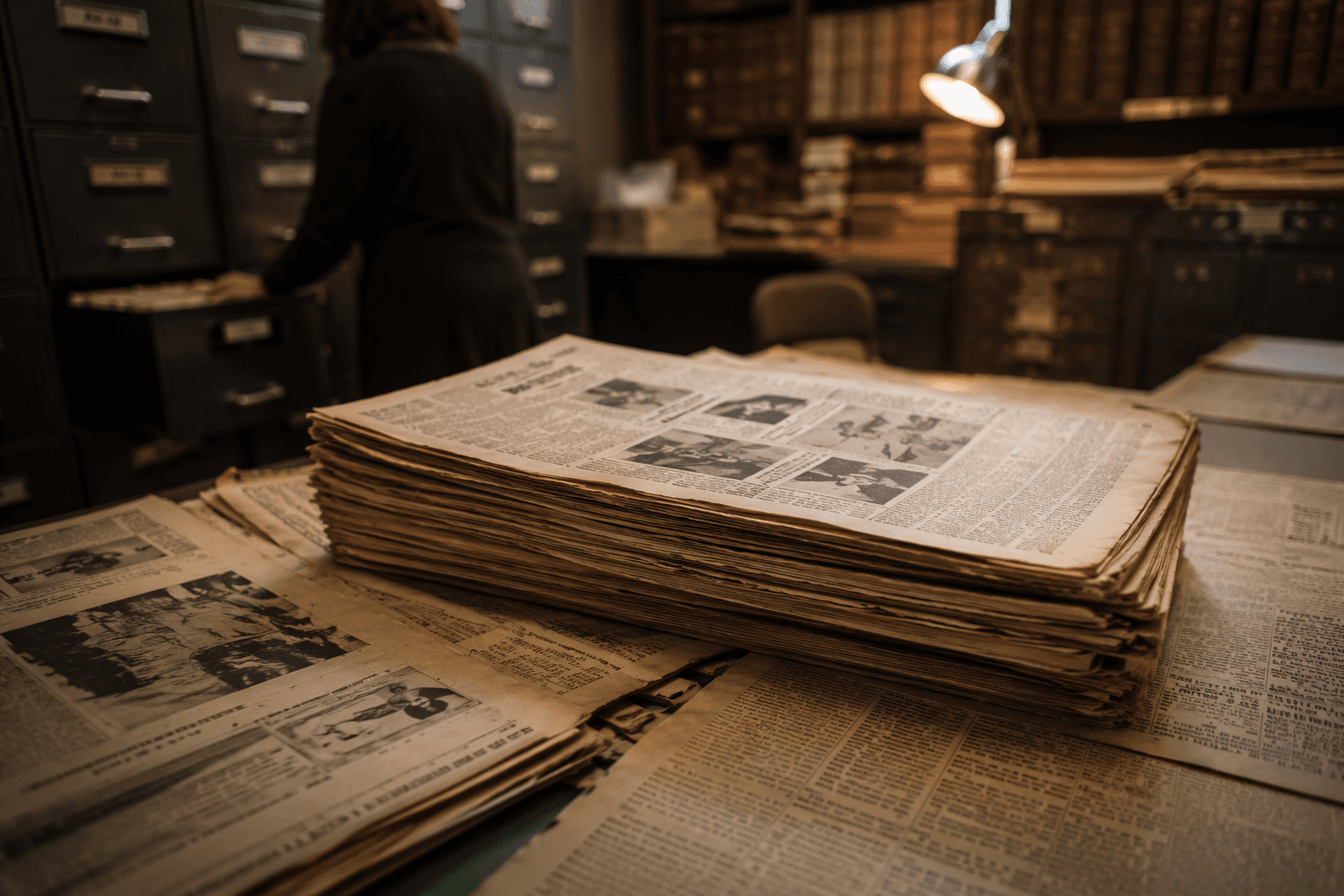
A surname, a long-gone storefront, a school program, or an obituary for a ranching ancestor can turn up in the Texhoma Times archive with a level of local detail that court records rarely capture. The paper ran weekly from 1904 to 1983, and its surviving pages now give Texas County readers a direct line into the everyday record of a border town that never fit neatly inside one county box.
What the archive preserves
The Gateway to Oklahoma History says the Texhoma Times was established by J. E. Kerr in September 1904 and published on a weekly basis through 1983. Newspapers.com lists 22,760 searchable pages from 1904 to 1981, which makes the archive unusually deep for a small-town weekly and especially useful for family history work. That scale matters because a local paper like this did not just report the big events; it recorded the repeated details that define a place.
Those pages can surface the names and dates that descendants are often trying to recover. School events, church services, merchant advertisements, crop reports, graduations, marriages, obituaries, and election notices were the kind of community news a weekly paper handled routinely. In a town the size of Texhoma, those notices often tell you more about how a family lived than a courthouse ledger ever could.
Why Texhoma produced a border-town paper
Texhoma sits in southern Texas County, Oklahoma, at the junction of State Highway 95 and U.S. Highway 54, a location that explains why its newspaper carried more than a strictly county-centered identity. The Gateway to Oklahoma History notes that the Texhoma Times covered Texhoma in both Beaver County and Texas County, which makes the paper a record of a community shaped by movement across boundaries rather than by them. That makes the archive especially valuable for anyone trying to understand how families, businesses, and institutions operated on both sides of the line.
The town’s own history shows why that border identity runs so deep. The Town of Texhoma says a post office named Loretta was established on May 7, 1898, then moved in 1901 and renamed Texhoma in anticipation of the railroad. The name itself refers to the community’s location on the state line, so the paper’s coverage of the town naturally reflects a place built around the meeting point of Oklahoma and Texas rather than around a single county seat.
Texas County’s own history adds another layer. The Oklahoma Historical Society says Texas County was created at 1907 statehood from Beaver County, which had been the Public Land Strip. That means the newspaper began just before statehood and then continued through a period when county lines, rail connections, and local identity were all being redrawn. For researchers, that timeline turns the Texhoma Times into more than a newspaper archive. It becomes a record of the county’s transition from frontier-era arrangements into the shape readers recognize today.
What you can uncover in the pages
For family researchers, the most useful discoveries are often not dramatic at first glance. A small ad for a hardware store can pin down where a relative worked. A marriage notice can confirm a maiden name. A school column can show which children were in town at the same time, and an obituary can connect one branch of a family to another through named survivors, church ties, and burial information.
The archive is also strong for tracing vanished businesses and local institutions. If a grocery, elevator, café, bank, or implement dealer operated in Texhoma, the weekly paper may have carried its advertisements, openings, closures, or ownership changes. The same is true for schools, churches, and civic groups that announced meetings, plays, graduations, fundraisers, and election results in the local paper long before those details were preserved elsewhere.
A practical search often starts with the names families already know, then moves outward to the places they lived and the organizations they joined. Useful leads include:
- Surnames, including spelling variations that changed across generations
- Business names, especially old merchant ads and service stations
- School terms such as graduation, play, contest, or superintendent
- Church and social notices, which often list attendees, officers, and visiting relatives
- Obituaries, marriage announcements, and election notices, which can connect people across family lines and town records
Because the paper covered both Beaver County and Texas County, it can also help explain why some family stories do not line up neatly with modern county geography. A relative may have lived, worked, worshiped, or gone to school in a community that crossed the state line in daily life even if later records place them in one county or the other. That is especially important in the Oklahoma Panhandle, where distance and transportation shaped daily routines as much as county boundaries did.
Why preserving small-town papers matters
Old weekly newspapers preserve the language of a place. They show how Texhoma described itself when the town was still tied to the railroad era, how local merchants reached customers, and how residents marked the seasons of farm life, school calendars, and community gatherings. Larger newspapers usually skipped those details, which is why a surviving weekly can become the most complete public memory a town has.
That is the enduring value of the Texhoma Times archive for Texas County. It captures the ordinary record of a border-town community that grew up on the state line, under the influence of railroad development, county change, and the long life of the Oklahoma Panhandle. For anyone tracing a family name, a vanished business, or a school event that shaped local memory, those 22,760 searchable pages are not just old news. They are the town’s working history, still readable line by line.
This article was produced by Prism’s automated news system from verified source data, official records, and press releases, then run through automated quality and moderation checks before publishing. The system is built and supervised by the people who set the standards it runs under. Read our full AI policy.
Did this article answer your question?