Wild Horse Lake, a local landmark tied to history and water law
Wild Horse Lake sits in northern Texas County near Hooker, a seasonal playa lake that has long been part of local ecology and regional history. The site also figures in Oklahoma water appropriation law, linking a violent 1888 county seat dispute to contemporary questions about water and property in the Panhandle.
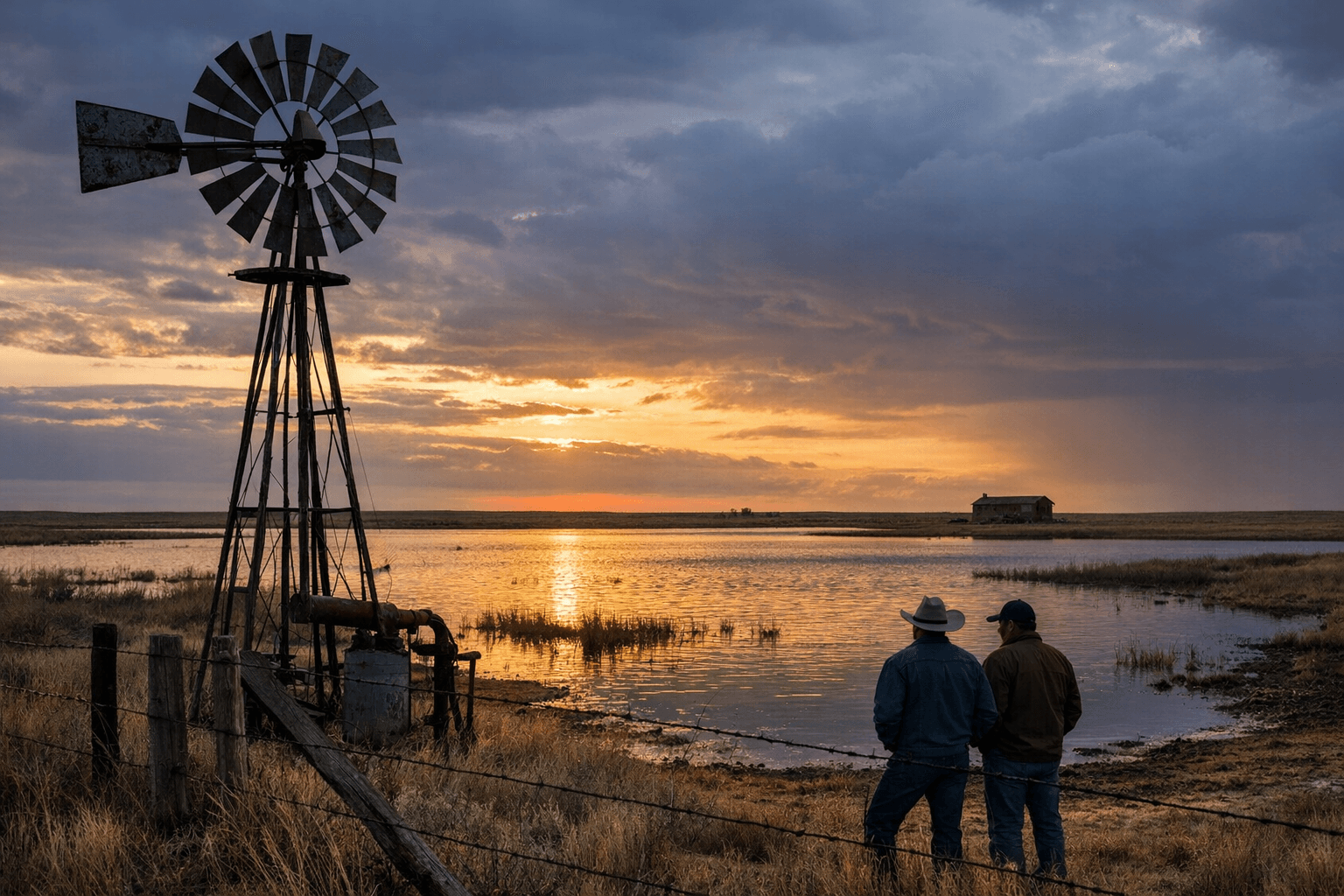
Wild Horse Lake, a seasonal playa lake west of Hooker and east of Hough just south of the Oklahoma and Kansas border off State Highway 136, is more than a roadside geographic feature. For residents of northern Texas County the shallow basin is a landscape marker, a wildlife resource during wet cycles, and a place tied to a notorious episode in the region s late nineteenth century history that continues to echo in legal debates over water use.
Playas are common across the Oklahoma Panhandle, filling with rain and runoff in wet seasons and supporting local ecology by providing habitat for migratory birds and concentrating recharge for shallow aquifers. Wild Horse Lake s periodic waters have long mattered to ranchers, wildlife watchers, and landowners who depend on seasonal moisture for grazing and local biodiversity.
The area around Wild Horse Lake was the scene in July 1888 of the Hay Meadow Massacre, a violent clash rooted in a bitter contest over county seat designation. At the time the killings occurred in what was known as Unassigned Lands or No Man s Land, a jurisdictional anomaly that complicated law enforcement and legal responsibility. That historical episode remains part of the collective memory of the Hooker area and is taught and recalled as an example of how territorial uncertainty shaped frontier conflicts.
Beyond history and habitat, Wild Horse Lake has a legal footprint. The lake and its environs have been referenced in Oklahoma case law concerning water appropriation, including citation in Depuy v. Hoeme, 1980 OK 26. Those legal links illustrate how a modest seasonal basin can intersect with long term disputes over water rights, property interests, and the rules governing use of scarce resources across the Panhandle.
For Texas County residents these connections matter on the ground. Understanding the lake s seasonal behavior is relevant to grazing plans and wildlife management. The site s historical significance informs local heritage and the teaching of regional history. And the lake s presence in court decisions underscores the larger policy conversations about water allocation that continue to shape land use in the semi arid plains.
Wild Horse Lake therefore stands as a point where ecology, history, and law meet, reminding the community that local landmarks can carry legal and cultural weight across generations.
This article was produced by Prism’s automated news system from verified source data, official records, and press releases, then run through automated quality and moderation checks before publishing. The system is built and supervised by the people who set the standards it runs under. Read our full AI policy.
Did this article answer your question?