Blue Mountain Crossing lets visitors walk Oregon Trail history near La Grande
Blue Mountain Crossing turns Oregon Trail history into a walkable summer stop near La Grande, with accessible trails, wagon ruts, and picnic space.
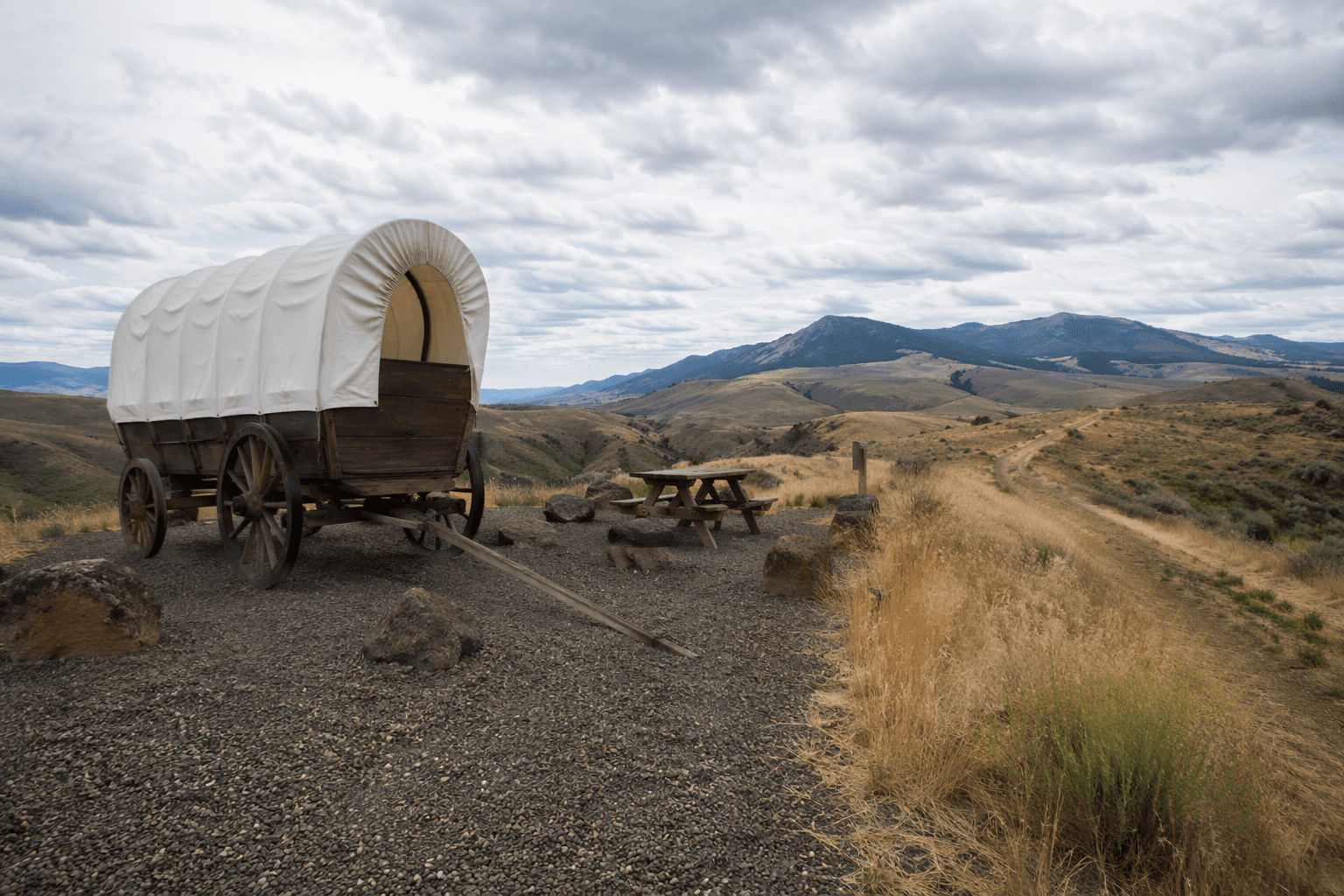
Blue Mountain Crossing gives Union County one of its most practical summer history stops: a place where you can still walk the Oregon Trail, see the ground cut by wagon wheels, and pair the visit with a picnic. Just west of La Grande off I-84 at exit 248, the Oregon Trail Interpretive Park at Blue Mountain Crossing works as both a quick roadside outing and a deeper look at how emigrants crossed the Blue Mountains on the way west.
What you can actually experience
The main draw is physical evidence you can see without having to imagine it from behind glass. The site preserves wagon-wide depressions, called trail swales, along with scars on ponderosa pine trees made by passing wagons more than 150 years ago. Those details make the stop different from a standard museum visit because the history is still on the land itself, on a forested ridge where the trail remains visible.
A half-mile wheelchair-accessible interpretive loop and other paved paths make the park easy to navigate, and the U.S. Forest Service has designed it as a combination interpretive trail and picnic area. Large parking areas, drinking water, restrooms, and interpretation panels mean the site can handle a family outing without much advance planning. Bicycles and equestrian use are allowed on the trails, which adds to its appeal as an outdoor stop rather than a single-purpose exhibit.
Why the place matters in Oregon Trail history
Blue Mountain Crossing sits in a section of eastern Oregon that carried major weight in the overland migration era. The Oregon Trail was one of the largest mass migrations in American history, with an estimated 300,000 to 400,000 travelers using the roughly 2,000-mile route between 1840 and 1860. The Blue Mountains were the last major mountain range emigrants had to cross before reaching the Willamette Valley, which is part of why this stretch of trail still resonates.
That context gives the La Grande site more than local charm. The park marks a hard point in the journey, where progress slowed and the landscape itself became part of the story. The National Park Service describes the area as a place where visitors can walk along Oregon Trail swales, and that direct contact with the trail is what makes the stop especially compelling for families, students, and road-trippers who want history they can actually touch.
How it fits into a Union County outing
La Grande, the seat of Union County, sits in the Grande Ronde Valley in the eastern foothills of the Blue Mountains, and the Oregon Trail passed through that valley. The city’s first settlement in 1861 grew out of immigrant traffic that had originally been headed for the Willamette Valley, so Blue Mountain Crossing is not a detached heritage site. It is tied to the region’s early settlement story and to the route that helped shape the county’s development.
For visitors coming from town, the location keeps the trip simple. The park is just west of La Grande and reached from I-84 through exit 248, then local roads. That makes it a low-cost outing with a high return: you can get out of the car, walk the interpretive loop, read the panels, and make the stop part of a larger afternoon in Union County without needing a full-day itinerary.
Seasonal timing and what to expect
This is best treated as a warm-season destination. Travel Oregon says the park is generally open weekends and holidays from May to October, and another Travel Oregon listing describes it as generally open late May to early September. The overlap makes one point clear: this is not a winter-oriented site, and visitors should plan around the months when the park is most likely to be open and active.
The seasonal rhythm also fits the park’s programming. Living-history re-enactments are periodically offered on holidays, giving the site an occasional event feel without turning it into a one-date attraction. Travel Oregon also notes a settlement-era logging exhibit, which widens the story beyond the Oregon Trail alone and gives visitors another layer of local history to explore while they are there.
Why it feels more engaging than a museum visit
The difference is in the setting. Instead of reading about the Oregon Trail in a gallery, visitors at Blue Mountain Crossing stand on the same land where wagons passed, where trail swales remain visible, and where scarred trees still mark the route. The interpretive panels help explain what happened there, but the terrain does much of the work on its own.
That combination of open-air history, easy access, and picnic amenities makes the site especially well suited to families and visitors looking for a low-cost outing near La Grande. It functions as a short educational stop, a scenic pause along the road, and a place to understand how the Oregon Trail moved through Union County in a way that feels immediate. In a county shaped by the route west, Blue Mountain Crossing turns a distant migration story into something you can walk through in a single visit.
This article was produced by Prism’s automated news system from verified source data, official records, and press releases, then run through automated quality and moderation checks before publishing. The system is built and supervised by the people who set the standards it runs under. Read our full AI policy.
Did this article answer your question?