La Grande Air Quality Worsens as DEQ Report Tracks Rising Smoky Days
La Grande recorded zero unhealthy air days in 2025, but DEQ's decade-long data shows wildfire smoke seasons growing longer and starting earlier statewide.

La Grande escaped unhealthy wildfire smoke entirely in 2025, recording zero days in the four worst air quality categories tracked by the Oregon Department of Environmental Quality. But the relief is tempered: a new DEQ report released this month shows the long-term trend pointing firmly in the wrong direction.
The DEQ's 2025 Wildfire Trends Report, summarized for the La Grande Observer by reporter Isabella Crowley on March 18, found that last year's cooler, wetter fire season kept smoke impacts well below recent peak years across most of Oregon. In 2025, Bend recorded just two unhealthy air days, Klamath Falls and Medford each recorded one, and La Grande, Portland, Salem, and Eugene recorded none. None of those communities saw air quality rise above the "unhealthy for sensitive groups" threshold, the fourth-worst category on DEQ's six-tier Air Quality Index.
"The air quality effects from the 2025 wildfire season were minimal compared to the trends we've seen during the last 10 years," said Ali Mirzakhalili, DEQ's air quality administrator. "It was a cooler and wetter summer, and the fires were not close to cities and towns where we have our air quality monitors."
Many of the large fires burned far from populated areas and, in at least one case, far from DEQ's air monitoring stations, making impacts harder to detect. While overall fire activity stayed below average statewide, long-range smoke from Idaho and Washington pushed several mid-July intrusions into northeastern and north-central Oregon, the region that includes Union County. The DEQ report notes that a map snapshot from that period made communities like Ontario and La Grande appear inundated with smoke, though over the full 24-hour measurement window, central Oregon communities including La Pine and Bend recorded higher average air quality index readings on August 29, 2025.
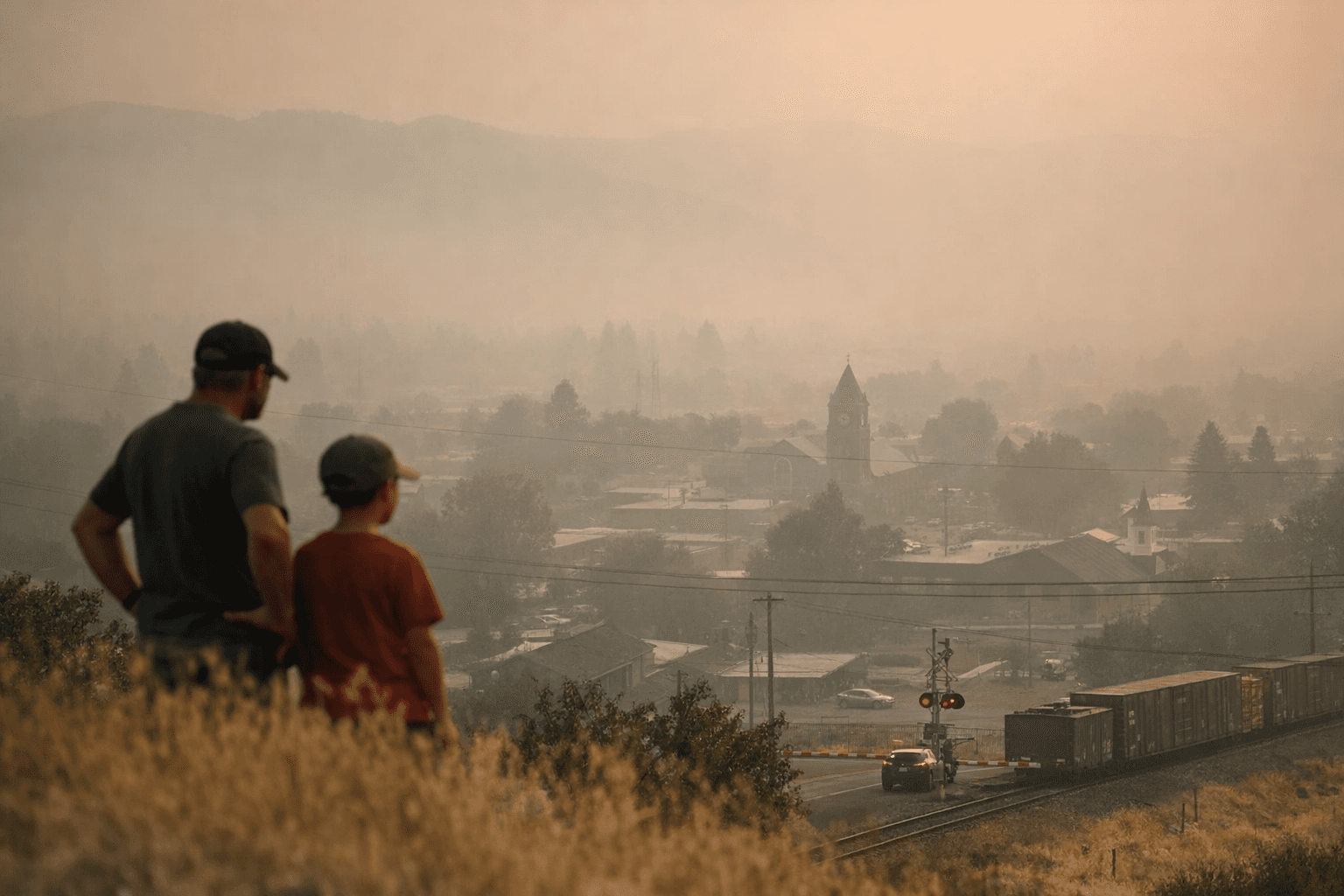
Union County also appeared on a DEQ list of counties that experienced intermittent smoke during the 2025 wildfire season without triggering a formal air quality advisory. Baker, Umatilla, Wallowa, and Wasco counties shared that designation. DEQ noted that days with smoke that degraded air quality temporarily but did not reach the advisory threshold are not captured in the report's advisory tables, meaning some smoke exposure in the region went uncounted in official tallies.
A structural gap compounds that undercounting. DEQ acknowledged it is not staffed to respond to smoke impacts that occur over weekends and holidays, meaning communication about wildfires that start or worsen during those periods must come solely from local agencies.
The cooler 2025 season masks a decade of deterioration. Mirzakhalili noted that the report allows side-by-side comparison of two 12-year cycles, 2000 to 2012 and 2013 to 2025, and the longer-term trend shows a significant increase in days registering as unhealthy for sensitive groups or worse. "Nevertheless, the overall trend in the data during the past 10 years is clear in this report," he said. "Wildfire seasons have been starting earlier and lasting longer, causing more smoke-filled days for Oregonians to navigate."
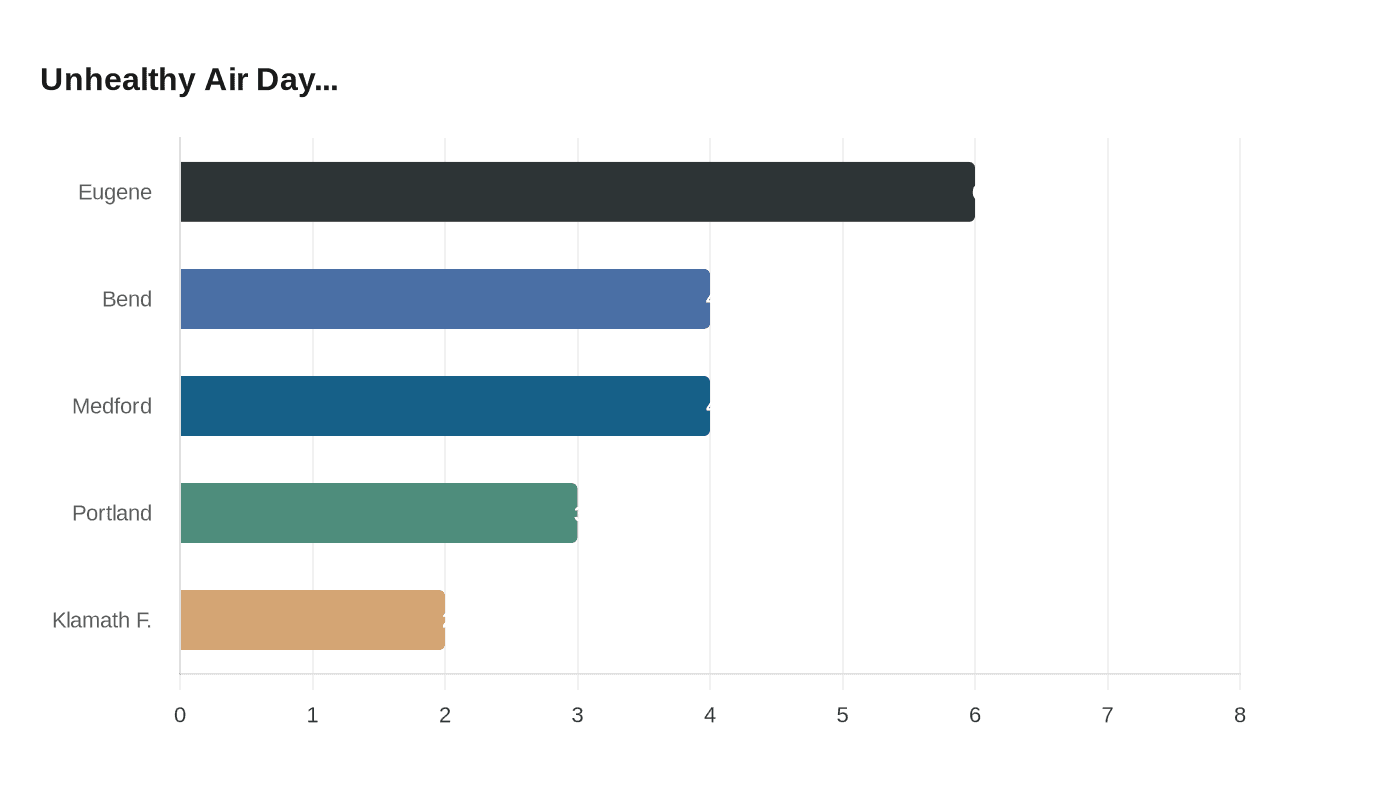
The contrast with 2020 underscores the stakes. That year, Oregon set records for acres burned in a single wildfire season, and Eugene logged six hazardous air days, while Bend and Medford each recorded four, Portland three, and Klamath Falls two. Those cities had previously set their pollution records during the 2017 wildfire season.
DEQ said it is working to reduce future smoke exposure through cross-agency prescribed fire efforts, building on a Joint Statement of Intent to Cooperate on Prescribed Fire and Smoke Management signed in February 2024. Lessons from the West Bend Prescribed Fire Pilot are being evaluated and fed into a 2026 smoke management rule review being conducted jointly with the Oregon Department of Forestry and the Oregon Health Authority.
The low snowpack this winter is already drawing scrutiny. "Furthermore, with the small amount of snow we've seen so far this winter, we need to be prepared for a 2026 wildfire season that realigns with these trends," Mirzakhalili said.
This article was produced by Prism’s automated news system from verified source data, official records, and press releases, then run through automated quality and moderation checks before publishing. The system is built and supervised by the people who set the standards it runs under. Read our full AI policy.
Did this article answer your question?