La Grande planning page lays out city growth and housing roadmap
La Grande’s planning page shows the documents that decide where housing, jobs, and future growth can go. It is the best early warning system before a subdivision, zoning change, or boundary fight reaches a vote.
La Grande’s planning page is the first place to look when a subdivision, zoning change, or growth boundary fight starts to take shape. It pulls the city’s long-range plan, housing analysis, employment-land study, and development code into one public roadmap, so residents can see which rules are steering the next round of growth. For anyone watching land use in Union County, it shows where city decisions begin before they harden into permits or ordinances.
Why this page matters
The value of the page is not just that it stores documents. It shows how La Grande connects big policy questions to the day-to-day rules that govern land. The city describes its Comprehensive Plan as a 20-year vision, and says that vision is carried out through the Land Development Code ordinance. That matters because the plan reaches into public involvement, open space, historic resources, natural hazards, economic development, housing, water and sewer, and transportation.
That is the institutional backbone behind local growth decisions. If a project seems to appear suddenly, the real groundwork usually started here, in the city’s planning materials, long before a hearing notice or council vote. The page is useful precisely because it gathers the documents that turn broad policy into actual land-use outcomes.
The documents that shape what gets built
The page groups together the city’s core planning files: the Comprehensive Plan, the Goal 9 Economic Opportunities Analysis, the draft Goal 14 Urban Growth Boundary Expansion Analysis, the Housing Needs Analysis, the Housing Production Strategy, and the Land Development Code. Each one plays a different role, and each one matters when residents want to understand how much land is available, what kind of development is encouraged, and where the city may expand.
The Comprehensive Plan sets the policy framework. The Land Development Code is where those policies become rules that affect subdivisions, partitions, setbacks, densities, and other on-the-ground decisions. The housing documents address whether La Grande has enough places for the people who already live here and the workers the city expects to attract. The employment-land documents show how much room the city thinks it needs for commercial and industrial growth.
For residents, that means the page is more than background reading. It is the clearest way to see whether a proposal is consistent with the city’s stated direction or whether it requires a change in policy first.
What the Goal 9 analysis says about job growth
La Grande’s Goal 9 work is the clearest example of how one planning document can trigger the next. The city contracted with Points Consulting and Nexus Planning Services in 2022 for the Economic Opportunities Analysis, and the 2024 ordinance updating the city’s Goal 9 chapter says the work was completed in October 2023. The analysis projected net job growth of +7.5% to +12% for 2023 to 2043.
That same analysis initially forecast a need for 31 additional acres of industrial land and 28 additional acres of commercial land. When qualitative factors were added, the need rose sharply to 121 acres of industrial land and 63 acres of commercial land. That is the policy chain that matters: once the city identified an employment-land need, state Goal 14 rules required it to look for ways to satisfy that need. That is what pushed La Grande into the urban growth boundary discussion.
In practical terms, this is the kind of document neighbors should watch when a city starts talking about growth. It tells you whether the city believes it needs more room for businesses, warehouses, factories, and commercial services, and it sets the stage for where expansion pressure will land.
Where the boundary discussion went
La Grande’s draft Goal 14 analysis tested lands within roughly 1-mile and 1.5-mile radii around the city. The initial screening found six possible expansion areas along the north, east, and south edges of La Grande. After considering water and sewer service availability and street infrastructure capacity, the list narrowed to two final areas south of La Grande.
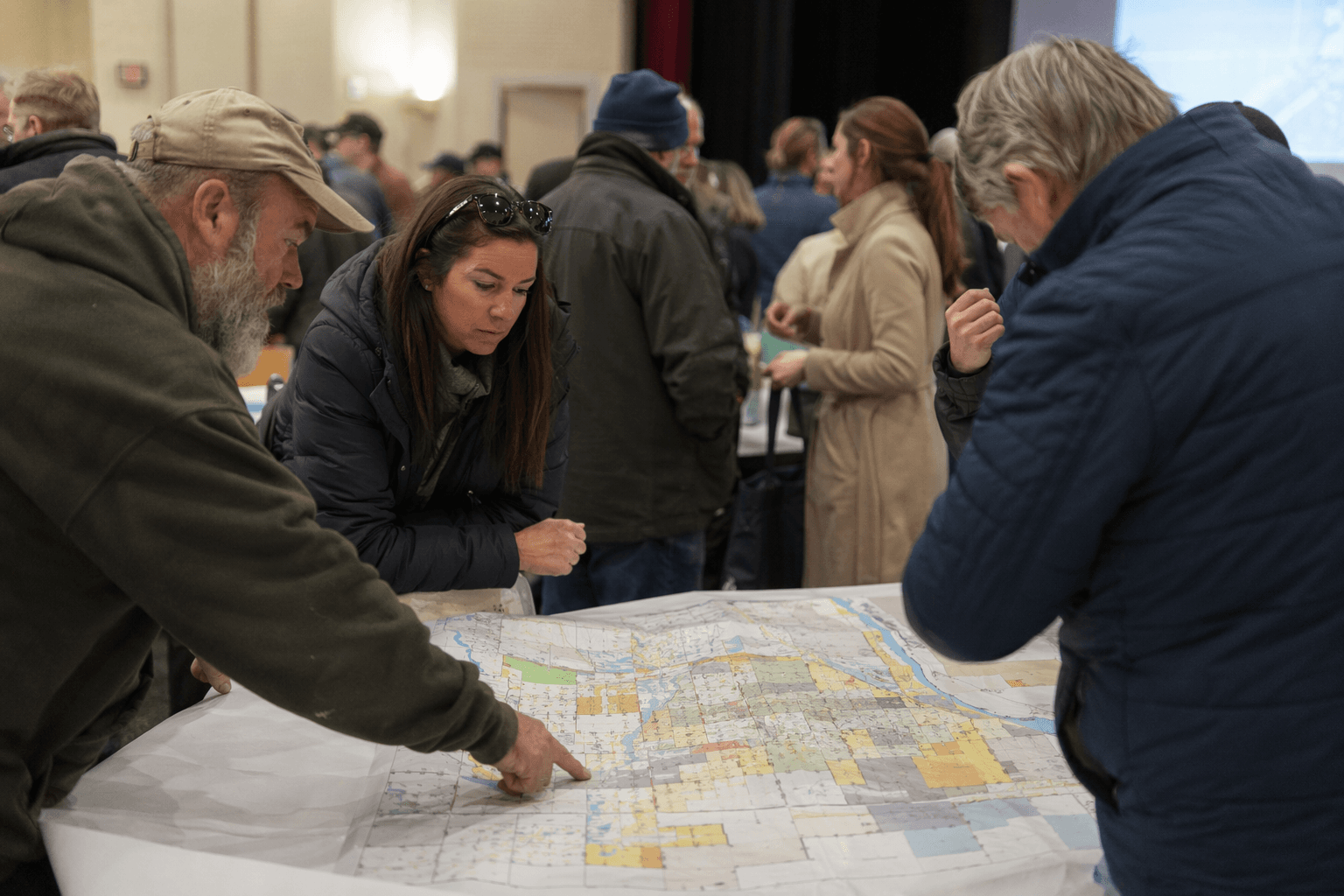
Those two areas held 148.7 acres of commercial land and 215.4 acres of industrial land, more than enough to cover the city’s employment-land need. The study was completed in January 2025, and the city said it did not recommend moving forward with a boundary expansion because property owners in the study area were not interested.
The public process around that work also matters. The Planning Commission hearing was scheduled for April 8, 2025, and the City Council hearing was scheduled for May 7, 2025, both at City Hall, 1000 Adams Avenue in La Grande. For people tracking development pressure, those dates marked the point when the study moved from technical analysis into public decision-making.
Housing is the other half of the equation
The city’s housing documents show why planning is not only about where businesses go. La Grande’s Housing Needs Analysis covers the 2019 to 2039 period, and reporting on the 2019 analysis said the city needed about 800 new housing units over 20 years to accommodate a projected increase of 1,392 residents. That works out to roughly 40 new units a year.
The Housing Production Strategy, developed in 2021 with community and local stakeholders, is required by Oregon Administrative Rule 660-048-0050. Cascadia Partners said La Grande was one of four statewide pilot projects testing the new requirements under HB 2003, which places the city’s housing work inside a larger Oregon policy shift. The strategy includes current and future housing needs, the factors affecting housing production, housing-related equity concerns, engagement summaries, and recommendations for future engagement.
That combination makes the housing documents especially important for readers watching affordability, density, and neighborhood change. If the city says it needs more housing, these are the papers that explain how much, what kind, and how the city plans to get there.
Why the code itself deserves attention
The Land Development Code is where all of this becomes real for property owners and applicants. A 2026 code-amendment process tied to a DLCD technical-assistance grant and an audit of residential land-use codes proposed making subdivisions and major land partitions administrative decisions. It also proposed converting the variance process into over-the-counter adjustments.
That shift matters because it changes how quickly projects move and how much of the decision-making happens before a public hearing. For residents, it means the most important questions may surface earlier, in the code language itself, not just when a project lands on a council agenda. For applicants, it changes the rules of the game before a site plan is drawn.
What Union County readers should watch
La Grande’s planning page is useful because it gives the public a single place to track the documents that shape the city’s next decade of growth. If you want to understand a proposed subdivision, a zoning change, or a fight over land at the edge of town, start with the Comprehensive Plan, the Goal 9 analysis, the Goal 14 boundary study, the housing documents, and the Land Development Code.
That same habit applies beyond city limits. Union County is separately updating its Comprehensive Plan in 2026, and the county planning office at 1001 Fourth Street, Suite C, in La Grande is another place where growth policy takes shape. In a county where land, housing, and infrastructure decisions are tightly linked, the planning page is the clearest public record of what La Grande thinks should happen next, and what rules will decide it.
This article was produced by Prism’s automated news system from verified source data, official records, and press releases, then run through automated quality and moderation checks before publishing. The system is built and supervised by the people who set the standards it runs under. Read our full AI policy.
Know something we missed? Have a correction or additional information?
Submit a Tip