ODOT Crews Deploy On-Site Salt Brine System to Boost Eastern Oregon Winter Road Safety
ODOT crews in La Grande now make salt brine on-site, cutting refill runs and speeding pre-treatment on I-84 and U.S. 30 before winter storms arrive.
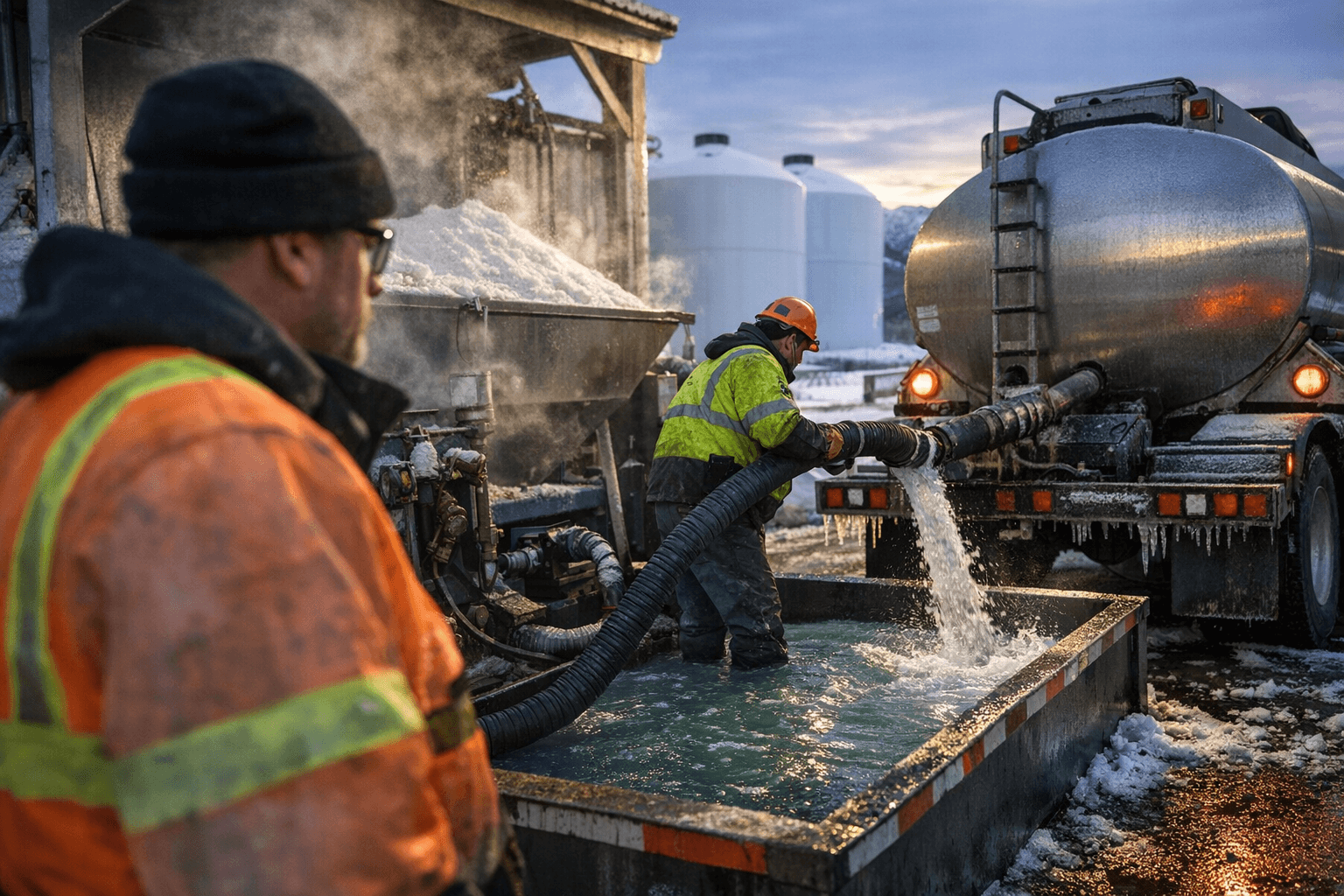
Oregon Department of Transportation maintenance crews serving the La Grande area have deployed an on-site salt brine manufacturing system that lets them mix and load liquid brine at their work sites, cutting turnaround time for truck refills and improving the ability to pre-treat roads on Interstate 84 and U.S. 30 before winter storms arrive.
The system eliminates the need to haul pre-mixed liquid from centralized fill stations. Manufacturers of on-site brine makers cite measurable gains: lower total salt consumption for the same anti-icing coverage, faster response times, and reduced labor associated with moving and loading bulk salt materials.
The operational advantage matters most in rural eastern Oregon, where long stretches of highway and limited overnight crew capacity have traditionally made storm response slower than in urban corridors. Liquid brine bonds to pavement more effectively than granular salt and works preventively, stopping ice from forming before it bonds to the road surface rather than treating it after the fact. That distinction carries real weight on I-84 and connecting state routes, where a single closure can delay freight, commuters, and emergency vehicles serving Union County communities.
ODOT characterized the brine maker as part of routine modernization of winter maintenance practices. Highway departments across the country have moved in this direction, with experience showing that pre-treating with brine can reduce or eliminate the need for heavier granular applications once a storm is underway. Targeted pre-treatment also lowers total salt use, which can reduce runoff into roadside soils and waterways near the mountain and canyon sections common to eastern Oregon routes.
Drivers on I-84 and area state routes should continue following ODOT travel advisories, including reduced-speed requirements and chain laws when conditions call for them. The new brine-making capacity improves pre-treatment coverage but does not change traveler obligations during active winter weather.
This article was produced by Prism’s automated news system from verified source data, official records, and press releases, then run through automated quality and moderation checks before publishing. The system is built and supervised by the people who set the standards it runs under. Read our full AI policy.
Did this article answer your question?