Oregon makes fair livestock disease rules permanent for Union County events
Union County fair exhibitors will face 20-day registration, 90-day records and new isolation rules under Oregon’s permanent livestock disease standards.
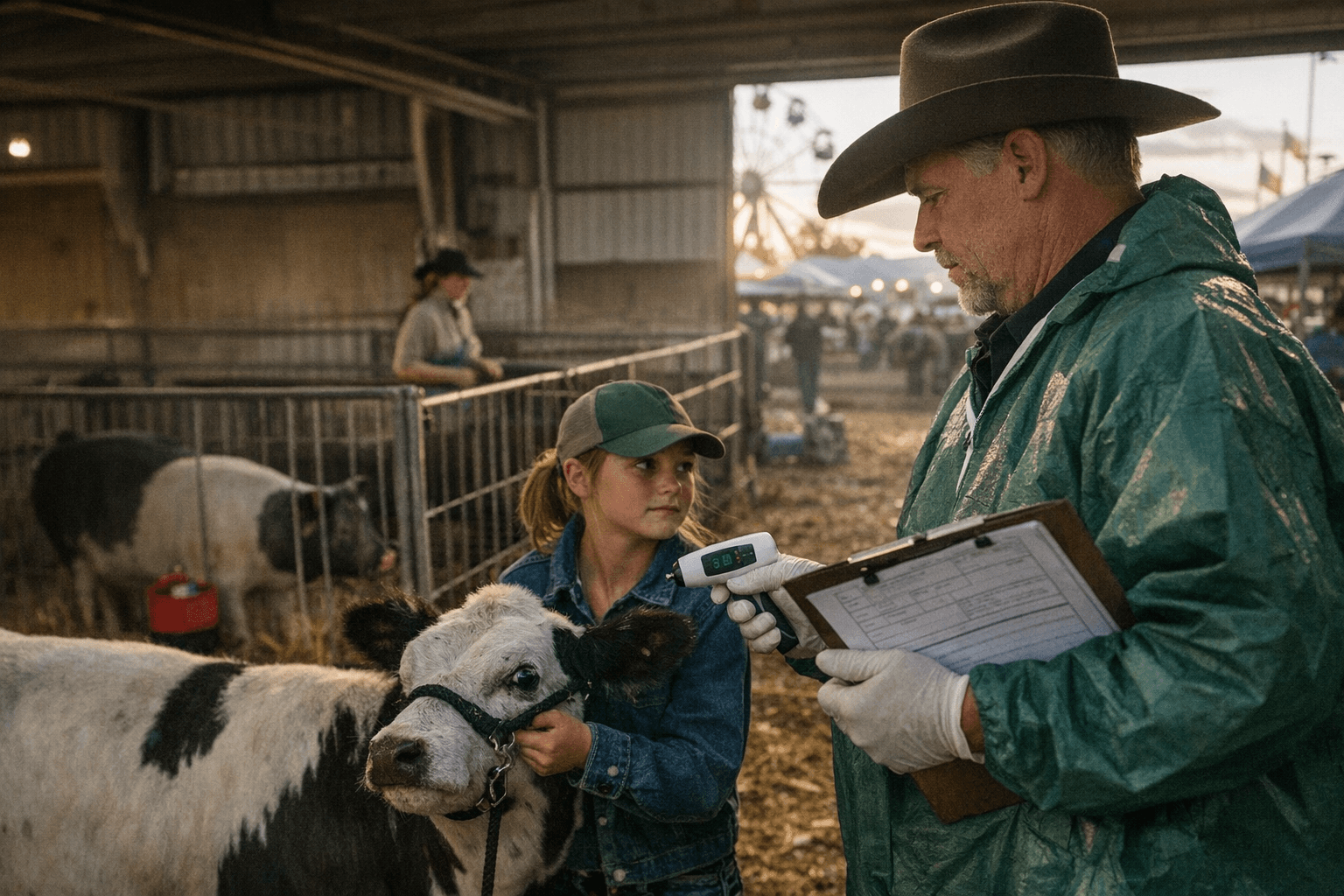
Union County’s Eastern Oregon Livestock Show will open under permanent state disease rules that require fair organizers, 4-H and FFA families, ranchers and livestock exhibitors to register ahead of time, track animals for 90 days and build biosecurity into every public exhibition.
The Oregon Department of Agriculture filed Permanent Administrative Order DOA 97-2026 on April 8, 2026, after approving the rules April 1. The department said the permanent standards are meant to keep animals that may be infected, exposed or carrying zoonotic or other important livestock diseases out of exhibitions, and to give officials the records and access they need for a rapid response if an outbreak is detected.
The rules follow emergency measures used during the summers of 2024 and 2025, when Oregon fairs were dealing with highly pathogenic avian influenza, rabbit hemorrhagic disease and equine herpesvirus. ODA says fairs that operated under those emergency rules completed their events without contributing to the spread of those diseases, which helped convince the agency to make the protocols permanent.
The new requirements cover all species, not just poultry, waterfowl, dairy cattle, swine and rabbits. ODA defines an exhibition as an event where livestock owned by two or more people are brought to one Oregon location for judging, competition, performance or display, and says a county fair can be registered as a single exhibition even if it includes multiple competitions. Each event must register with the agency at least 20 days before it opens, and that registration is free.
Organizers must keep records for 90 days after the exhibition, including animal identification, exhibitor contact information and the physical address where each animal was kept immediately before the event. Animals arriving from outside Oregon will need a Certificate of Veterinary Inspection. Organizers also must work with at least one veterinarian during planning, provide an isolation area for sick animals, and, for public exhibitions, set up hand-washing stations and warning signs. Influenza-susceptible animals must be housed separately, and lactating dairy cattle must be milked in areas that the public cannot enter or behind a 10-foot barrier.
ODA’s rulemaking process drew little public response. A hearing was held Jan. 16, 2026, written comments were accepted through Jan. 30, and the hearing officer reported just one comment, which was generally supportive. The report also included an opposing comment arguing that livestock exhibition rules should not be government-regulated.
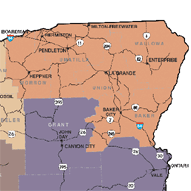
That matters in Union County because the Eastern Oregon Livestock Show, part of the community since 1908, is scheduled for June 7-14, 2026, and the Union County Fairgrounds is already juggling 2026 construction and closures, including a campground closure that began March 9. The new rules add paperwork and on-site biosecurity, but state officials say they also reduce the chance that a fair in Union becomes the next disease outbreak point.
This article was produced by Prism’s automated news system from verified source data, official records, and press releases, then run through automated quality and moderation checks before publishing. The system is built and supervised by the people who set the standards it runs under. Read our full AI policy.
Did this article answer your question?