Powder Valley-Union games highlight league race and community stakes
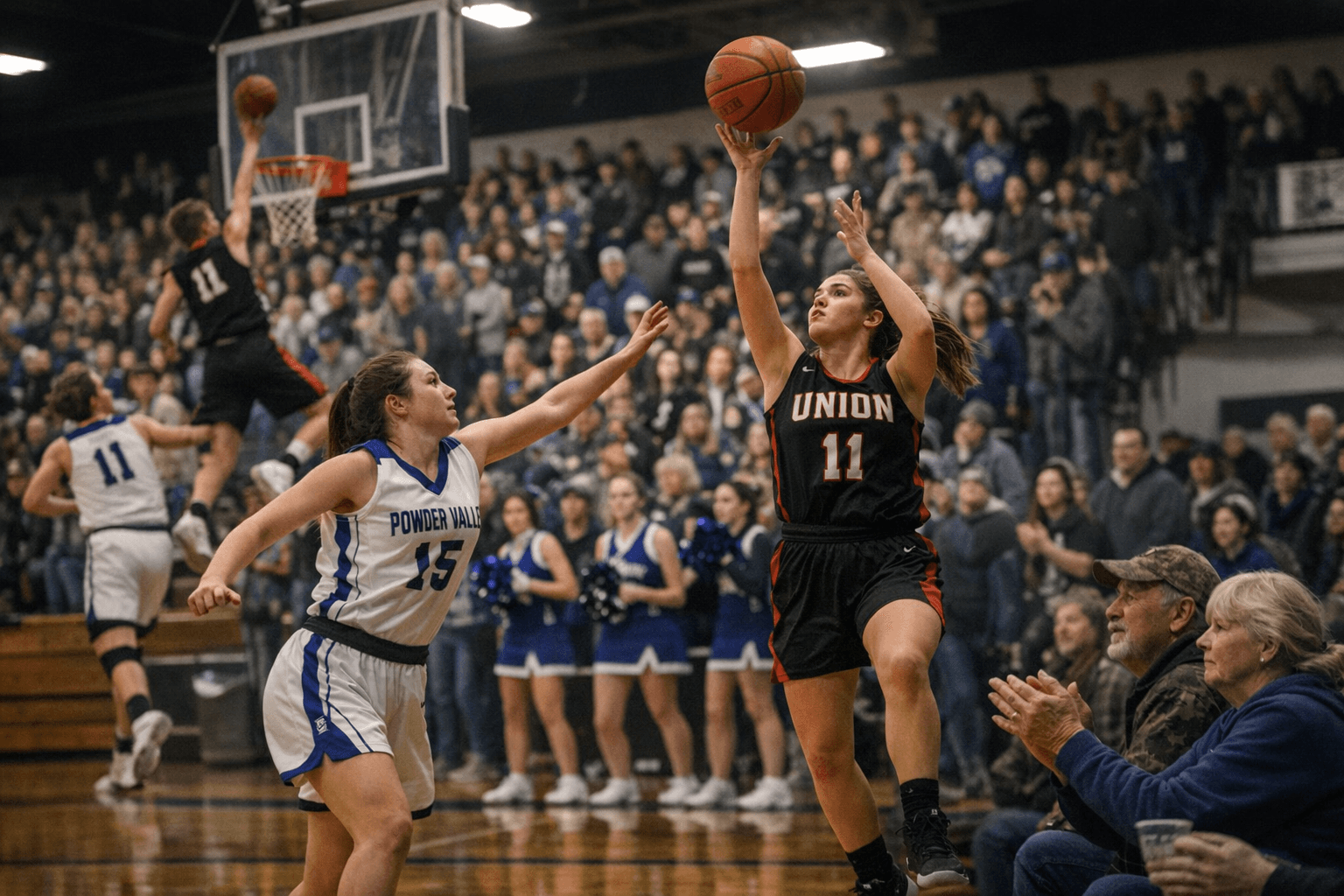
Powder Valley hosted Union on Jan. 16 with girls at 6 p.m. and boys at 7:30 p.m., a matchup that factors into Greater Oregon League and Old Oregon League standings and postseason seeding.

Powder Valley hosted Union on Friday, Jan. 16, with the girls tipping off at 6 p.m. and the boys scheduled for a 7:30 p.m. start. The weekend’s matchup is one of several Eastern Oregon contests that figure directly into Greater Oregon League and Old Oregon League standings, where every win and loss reshapes postseason seeding for Union County teams.
A regional preview of high school basketball across Eastern Oregon laid out league schedules and the slate of games that will determine which teams carry momentum into district and state play. For Union County fans, the Powder Valley-Union games are more than a Friday-night rivalry; they are key opportunities for teams to position themselves for late-season tournaments that matter for player exposure, school pride, and community fundraising.
High school athletics in Union County have long served as a focal point for small towns, bringing families together in gymnasiums and supporting booster programs that underwrite equipment and travel. That community role carries practical implications: travel distances across Eastern Oregon increase costs and time away from class, and league scheduling decisions can amplify those burdens for rural programs. League outcomes also affect the number and timing of postseason travel, which strains school transportation budgets and household schedules alike.
Public health and safety remain part of the event calculus. Indoor events draw crowds that can concentrate respiratory illnesses in close quarters; schools and districts set their own policies for tickets, capacity, and health guidance. Fans planning to attend should check their schools’ athletics pages for the latest ticketing and safety information, and consider staying home if feeling ill to protect players and other supporters.
From a social equity perspective, schedules that require frequent long-distance travel place disproportionate strain on lower-income families and smaller programs with tight budgets. Community leaders and athletic directors face the task of balancing competitive fairness with logistical realities. As the Greater Oregon League and Old Oregon League grind toward the season’s midpoint, those scheduling and funding questions will shape which Union County athletes get the chance to compete on larger stages.
For local readers, the immediate takeaway is practical: these games directly affect postseason positioning and are opportunities to support neighborhood athletes. Longer term, the season underscores systemic questions about how rural schools share costs for travel and how leagues can structure schedules to reduce inequities. Expect league standings to continue evolving through January and February, and watch district announcements for postseason seedings and regional travel plans.
This article was produced by Prism’s automated news system from verified source data, official records, and press releases, then run through automated quality and moderation checks before publishing. The system is built and supervised by the people who set the standards it runs under. Read our full AI policy.
Did this article answer your question?