Union County nonprofits share $58,000 in Oregon Community Foundation grants
Three Union County nonprofits and one in Enterprise are splitting $58,000, money meant to keep staffing, programs and buildings going.
Three Union County nonprofits and one neighbor in Enterprise are splitting $58,000 in Oregon Community Foundation grants, a modest sum that is meant to keep day-to-day work moving rather than bankroll a new project. Statewide, the foundation awarded 258 grants worth nearly $5.2 million across Oregon’s 36 counties, with about $4.77 million flowing through its Community Grants program for general operating support.
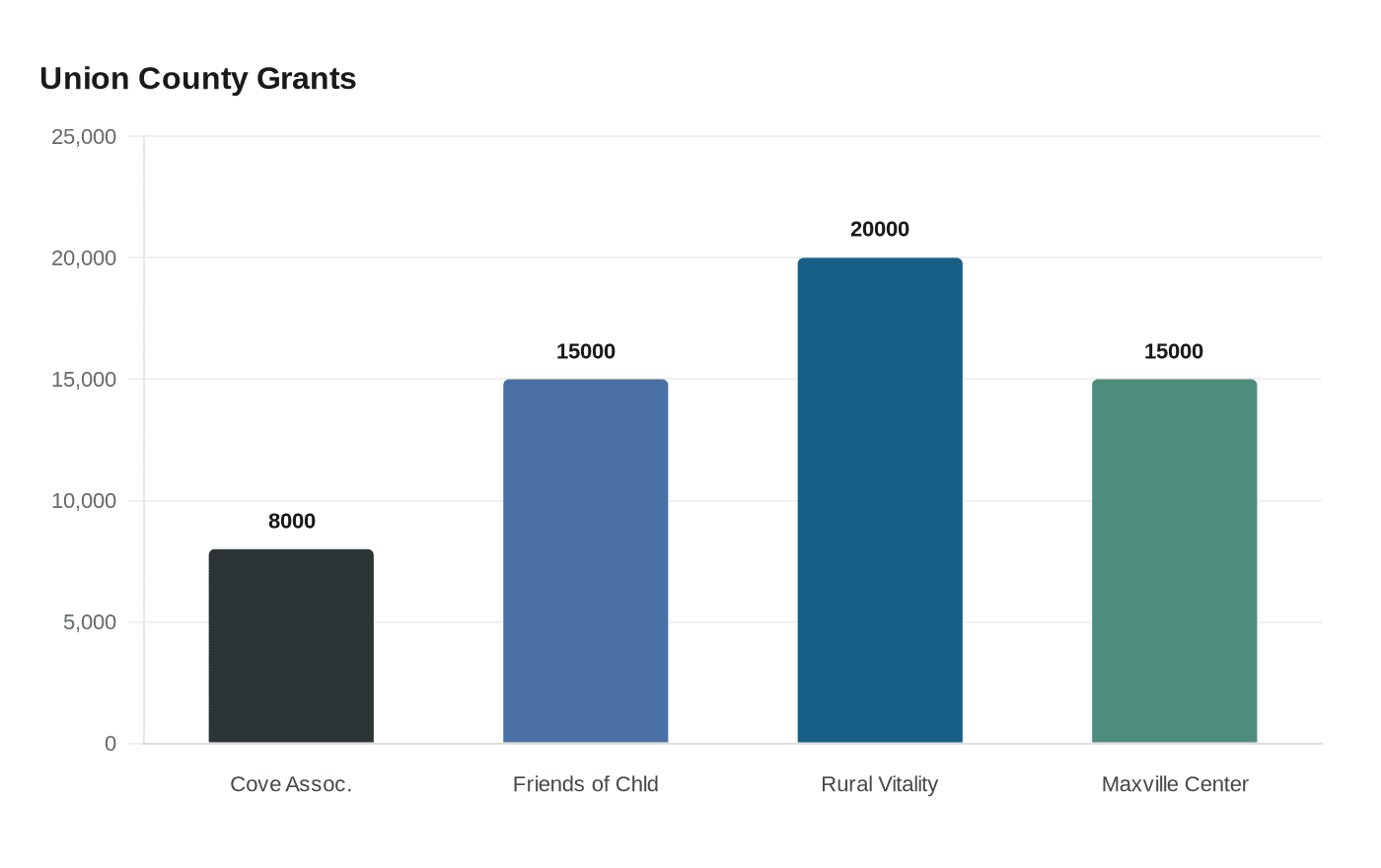
The Union County recipients are Cove Community Association, $8,000; Friends of the Children - Eastern Oregon in La Grande, $15,000; and Rural Engagement & Vitality Center in La Grande, $20,000. The fourth local award went to Maxville Heritage Interpretive Center in Enterprise, which received $15,000. Together, the Union County groups account for $43,000 of the regional total, while the broader Northeast Oregon award area reached $58,000.
That matters because Community Grants are flexible by design. Oregon Community Foundation says the money can go where it is needed most, including staffing, essential programming and the infrastructure that lets an organization keep serving. In practical terms, that means these grants are more likely to steady budgets, pay for core operations and cover repairs or program costs than to launch a big expansion. For small nonprofits in La Grande and Cove, the difference may show up in whether staff hours are cut, whether a program stays open, or whether a building fix gets delayed another season.
The foundation said the spring awards are intended to help nonprofits meet rising demand and support community-led solutions in both rural and urban areas. That statewide context is important in Union County, where local organizations often run on thin margins and outside grant money can determine how much service actually reaches residents in the months ahead. The check sizes are useful, but spread across four groups, they are still too small to solve the deeper funding gaps that keep rural nonprofits leaning on volunteers, patchwork budgets and constant fundraising.
This article was produced by Prism’s automated news system from verified source data, official records, and press releases, then run through automated quality and moderation checks before publishing. The system is built and supervised by the people who set the standards it runs under. Read our full AI policy.
Did this article answer your question?