High School Program Builds Advanced Manufacturing Skills for Students
Students at Mifflinburg Area High School completed a full-year course in Invention, Innovation and Product Development that combined hands-on materials work with engineering and design thinking. The program equips local young people with practical skills in polymers, ceramics, glass, metals, composites and biotechnology, offering a direct pathway into advanced manufacturing and related careers in Union County.
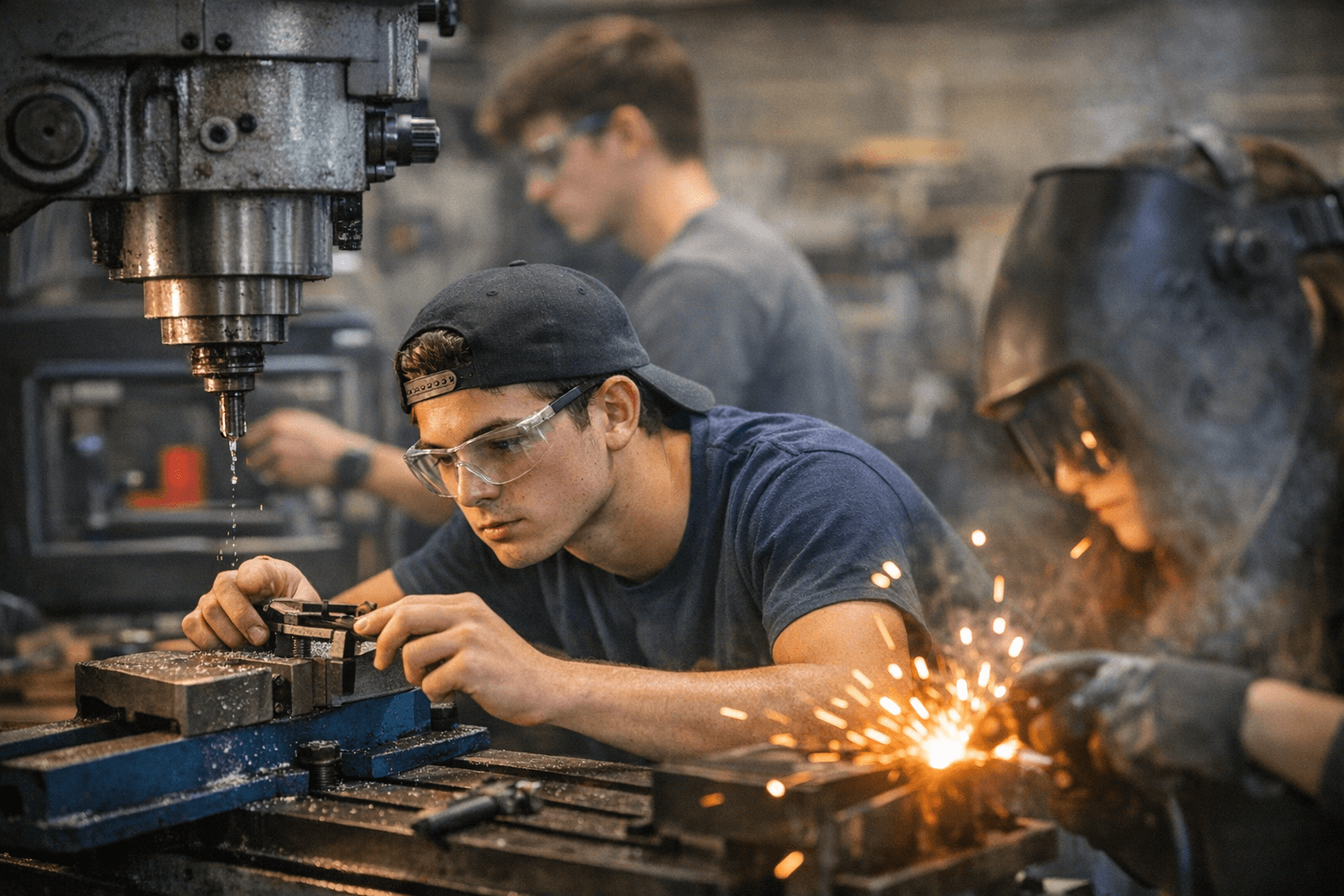
On Jan. 2, 2026, Mifflinburg Area High School students wrapped up a full-year course taught by Emil Stenger that put STEM concepts into tangible practice by designing and producing physical objects. The class, Invention, Innovation and Product Development, emphasized hands-on fabrication and materials science, asking students to move from concept to finished piece while applying engineering and design thinking to real projects.
Laboratory and shop work formed the backbone of the curriculum. Students spent sustained time working with polymers, ceramics, glass, metals and composite materials, learning not only how to manipulate those materials but also how choices of material affect cost, durability and manufacturability. The course also included a biotechnology unit that examined trout biology, giving learners exposure to bio-based applications and environmental science that can intersect with regional aquaculture and conservation work.
Instruction was deliberately career-oriented. Pupils fabricated pieces in class, developing portfolios of completed work and practical experience with tools and processes used in modern production environments. That emphasis positions graduates of the course to pursue multiple postsecondary paths: employment in local advanced manufacturing firms, apprenticeships, technical certificates, or further study at community colleges and universities that support material science and engineering programs.
For Union County, the program represents a local pipeline into sectors where employers increasingly seek workers with applied technical skills and familiarity with modern materials. By teaching students how to evaluate material performance, prototype devices and think through production constraints, the course reduces the time and expense employers face when upskilling new hires. It also broadens career awareness for students who may not otherwise see manufacturing and applied materials work as accessible options.
The initiative underscores broader trends in education and workforce development: tighter links between secondary curricula and industry needs, greater emphasis on experiential learning, and the growing importance of materials science and biotechnology in regional economies. Sustaining and expanding programs like this will require continued school investment and collaboration with local businesses and postsecondary institutions to create internships, equipment sharing and clear credential pathways. For families and employers in Union County, the course already offers a concrete example of how high school instruction can translate into workforce readiness and career mobility in advanced manufacturing and related fields.
Know something we missed? Have a correction or additional information?
Submit a Tip