Lewisburg’s walkable downtown blends history, business, and river access
Lewisburg’s downtown and riverfront work together as Union County’s everyday crossroads, but keeping that access open will take steady planning, upkeep, and flood-aware decisions.
Downtown Lewisburg is the county’s daily crossroads
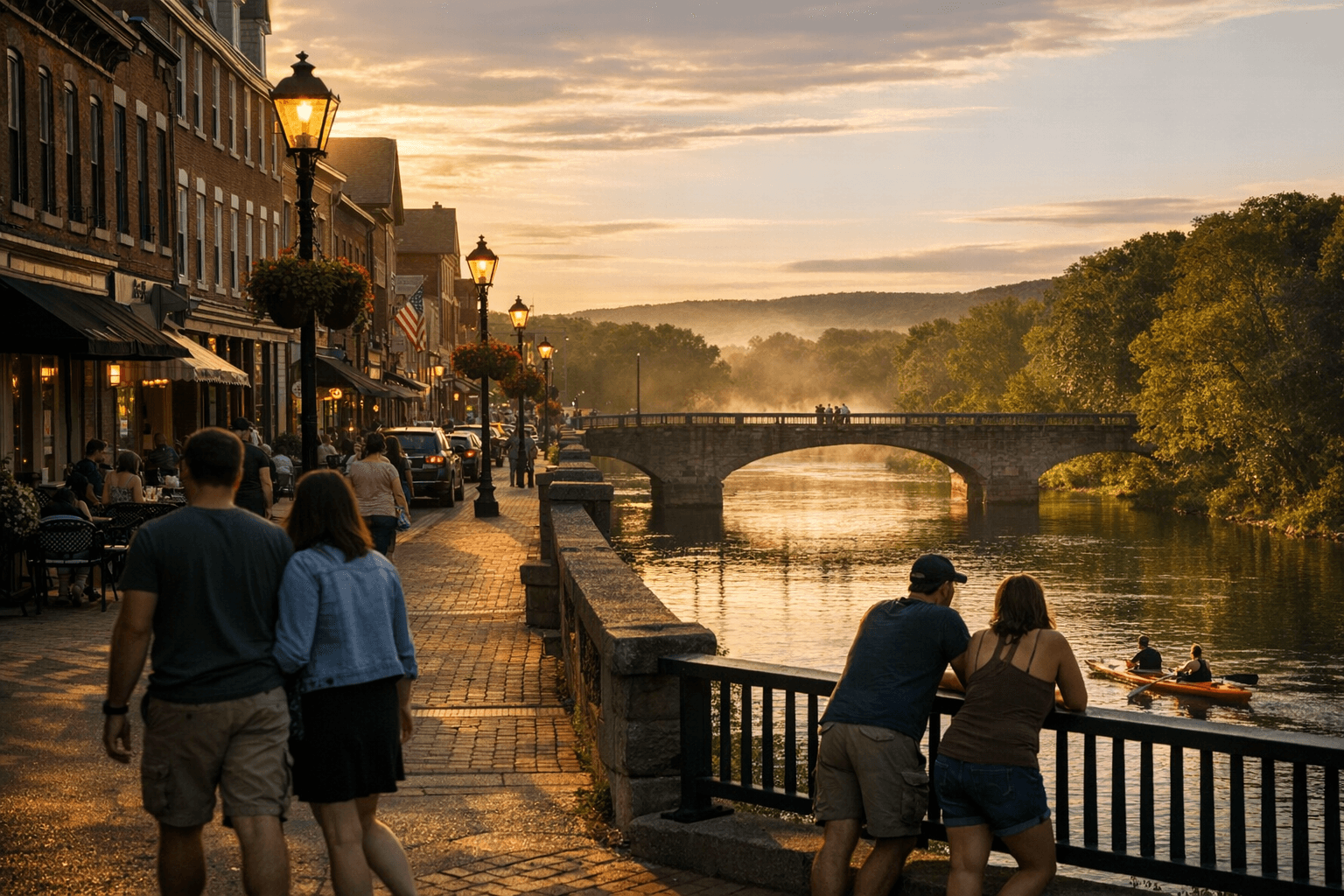
A lunch crowd on Market Street tells the story quickly. People step out for a sandwich, a bank errand, a meeting, or a quick stop at a shop, and the whole block still feels small enough to walk without losing momentum. That is the Lewisburg advantage: a compact downtown that is not just scenic, but useful, and a riverfront setting that makes the borough feel connected to something larger than its own grid.
The borough says it is Union County’s primary commercial center and has the greatest density of persons anywhere in the county. That matters because Lewisburg is not just a place people visit on weekends. It is where daily business gets done, where students, workers, and neighbors cross paths, and where the county’s mix of rural and borough life is most visible in one walkable corridor.
Lewisburg’s identity reaches back well beyond the modern retail mix. The borough says its origination began in 1769, and it became known as Lewisburg on March 13, 1812. That history is still visible in the downtown core, where the Lewisburg historic district was created in 1985 and is listed on the National Register of Historic Places. The district includes 871 contributing historic buildings, structures, and sites, a scale that gives the borough a depth of character far beyond a typical small-town business strip.
A historic district that still functions like a living main street
What makes Lewisburg unusual is that preservation here has not frozen the downtown in place. The Lewisburg Downtown Partnership says the district is the “heart and soul” of the borough, and the phrase fits because the area is still actively commercial. The partnership says downtown includes more than 40 specialty retail stores, restaurants, museums, bed-and-breakfasts, and an Art Deco movie palace showing movies nightly.
That mix gives the borough a range of reasons to come downtown. A resident can run errands, stop for lunch, browse boutiques, or catch a movie without driving from one isolated stop to the next. Bucknell University describes the heart of Lewisburg as a historic downtown with beautifully preserved Victorian homes, restaurants, and shops, and that combination of college-town energy and older architecture helps explain why the streets stay busy.
The downtown also carries an institutional footprint that reaches beyond retail. The historic district encompasses most of the borough and a large portion of the Bucknell campus, which means the public realm here is shared by residents, students, visitors, and business owners alike. That overlap is one reason Lewisburg feels more like a civic center than a commercial corridor.
River access extends the borough’s value beyond the storefronts
Lewisburg’s setting along the Susquehanna is just as important as its downtown blocks. The borough is bordered on the east by the West Branch of the Susquehanna River, and that access adds a public asset that many nearby places do not have in the same concentrated form. It supports walking, biking, birding, and family outings, and it gives the borough an outdoor identity that complements the storefronts and offices on Market Street.
The Buffalo Valley Rail Trail is the clearest example of how the river-adjacent landscape and the downtown core connect. The trail runs 9.5 miles between Lewisburg and Mifflinburg, with asphalt and gravel surfaces and interpretive signs that highlight regional history. It opened in 2011, and Phase II into historic Lewisburg was completed in October 2015, extending the trail directly into the borough’s historic heart.
For a small county, that is a major recreational spine. The Buffalo Valley Recreation Authority says thousands of visitors and residents walk, run, and bicycle the rail trail, turning a former transportation corridor into a regular part of local life. It is also a reminder that accessibility is not abstract here. When trail links are strong, downtown foot traffic grows, families linger longer, and Lewisburg’s business core benefits from people arriving on foot and by bike as well as by car.
Parks, planning, and flood awareness shape the future
Lewisburg’s park system shows how seriously the borough and its partners have treated public space. Lewisburg Area Recreation Park is a 22-acre site that the Buffalo Valley Recreation Authority describes as the first multi-generational destination park in the United States. It is open free from dusk to dawn each day, with reservations managed by BVRA, and the authority serves East Buffalo Township, Lewisburg Borough, and Kelly Township.
That regional structure matters. The park is not a private amenity or a single-neighborhood asset. It is part of a shared recreation network that reinforces how Lewisburg functions for the wider area. In a county where towns can feel separated by geography, the borough’s public spaces create a common destination that serves multiple communities at once.
The planning work is not finished, either. Borough documents show that a Riverfront Park Master Site Plan is under review, which signals that Lewisburg is still deciding how to shape its river-adjacent land. That review is important because riverfront development, park maintenance, trail access, and flood resilience all affect the same stretch of public space. A 2024 WVIA report noted that borough flood-stage planning maps show how far Susquehanna floodwaters could reach if the river hit 28 feet, a sobering reminder that recreation planning here cannot be separated from risk management.
That is where local accountability comes in. If Lewisburg wants to keep its river access, downtown walkability, and historic character intact, borough and township leaders will need to make careful choices about maintenance, signage, connectivity, and development pressure. Preserving access means more than keeping views open. It means protecting the public’s ability to move between downtown, trails, and riverfront spaces without losing the character that makes those places work in the first place.
Why Lewisburg matters across Union County
Lewisburg’s role in Union County is economic as much as cultural. The borough’s population was 5,158 in the 2020 census and 5,253 in the July 1, 2024 population estimate, small enough to feel intimate, but large enough to support a serious commercial core. Its median household income was $54,767 in the 2020-2024 period, and its median gross rent was $997, numbers that help frame the borough’s everyday economics and housing pressures.
Bucknell University adds another layer to that local economy. The university says its community relations work spans the Susquehanna Valley and includes community-engaged learning and service opportunities. It also operates a Small Business Development Center whose Entrepreneurs Incubator, called Startup Lewisburg, is located downtown. That creates a direct link between the borough’s walkable core and the next generation of entrepreneurs, students, and nonprofit partners.
Taken together, the historic district, the trail network, the riverfront, and the downtown business mix explain why Lewisburg remains one of the county’s most recognizable places. It is practical, but not plain. It is historic, but not frozen. And as growth pressures increase, the borough’s challenge will be to keep that rare balance intact so the downtown, river access, and public spaces continue to serve Union County as a shared asset rather than a lost opportunity.
This article was produced by Prism’s automated news system from verified source data, official records, and press releases, then run through automated quality and moderation checks before publishing. The system is built and supervised by the people who set the standards it runs under. Read our full AI policy.
Did this article answer your question?