Local Volunteer Brings Music To Older Adults Across Valley
Jamie Wagner, a 69 year old Mifflinburg native, brings live music to nursing homes, memory care units and rehabilitation centers across the Valley, visiting multiple facilities each month. Her volunteer performances provide social connection and cognitive stimulation for older residents with limited visitors, highlighting gaps in long term care supports and opportunities for community based solutions.
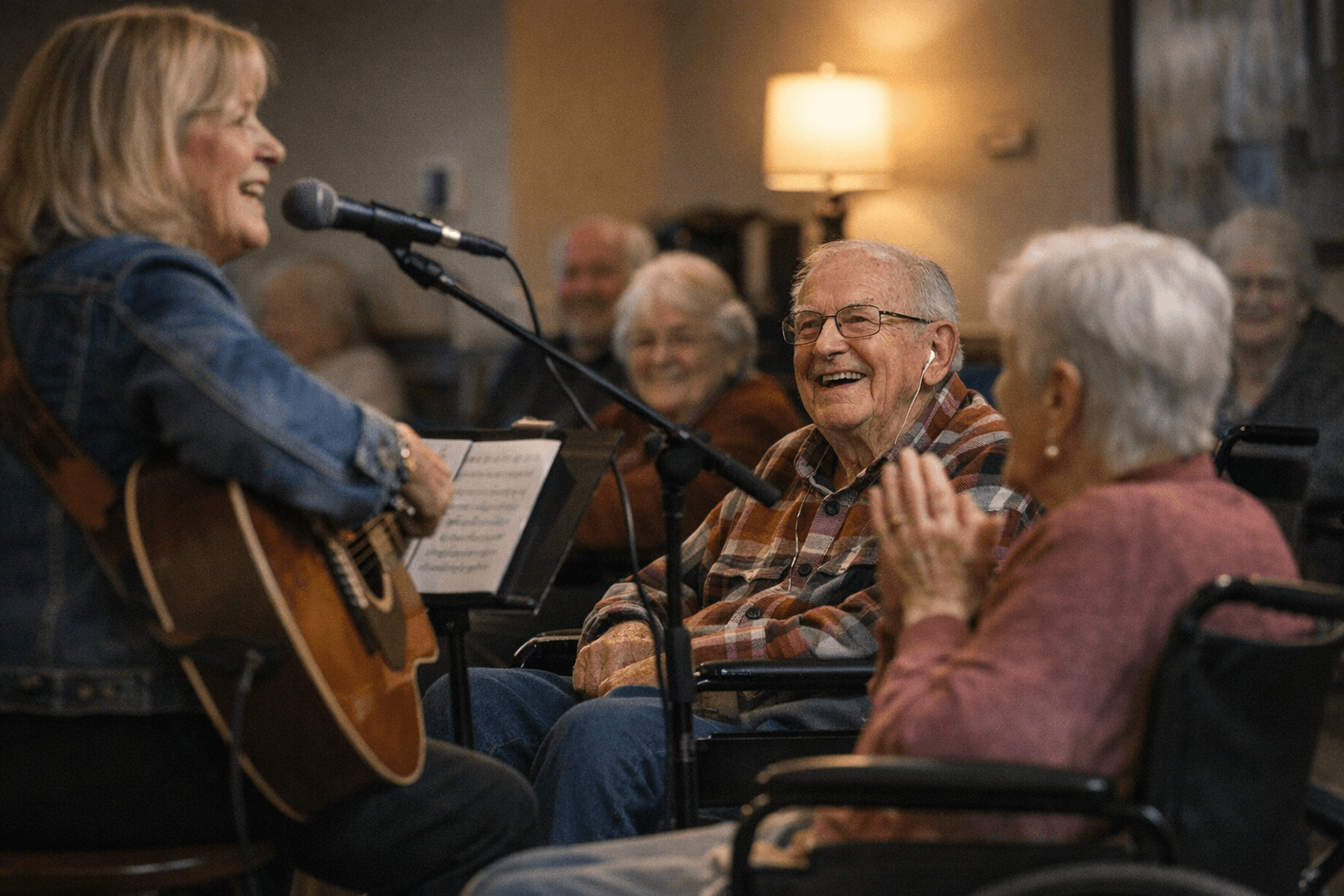
Jamie Wagner of Mifflinburg spends her weeks carrying a guitar and a songbook into nursing homes, memory care units and rehabilitation centers across the Valley. A retired paraeducator and active church member, Wagner visits multiple facilities each month to sing and play for older adults who often have few visitors or limited opportunities for social activity. Program staff and nominators who arranged performances described measurable lift in mood and engagement among residents after her visits.
Wagner drew on decades of experience working in local schools and with the Central Susquehanna Intermediate Unit to shape what she calls a music ministry aimed at older adults. Her approach centers on familiar hymns, community songs and gentle accompaniment that encourages residents to sing along, clap or move to the music. Staff at memory care units report that these sessions spark recognition and interaction even among residents living with cognitive decline.
The local health implications are significant. Social isolation and limited family contact are common among residents in long term care, especially for those in rural communities. Regular, volunteer led music programming can serve as a non drug intervention that supports emotional wellbeing and cognitive stimulation. Wagner’s steady presence illustrates how community volunteers can fill important gaps left by strained staffing and limited programming budgets.
At the same time, the pattern of reliance on volunteers raises questions about equity and sustainability. Access to volunteers and arts programming varies widely between facilities, leaving some residents without similar opportunities for engagement. Public health planning and local policy makers can support more consistent access through funding for arts in care, partnerships between schools and elder care providers, and incentives for volunteer recruitment and training.
Wagner’s work is ongoing, and her visits remain a quiet but powerful example of community level care. For Union County residents and policymakers, the presence of volunteers like Wagner is a reminder that small acts of connection improve quality of life, and that strengthening support for arts and social programming in long term care should be part of broader efforts to promote health equity for older adults.
Know something we missed? Have a correction or additional information?
Submit a Tip