Mifflinburg Buggy Museum Offers Visitors a Window Into Union County History
Inside a yellow wooden house on Green Street in Mifflinburg sits the only intact 19th-century carriage factory open to the public in the United States.
Step through the front gate at 598 Green Street in Mifflinburg and you are standing at one of the most singular industrial history sites in the country. The Mifflinburg Buggy Museum preserves the only intact 19th-century carriage factory in the United States, and it does so on the very ground where that history was made. For Union County residents and visitors alike, it is a rare thing: a place where the past was not reconstructed or approximated, but simply left in place.
How Mifflinburg Became "Buggytown USA"
The story behind the museum begins with the town itself. Mifflinburg was established by German immigrants to Pennsylvania, who brought old-world craftsmanship and manufacturing techniques in wood and metalworking. In 1845, a Mifflinburger named George Swentzel founded the town's first buggy manufacturing facility. The industry grew quickly. By the time of the 1855 assessment, Mifflinburg, with its 800 citizens, had 13 coachmakers. In the 1880s, Mifflinburg Telegraph publisher George Schoch wrote an account of the buggy industry in town, and his findings that 597 sleighs had been made in a single month led him to conclude his article with the question: "Is there a town in the state the size of Mifflinburg that has a better record?" Since the 1880s, Mifflinburg has been known as "Buggy Town" because its buggy makers produced more buggies per capita than any other town in the state.
Over the following 84 years, more than 80 coach makers would have shops in Mifflinburg, and local producers made 5,000 vehicles annually and sold them nationally. The era ended, as most eras do, with technology. When Henry Ford made the Model T affordable, people abandoned their horse-drawn vehicles, and one by one, buggy makers closed their doors. As the buggy gave way to the automobile, the factories closed and were converted for other purposes. Only one remained intact: the W.A. Heiss Coach Works.
The Discovery That Started a Museum
It was an ordinary Sunday in May 1978, but something extraordinary happened. A group of Mifflinburg citizens, led by retired history professor Dr. Charles McCool Snyder, had been discussing the need for a museum to celebrate the town's buggy-making heritage. At an earlier meeting, Norman Heiss and his sons, Owen and Glen had asked, "Would you like to see a buggy factory?" Behind the closed doors of the factory lay forty years of buggy-making history: William's tools, a hit-and-miss engine, horseshoes, tires, wheels, dashboards, upholstered seats, paints, catalogs for parts, and his own account books. There were finished vehicles in ruins and vehicles barely begun.
The structures and grounds were restored by a team made up mostly of volunteers, and a visitor center was created to share the rich history of the industrial craft of buggy making in Mifflinburg. In 1979, the historic importance of the three-building complex was confirmed when it was placed on the National Register of Historic Places. Today, volunteers continue to be the backbone of the Mifflinburg Buggy Museum, guiding tours, staffing the admissions desk, planning events and programs, and offering research assistance to visitors.
The William A. Heiss House
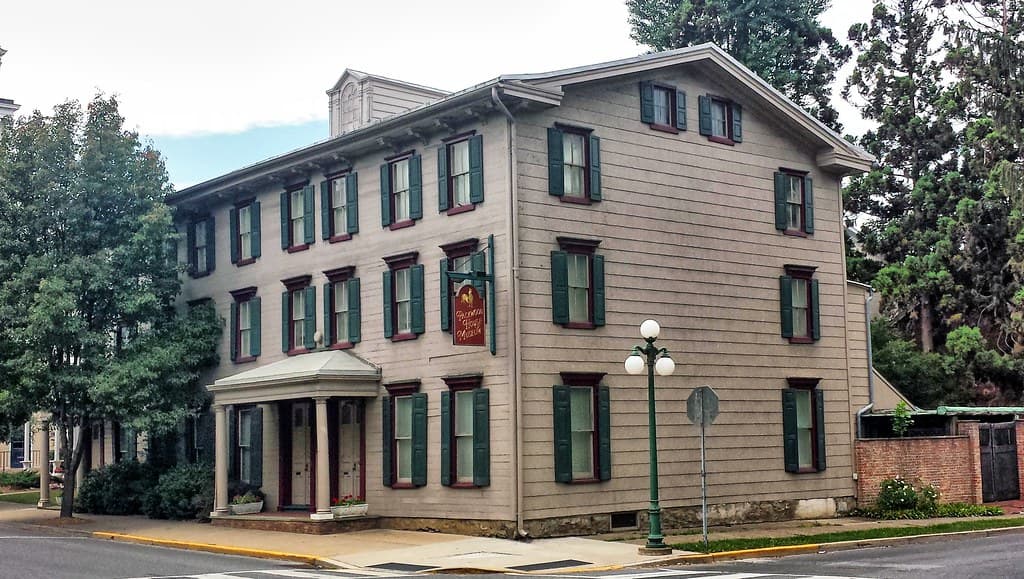
The museum complex centers on the William A. Heiss house, a structure that earns its place as both artifact and attraction. The two-story yellow wooden building, with its gray metal roof and brown trim around the windows, sits amid lush greenery and flowering plants, with a paved walkway leading up to the front door. Inside, the rooms tell a domestic story that complements the industrial one next door. William Heiss's parents were the first occupants in 1872, and many of the furnishings that exist today in the five-bedroom home are original. The Heiss home, furnished as it would have been during the late 19th and early 20th centuries, lets visitors step into the everyday life of a successful buggy maker, one whose professional ambitions and family life were inseparable from the rhythms of Green Street.
Inside the Factory: Tools That Time Forgot
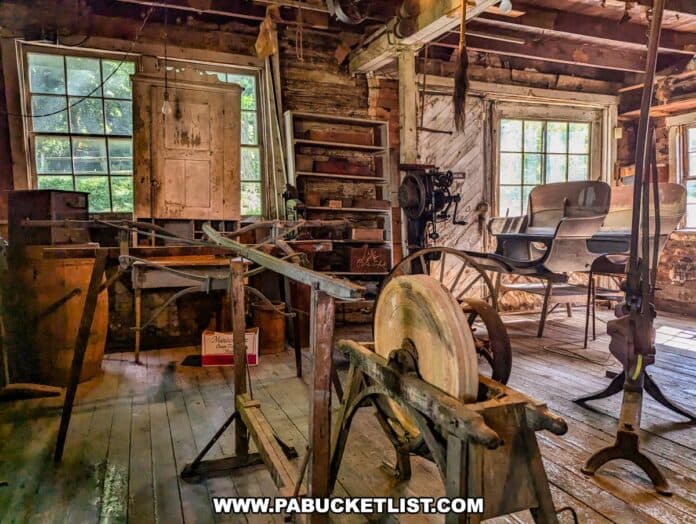
According to Executive Director Bronwen Anderson-Sanders, the museum holds "the only intact 19th-century carriage factory that is open to the public in the United States," a distinction that sets it apart from the dozens of buggy collections that exist elsewhere around the country. One highlight of the guided tour is seeing the original tools and machinery inside William Heiss' buggy factory still in place, as if frozen in time. The factory floor has not been sanitized for museum visitors; it looks as it did when Norman Heiss opened those doors in 1978.
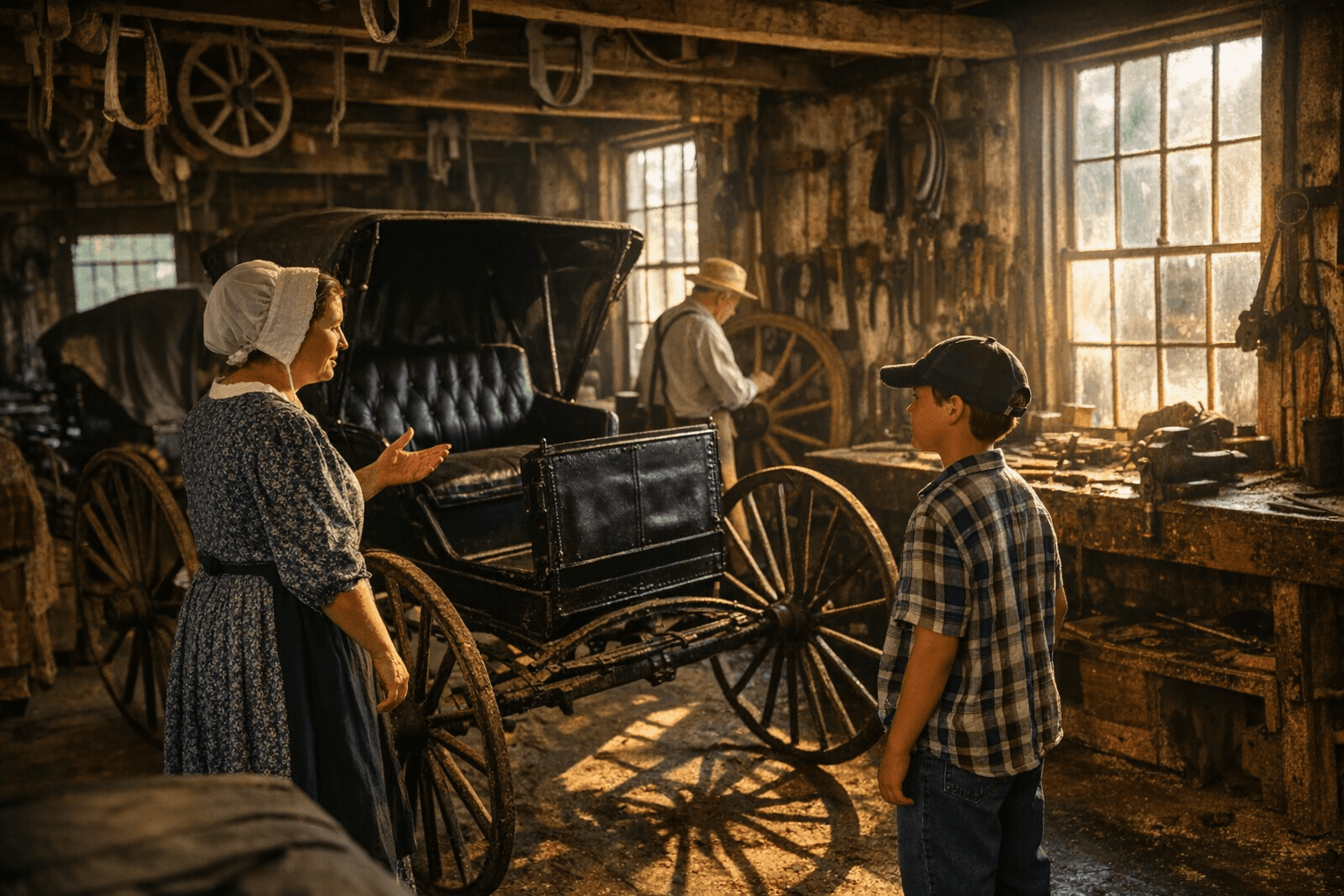
Among the most memorable experiences the tour offers is a live wheel-making demonstration. A guide, wearing a Mifflinburg Buggy Museum hat and shirt, stands next to a large machine used for bending wood to shape buggy wheels. The room around the demonstration features rustic wooden floors, exposed beams, and various tools and equipment in the background, including a large grinding wheel and shelves filled with supplies. The demonstration offers visitors a hands-on glimpse into the craftsmanship behind 19th-century buggy construction, making abstract history viscerally concrete.
The Exhibits: Buggies, Panels, and More
The complex includes a buggy maker's home, buggy showroom, and modern visitor center. The visitor center has permanent and changing exhibits, a hands-on workbench, and videos. The visitor center features original buggies made in the local area between the 1880s and 1910s, as well as a short but informative video explaining the history of Mifflinburg and the development of the buggy industry in and around this Central Pennsylvania town.
The exhibit floor showcases the full breadth of what Mifflinburg once produced. A maroon-seated buggy displayed in the main exhibit area is accompanied by informational panels tracing the arc of Mifflinburg's buggy-making history. Nearby, a collection of colorful buggies, including a green U.S. Mail buggy, lines a stone wall inside the museum, each vehicle a working artifact of the different roles these conveyances played in American life. Visitors learn not only about the technical aspects of buggy making but also about the cultural and economic importance of this industry to Mifflinburg. The museum does a solid job of showing how the advent of automobiles gradually replaced horse-drawn carriages, marking the end of the buggy era in "Buggytown USA."
Wall posters and copies of original photos depict the early carriage-making industry in Mifflinburg and the families that operated the coach works. There are also displays of tools, horseshoes, tires, wheels, paints, and account books.
Practical Information for Your Visit
The Mifflinburg Buggy Museum is located at 598 Green Street, Mifflinburg, PA 17844. The museum is open Saturday through Sunday, 1 p.m. to 4 p.m., from May through the last Sunday in October. Admission to the visitor center is free, with donations accepted. From November through April, the visitor center is open for specific events; the museum's calendar of events has details, or you can call ahead. The museum is set to reopen May 1, 2026.
Guided tours include the Snyder Visitor Center, the original buggy factory, and the repository. Visitors can choose to see just the visitor center or take the full tour, with separate fees for each option. A meeting room is also available to rent for meetings and special events.
The museum regularly hosts community events like its annual German fall festival, so checking its social media pages before planning a visit is worthwhile. Sell-out walking tours including "Ghost Tours" and "Scandals and Scoundrels" also generate funding for the museum and offer a different lens on Mifflinburg's history.
For anyone who grew up in Union County or has simply driven through Mifflinburg without stopping, the Buggy Museum reframes what feels familiar. The buggies on Green Street are not curiosities from somewhere else; they were built here, sold from here, and kept here by neighbors who understood what was worth holding onto.
This article was produced by Prism’s automated news system from verified source data, official records, and press releases, then run through automated quality and moderation checks before publishing. The system is built and supervised by the people who set the standards it runs under. Read our full AI policy.
Did this article answer your question?