Mifflinburg Buggy Museum preserves Union County's buggy-making legacy
The museum sits on the Heiss Coach Works site, preserving the only fully intact 19th-century carriage factory open to the public in the U.S. Its legacy still powers Mifflinburg's Buggy Town USA identity.

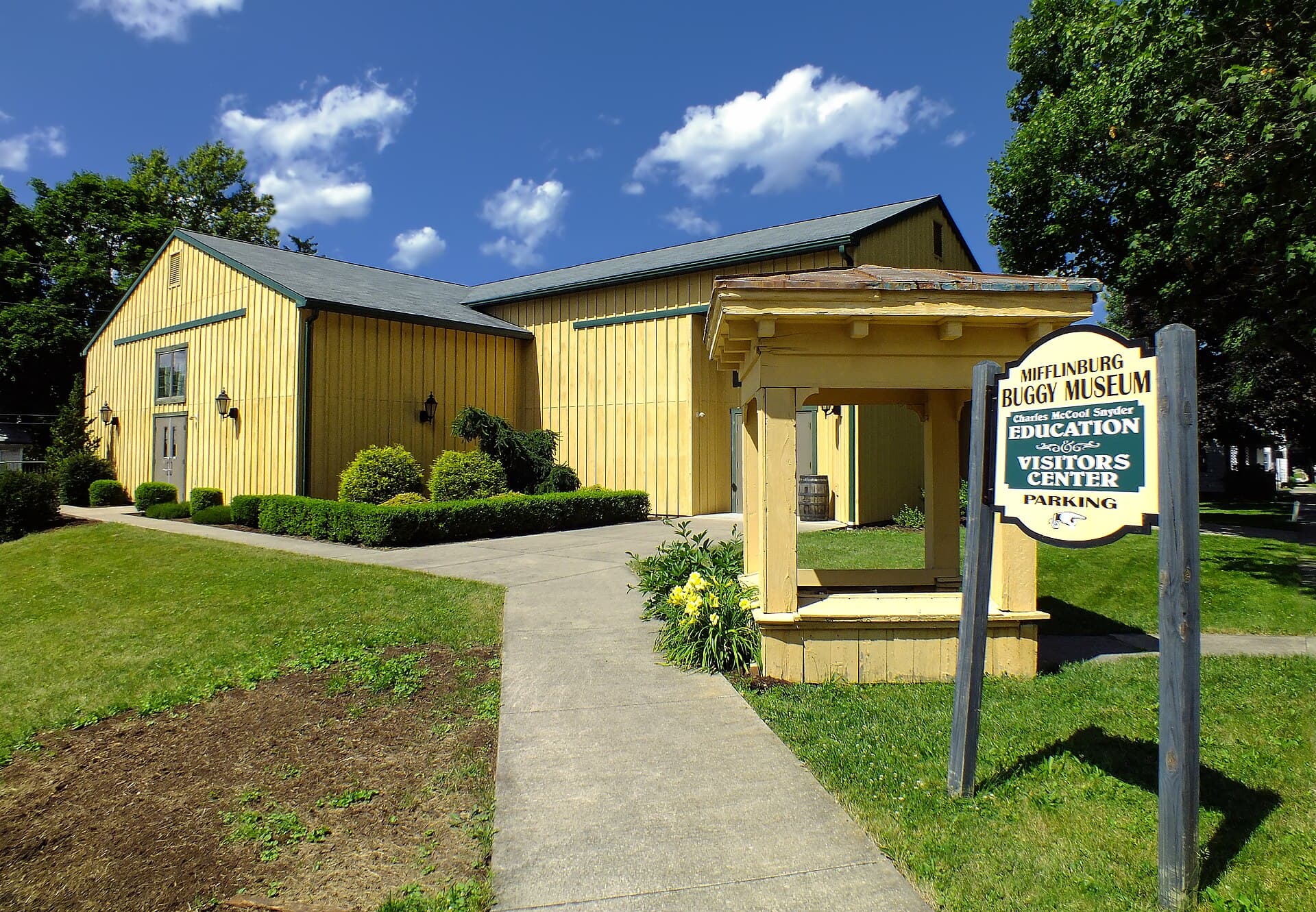
At 598 Green Street in Mifflinburg, the Mifflinburg Buggy Museum preserves the original Heiss Coach Works site, including the only fully intact 19th-century carriage factory open to the public in the United States. That makes Buggy Town USA more than a slogan: Union County still has the workshop, the family home, the showroom and the civic memory to prove the town once built vehicles for a national market.
A preservation effort that started with local citizens
The museum traces its origin to an ordinary Sunday in May 1978, when Mifflinburg citizens led by retired history professor Dr. Charles McCool Snyder were discussing the need for a museum to celebrate the town’s buggy-making heritage. Norman Heiss, the son of a buggy-making family, was part of those early preservation discussions, tying the project directly to the people whose name is still attached to the site.
That beginning matters because the museum was not created as a generic history stop. Its own mission is to preserve, interpret and celebrate the artistry of Mifflinburg’s 19th-century buggy and sleigh industry, and it does that from within the footprint of the industry itself rather than from a detached exhibit hall.
How Mifflinburg became a carriage town
The roots of the town go back well before the museum. In 1792, Elias and Catharina Youngman, also identified as Jungman, settled on land given to them by Catharina’s father and divided Youngmanstown into 60-by-120-foot plots to sell to other settlers. That early land pattern laid the groundwork for a town that would later become known far beyond Union County for carriage work.
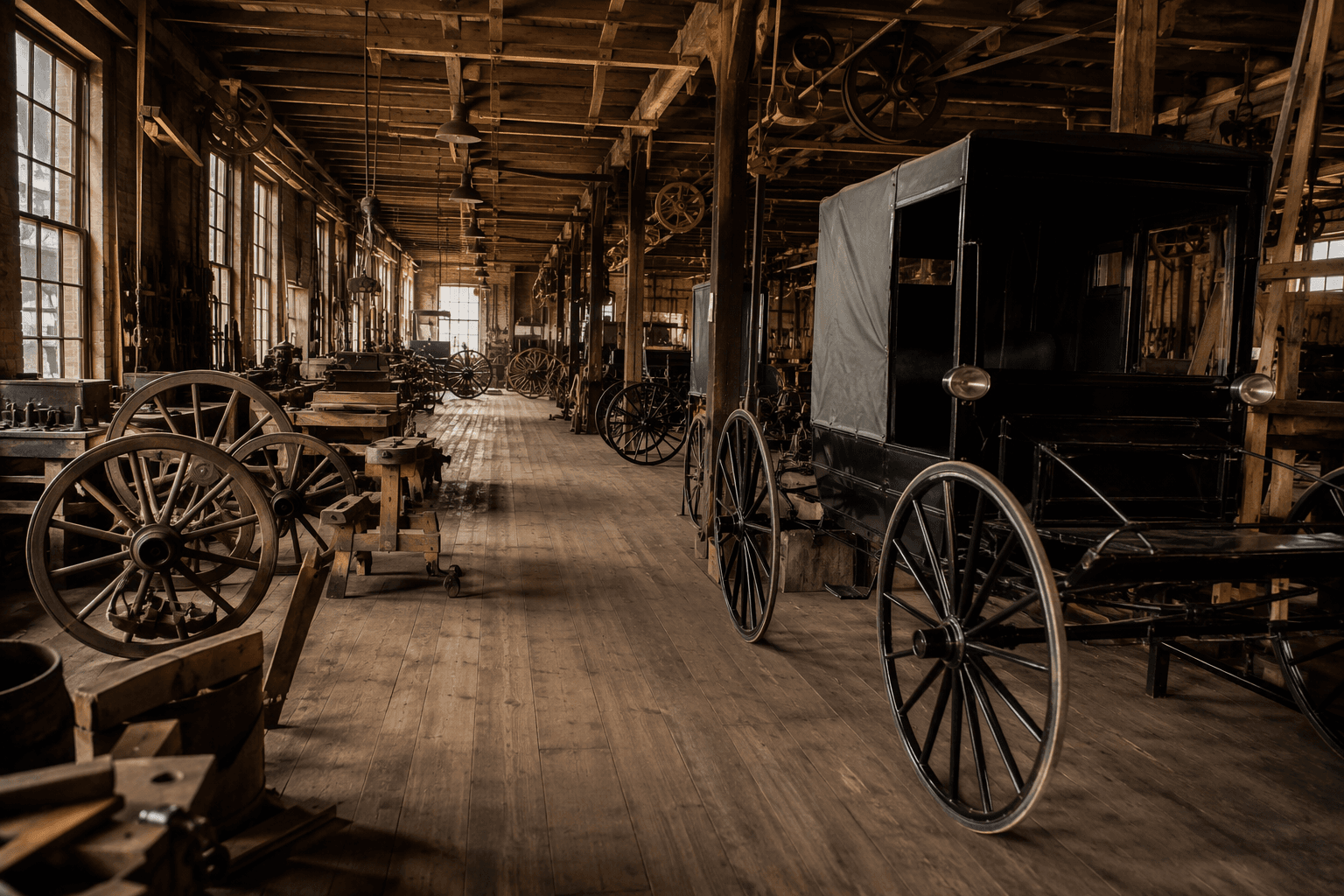
Pennsylvania State University’s SAH Archipedia says that from 1841 to 1924, Mifflinburg had 75 independently owned buggy shops, and at their peak they manufactured 6,000 vehicles a year for a national market. Another source places the count at more than 80 coach makers in the late 1800s and early 1900s, building thousands of buggies. A historical-marker listing also recognizes the borough for its buggy-manufacturing connection during the 19th and early 20th centuries.
What remains on the museum campus
The museum campus keeps the industrial story visible in a way few local landmarks can. One museum page says the grounds include the only fully intact 19th-century carriage factory open to the public in the United States, along with the original Heiss family home, the Repository showroom, a reconstructed Carriage House and a modern Visitor Center.
That combination gives visitors more than a single exhibit room. The factory tells the story of production, the showroom speaks to sales and display, and the family home shows that carriage making shaped not just employment but daily life in the borough. Because the museum sits on the original Heiss Coach Works site, the place itself does as much of the explaining as the exhibits do.
Why Buggy Town USA still carries weight
Mifflinburg’s buggy identity still shows up in tourism and community branding. The Susquehanna River Valley Visitors Bureau points travelers toward the borough’s buggy-making heritage, and a Pennsylvania travel page describes the museum as a place to “ride into history.” Those details matter because they show the museum is part of the region’s visitor economy, not only its memory.
The museum also helps keep downtown pride attached to a real industry story. In a town where the factory still stands, Buggy Town USA is rooted in manufacturing history, not nostalgia. The brand has staying power because it is attached to a specific place, a specific family name and a specific trade that once moved Mifflinburg goods into a national market.
Annual Buggy Day keeps the story public
The museum’s programming turns that history into a public event. Its 2025 Mifflinburg Buggy Day Street Fair featured horse-drawn buggy rides, live blacksmithing and old-fashioned fun, connecting the town’s current street life to the work that once filled its shops. A separate Instagram post listed Annual Buggy Day for Saturday, June 13, 2026, from 10:00 a.m. to 4:00 p.m.
That kind of event does more than entertain. It keeps the craft visible, gives families a reason to gather downtown, and makes the borough’s manufacturing past part of the present tense of Union County life.
Planning a visit
The museum’s visitor information is straightforward and useful for a day trip or a return stop in season.
- Address: 598 Green Street, Mifflinburg, PA 17844
- Seasonal hours: May through the last Sunday in October
- Visitor Center access: open for certain events in November through March
- Phone: 570.966.1355
- Public site features: guided tours and exhibits on Saturdays and Sundays from 1:00 to 4:00 p.m.
Those details make the museum easy to fold into a drive through central Union County, whether the goal is a quick stop at the carriage factory, a longer look at the Heiss family home, or time in town during Buggy Day.
In Mifflinburg, the old carriage trade is not locked behind a plaque. It still has an address, a campus and a public calendar, which is why the museum remains one of Union County’s clearest proof points that the borough’s industrial past still shapes its identity today.
This article was produced by Prism’s automated news system from verified source data, official records, and press releases, then run through automated quality and moderation checks before publishing. The system is built and supervised by the people who set the standards it runs under. Read our full AI policy.
Did this article answer your question?