New Berlin courthouse museum anchors borough’s historic town square, civic life
New Berlin’s old courthouse still does civic work, housing the post office and museum in the square where Union County government once sat. Its past now drives foot traffic, events, and borough identity.
The square still matters because it still works
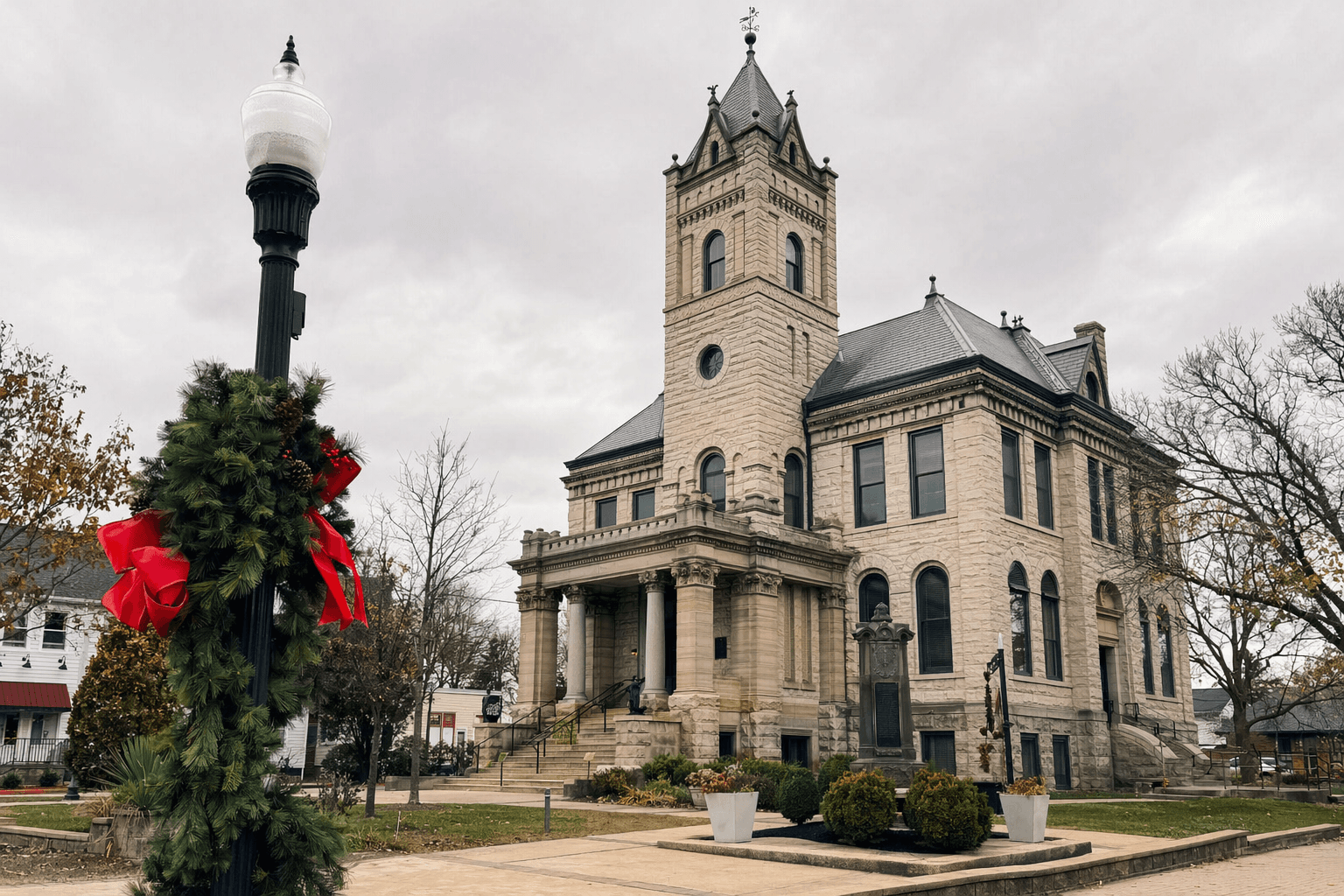
The old Union County Courthouse still gives New Berlin its center of gravity. On the town square at Market and Vine Streets, the building now houses the New Berlin Post Office and the Courthouse Museum, making one small structure do the work of daily errands, local memory, and borough identity all at once.
That matters in a borough of just 801 people, according to the 2020 census. In a place that small, the courthouse is not a decorative relic on the edge of town. It is a visible sign that New Berlin remains a place where public life has a fixed address, even after county government moved elsewhere.
A county seat that moved, but never really disappeared
Union County was created on March 22, 1813, from part of Northumberland County. Mifflinburg was the first county seat, New Berlin became the county seat in 1815, and Lewisburg took over in 1855, where the county seat remains today. That sequence explains why New Berlin still carries so much institutional memory in such a compact footprint.
The courthouse is the clearest reminder of that era. It was listed on the National Register of Historic Places in 1972, and historical references also note that the building was renovated in 1855 to 1857 and then used as a schoolhouse until about 1952. That long reuse gives the building a rare local story: it did not simply survive, it kept serving.
What you find inside the museum
The New Berlin Heritage Museum is maintained by the New Berlin Heritage Association and sits in the original courthouse at the corner of Market and Vine Streets. The collection reaches across generations and categories, with artifacts, photos, print materials, memorabilia, antiques, collectibles, books, newspapers, publications, long rifles, ancestry records, cemetery records, and crafts.
That range is part of its value. The museum is not limited to one family, one era, or one theme. It preserves the borough’s Native American artifacts and broader local records in a way that helps residents trace how the area changed, who lived there, and how the community remembers itself. For a county with a deep and layered past, the museum keeps that story visible in a place people still pass through.
Why the borough calendar still matters
New Berlin’s official borough pages do more than preserve history. They also keep residents plugged into the practical rhythms of local government and community life, with calendar and community pages that list council meetings, spring brush and limb clean-up, yard sales, and the New Berlin Fire Company Carnival.
That is part of the borough’s present-day civic value. A courthouse museum can feel symbolic, but the surrounding borough notices show that the square is still tied to everyday use. It helps residents know when government meets, when cleanup is scheduled, and when community events will bring people downtown.
The calendar also underscores how much the borough depends on shared spaces to stay visible. In a small town, a strong public calendar is not just administrative housekeeping. It is one of the main ways a community stays coordinated, connected, and seen.
New Berlin Day and the museum’s public role
New Berlin Day is held on the fourth Saturday of August, and the museum is open on New Berlin Day and, according to the borough site, by contacting Logan Roush. The museum also is listed as open one Sunday a month from May through October through the heritage association’s schedule.
That access keeps the courthouse from becoming a closed-off monument. When the doors open, the building becomes a gathering place, not just a photo stop. The event schedule is also a reminder that the borough’s history is not sealed in glass. It is activated by visitors, volunteers, and residents who still use the square as a meeting point.
The 2025 New Berlin Day event was canceled, according to the borough calendar, which shows how much one event can matter to a place like this. When a community gathering is lost, even temporarily, the square loses some of the foot traffic and shared attention that help keep a small downtown alive.
Why this landmark still defines the borough
The courthouse and museum give New Berlin a civic continuity that many small boroughs do not have. The same square that once anchored county government still anchors daily life, with the post office, museum, borough notices, and seasonal events all tied to one compact center.
That continuity has practical consequences. It draws visitors, supports preservation work, and helps local people explain where they live in a county where small places can be overlooked. If the courthouse faded into the background, New Berlin would lose more than a preserved building. It would lose one of the few places where its public history, present-day errands, and borough identity meet in the same view.
This article was produced by Prism’s automated news system from verified source data, official records, and press releases, then run through automated quality and moderation checks before publishing. The system is built and supervised by the people who set the standards it runs under. Read our full AI policy.
Did this article answer your question?