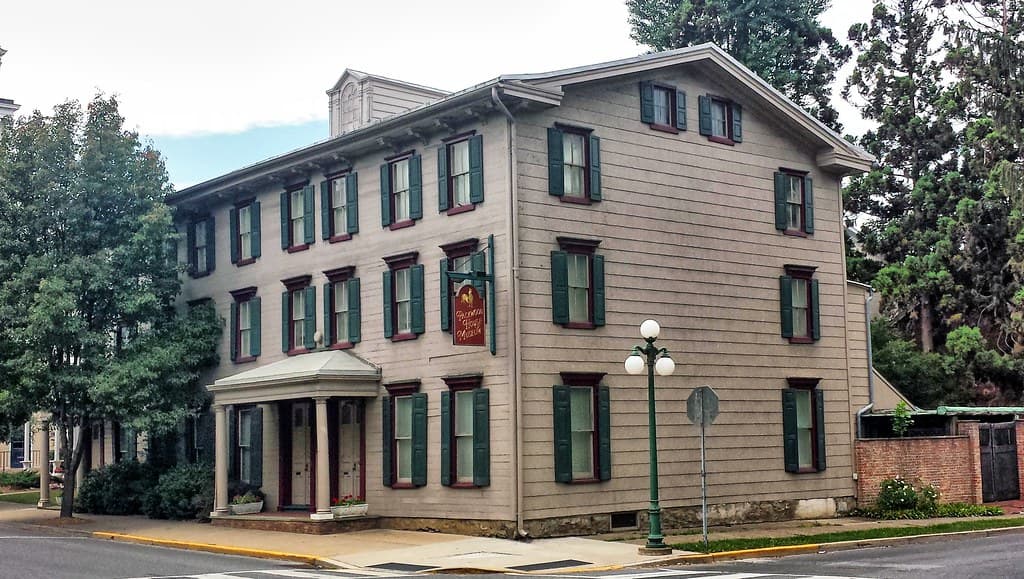
NPC, Partners Resume Turtle Creek Streambank Restoration Work in Union County
Eroding banks along Turtle Creek already shrank farmland and buried drain pipes; NPC and partners returned with logs and heavy equipment to protect more of southeastern Union County's most-restored watershed.
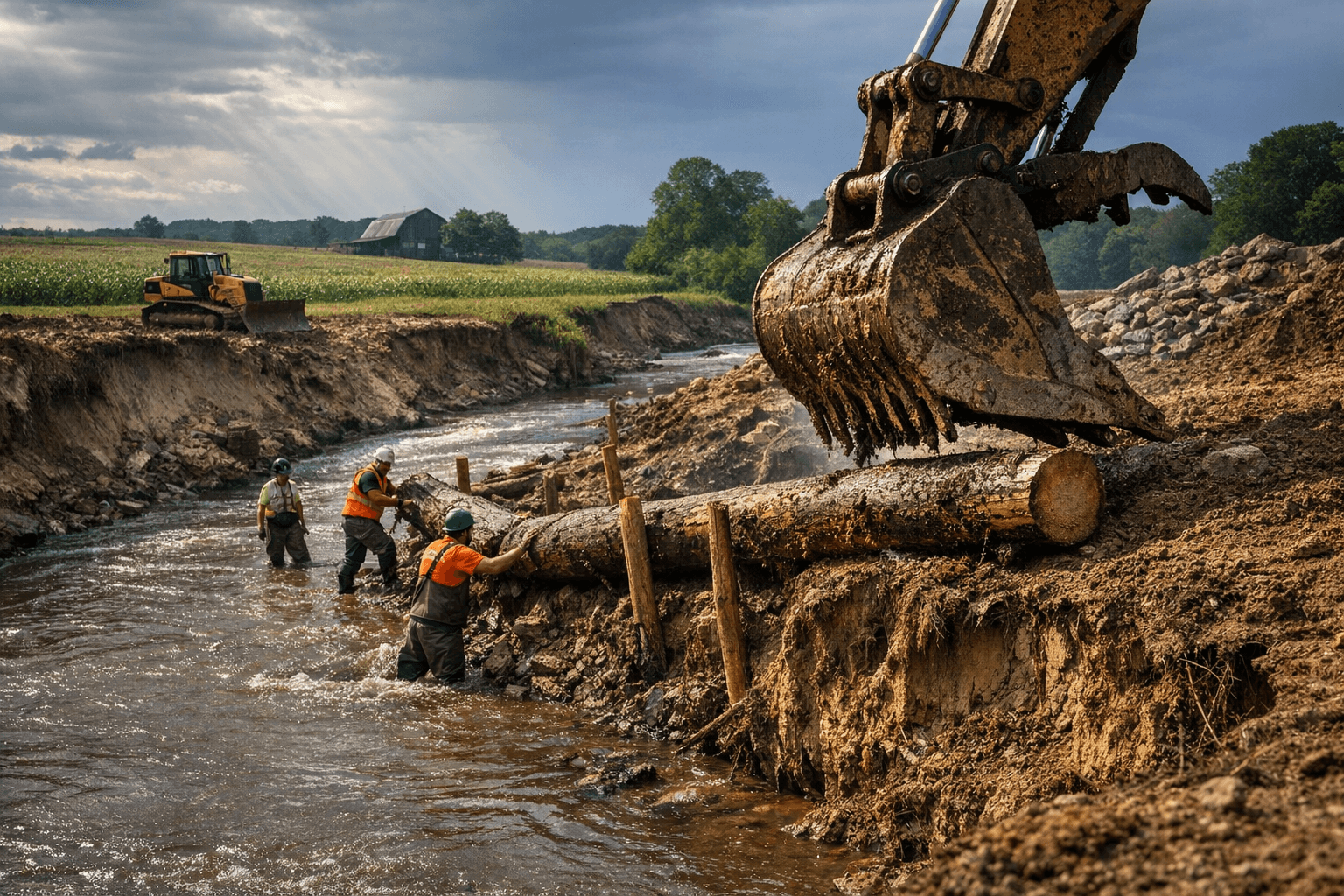
Heavy equipment and truckloads of logs arrived along Turtle Creek in southeastern Union County last week as the Northcentral Pennsylvania Conservancy and its project partners launched the next phase of streambank stabilization work on one of the region's most intensively restored watersheds.
Renee Carey, executive director of the Northcentral Pennsylvania Conservancy, has described the mobilization as part of a sustained, multi-year strategy to secure additional stretches of stream still vulnerable to collapse. The Union County Conservation District's watershed specialist, the Pennsylvania Fish and Boat Commission's habitat division, and a contractor are coordinating placement of large wood structures and bank reshaping along the creek.
The consequences of unchecked erosion along Turtle Creek are visible and costly. Banks retreating into the water have left drain pipes, once buried under soil, hanging five feet out into open air. Sediment shed from those crumbling slopes doesn't stay local: it travels downstream through the Susquehanna Valley system, smothering the gravel beds where trout spawn, raising effective flood levels, and consuming agricultural land field edge by field edge.
The Northcentral Stream Partnership, the multi-agency coalition behind the decade-long effort, has installed 1,368 stream-stabilizing structures and more than 10,900 feet of streambank fencing throughout the Turtle Creek watershed to date. That sustained investment produced a concrete milestone in April 2024, when 2.2 miles of Turtle Creek streams were officially removed from the federal Clean Water Act impaired-waters list, a designation that had hung over the watershed since before the partnership formed.
Funding for the ongoing work flows through Pennsylvania's Growing Greener program and the Agriculture Conservation Assistance Program, both of which provided simplified permitting and ready capital that allowed the partnership to move from initial landowner conversations to completed construction within months on previous phases. Farmers along the creek, many of whom did not have the independent financial means to address erosion, have been central partners in granting access and adopting livestock exclusion fencing and riparian buffers alongside the in-stream structures.
The technical method relies on large logs positioned in the channel as deflectors, pushing fast-moving water away from the base of vulnerable slopes where erosion accelerates. Bank grading gently widens the floodplain so rising water spreads across a broader area, losing the concentrated energy that carves away soil. Native vegetation planted after grading anchors the reshaped banks with root systems that filter nutrients before they reach the water.
Fish and Boat Commission staff and the conservation district's watershed specialist will work alongside the contractor to finalize log placements and complete in-stream structures in the current phase. Native planting and monitoring are planned for subsequent seasons. Project updates and watershed maps are available through the NPC website and the Union County Conservation District.
This article was produced by Prism’s automated news system from verified source data, official records, and press releases, then run through automated quality and moderation checks before publishing. The system is built and supervised by the people who set the standards it runs under. Read our full AI policy.
Did this article answer your question?