Union, Snyder counties treatment court graduates 13 at Lewisburg ceremony
Thirteen people finished Union-Snyder treatment court in Lewisburg, including Rose Samples of Middleburg, who said the program felt like being asked whether she was ready to save her own life.

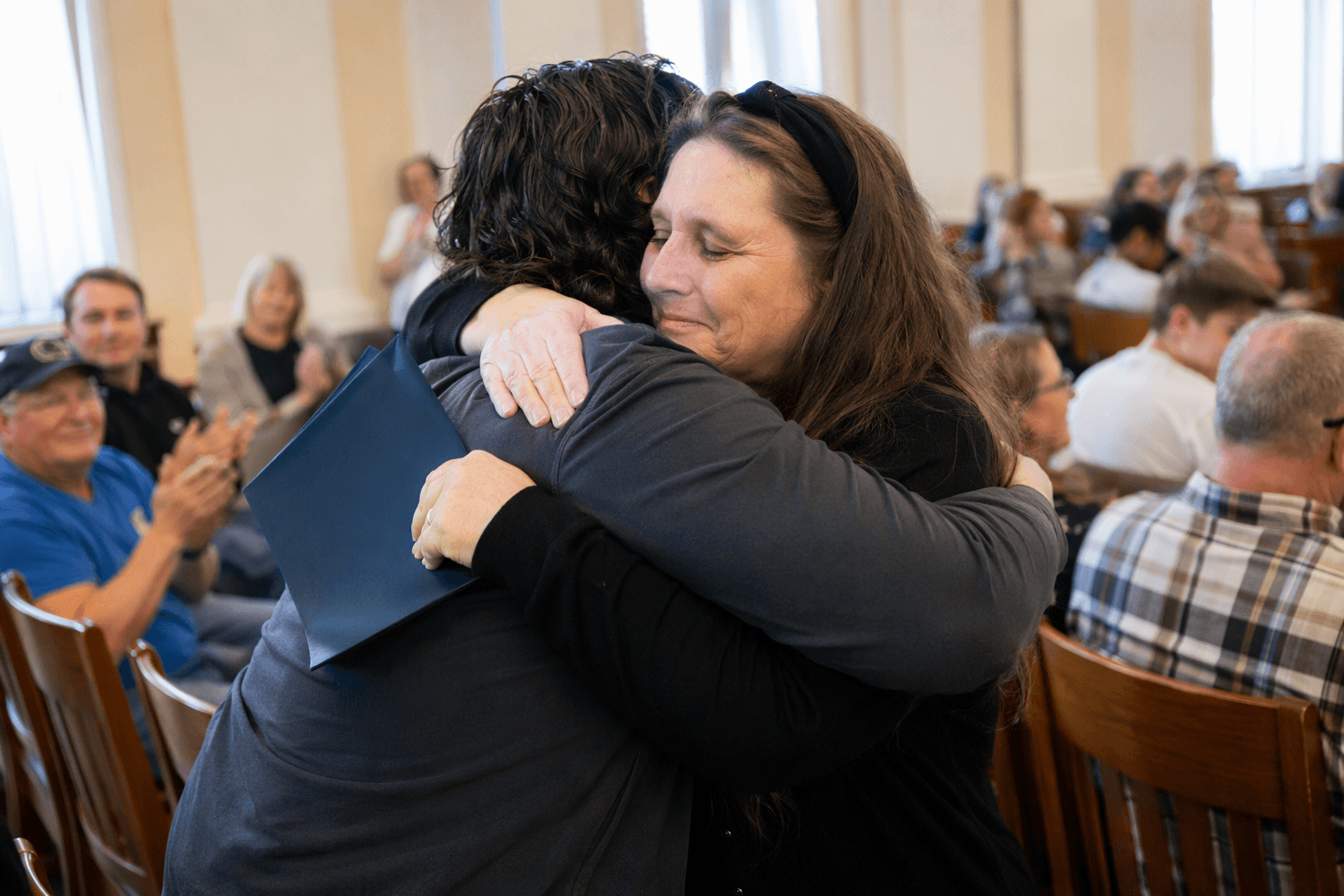
Thirteen participants graduated from Union and Snyder counties’ treatment court in Lewisburg, a result that showed the program’s practical aim: to move people with substance-use problems out of a cycle of arrests and jail time and into supervised recovery. Among them was Rose Samples of Middleburg, who said that when she was asked in 2024 whether she wanted to be admitted into treatment court, she heard something deeper, as if she were being asked whether she was ready to save her own life.
The graduates were honored during the program’s 43rd ceremony, a milestone for the 17th Judicial District Treatment Court, which serves both Union County and Snyder County through the Union County Probation Department. The court’s mission is to reduce recidivism by pairing treatment and rehabilitation with close supervision, rather than simply processing repeat offenders through the criminal justice system. For local judges, probation staff, counselors and families, the ceremony marked a completion point after months of weekly court appearances, frequent drug and alcohol testing, intensive treatment, and immediate sanctions and incentives.
The treatment court has become a built-in part of the local justice system over nearly two decades. Planning began in July 2007 under President Judge Harold F. Woelfel Jr. The drug-court track admitted its first participants on July 2, 2008 and held its first graduation on May 19, 2010. The DUI track followed with its first participants on January 13, 2010 and its first graduation on March 30, 2011. The district received state accreditation in September 2012, and Union County says it was the fourth county in Pennsylvania to earn that recognition.
Statewide, Pennsylvania’s first treatment court opened in Philadelphia in 1997 as an adult drug court. The Union-Snyder court now sits within that broader network, but its local structure is what gives the Lewisburg ceremony its weight. Participants generally spend 12 to 18 months in the program, and graduation requires treatment compliance, stable housing, resolved pending legal matters, employment or another source of income or full-time school enrollment, compliance with testing and at least 120 days of clean time.
Samples’ path captured what the program asks of participants and what the counties hope to gain from it: one person stabilizing a life, while the courts see fewer repeat cases and jail beds reserved for those who truly need them. The 13 graduates left Lewisburg with a credential that measured far more than attendance. It reflected a long court-supervised process that Union and Snyder counties still rely on as part of their public safety and recovery response.
This article was produced by Prism’s automated news system from verified source data, official records, and press releases, then run through automated quality and moderation checks before publishing. The system is built and supervised by the people who set the standards it runs under. Read our full AI policy.
Know something we missed? Have a correction or additional information?
Submit a Tip