Del Rio Landowners Learn How to Fight Proposed High-Voltage Transmission Line
About 80 Val Verde County landowners packed Mesquite Creek Outfitters on March 24 to get a legal road map for fighting a proposed high-voltage transmission line threatening private ranchland.
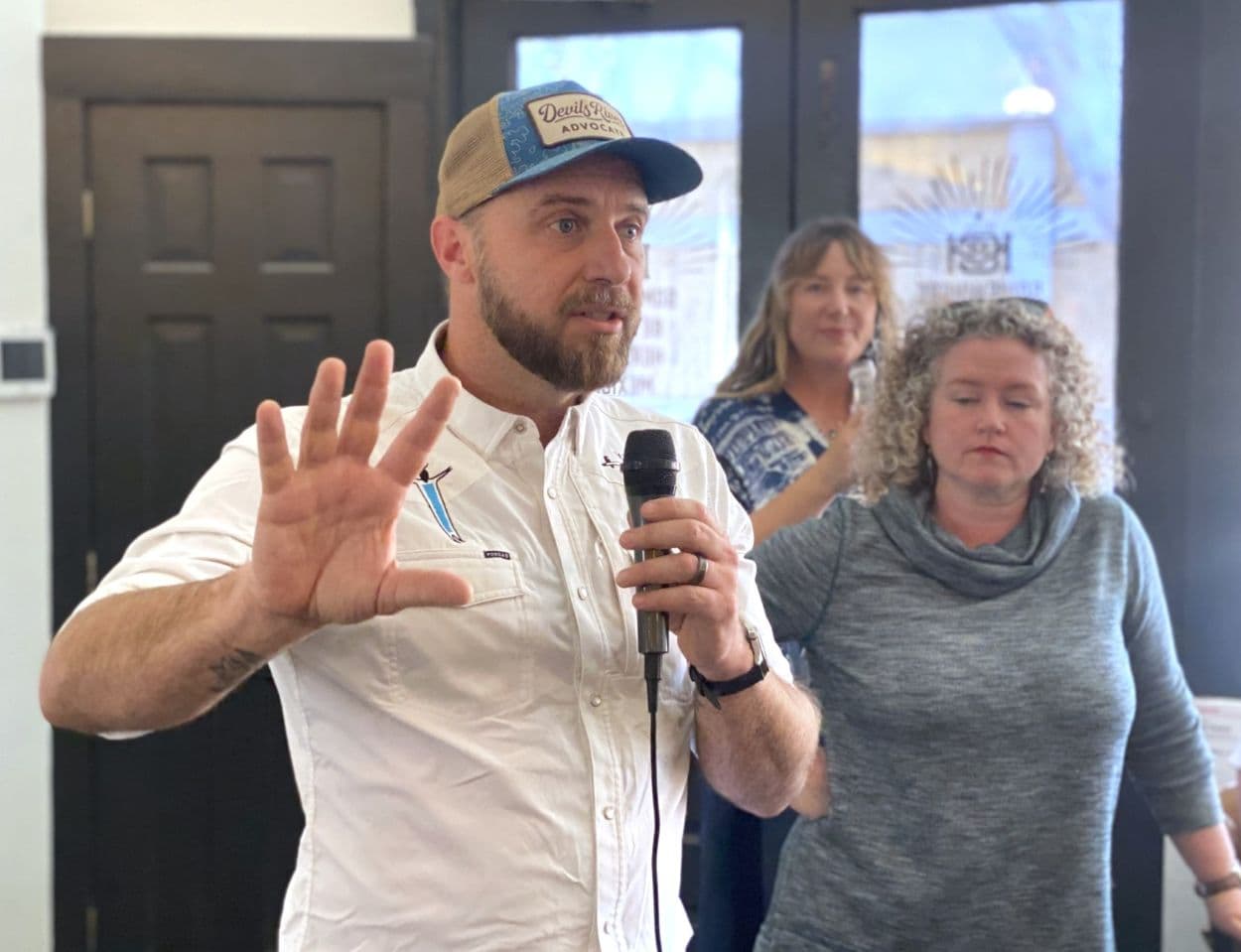
About 80 Val Verde County landowners filled Mesquite Creek Outfitters at 800 S. Main Street in Del Rio on March 24, turning out in force to get a practical road map for fighting a proposed high-voltage transmission line that could cut across thousands of feet of private ranchland in the region.
The workshop walked attendees through the regulatory sequence they will need to navigate: how to obtain the project's route maps and legal descriptions, how to file formal written comments with the utility and the Public Utility Commission of Texas, and how to document property-specific concerns ranging from water resources and grazing operations to archaeology and culturally sensitive sites. Organizers also outlined when and how landowners can request a contested case proceeding, a formal mechanism that carries significantly more weight with regulators than a general public comment.
The stakes for Val Verde County property owners extend well beyond the construction phase. A finalized route would impose new easements across private acreage, with long-term consequences for tax valuation, grazing practices, hunting lease revenue, and future development options on affected tracts. Heritage sites and wildlife corridors in the area could also fall within the proposed corridor, adding archaeological and environmental dimensions to what might otherwise appear to be a straightforward infrastructure dispute.
The Del Rio session fits into a broader mobilization playing out across West and Central Texas, where proposed extra-high-voltage projects in the 345 kV to 765 kV range have drawn organized opposition from landowners and conservation groups. The projects are being driven by growing electricity demand across the Texas grid, pushing utilities to propose new transmission infrastructure through remote and ecologically sensitive landscapes that had previously been left undisturbed.

For landowners who missed the workshop, the immediate priorities are clear: obtain the project map and its legal descriptions, file timely written comments with both the utility and the PUCT, and document any property-specific concerns before regulatory deadlines pass. Anyone facing a potential easement offer should consult with counsel about compensation rights and legal remedies before signing anything.
Eighty coordinated voices filing documented objections carry far more influence with regulators than scattered individual complaints. Whether that pressure reshapes the final routing decision depends on how many of those landowners follow through while the comment window remains open.
This article was produced by Prism’s automated news system from verified source data, official records, and press releases, then run through automated quality and moderation checks before publishing. The system is built and supervised by the people who set the standards it runs under. Read our full AI policy.
Did this article answer your question?