Del Rio native Arturo C. Gonzalez remembered for law, housing, radio work
Arturo C. Gonzalez left Del Rio two lasting institutions: a housing system built for working families and a border-radio legacy that carried local influence across the Rio Grande.
Arturo C. Gonzalez helped give Del Rio two kinds of reach: a legal and housing footprint that still shapes local services, and a radio network that pushed the city’s name across the border. Born in Del Rio on Oct. 4, 1908, and admitted to the Texas bar on Feb. 27, 1935, he built a career that linked Pecan Street law practice, public housing, and one of the most famous border stations in the region. He died Dec. 21, 2012, at age 104, but the institutions tied to his work still define part of how Del Rio operates.
Law, civic duty and a Pecan Street office
Gonzalez attended Del Rio High School before entering legal practice, and his office at 313 Pecan St. placed him squarely in the commercial and civic center of town. The Texas House and Senate memorial resolutions framed his life as one spent seeking equality and justice for those with less, a description that fits the way his name reappears in local housing history and public service records.
His personal life also appears in the memorial record. The Texas Senate resolution identified his late wife as Blanca, underscoring that the public career remembered in Del Rio was also rooted in a family life that those close to him saw as central. That combination of local schooling, legal training and a long practice in town made him part of the generation that turned Del Rio lawyers into civic actors, not just court-room advocates.
The housing legacy that still touches Del Rio families
Gonzalez’s most direct civic imprint came through housing. The Texas Senate memorial resolution says he was active in the Citizens Council’s efforts to develop public housing for the underprivileged, and that he served as the first director of the Del Rio Housing Authority. That role matters because it tied legal authority to a practical problem that never left the city: where working families and lower-income residents could live safely and affordably.
That legacy is visible in the Housing Authority of the City of Del Rio’s current mission, which is to provide safe, decent and sanitary housing to low- and mixed-income families. The agency’s present-day work shows that Gonzalez’s service was not symbolic. It helped establish an institution that still manages housing access for Del Rio residents who depend on public support to stay in the community.
In a border city shaped by wage work, migration and uneven development, housing policy is not abstract. Gonzalez’s role placed him at the point where civic advocacy met construction, eligibility rules and daily need. His name belongs in Del Rio’s housing history because the authority he helped launch remains part of the local safety net.
How a Del Rio attorney helped launch XERF
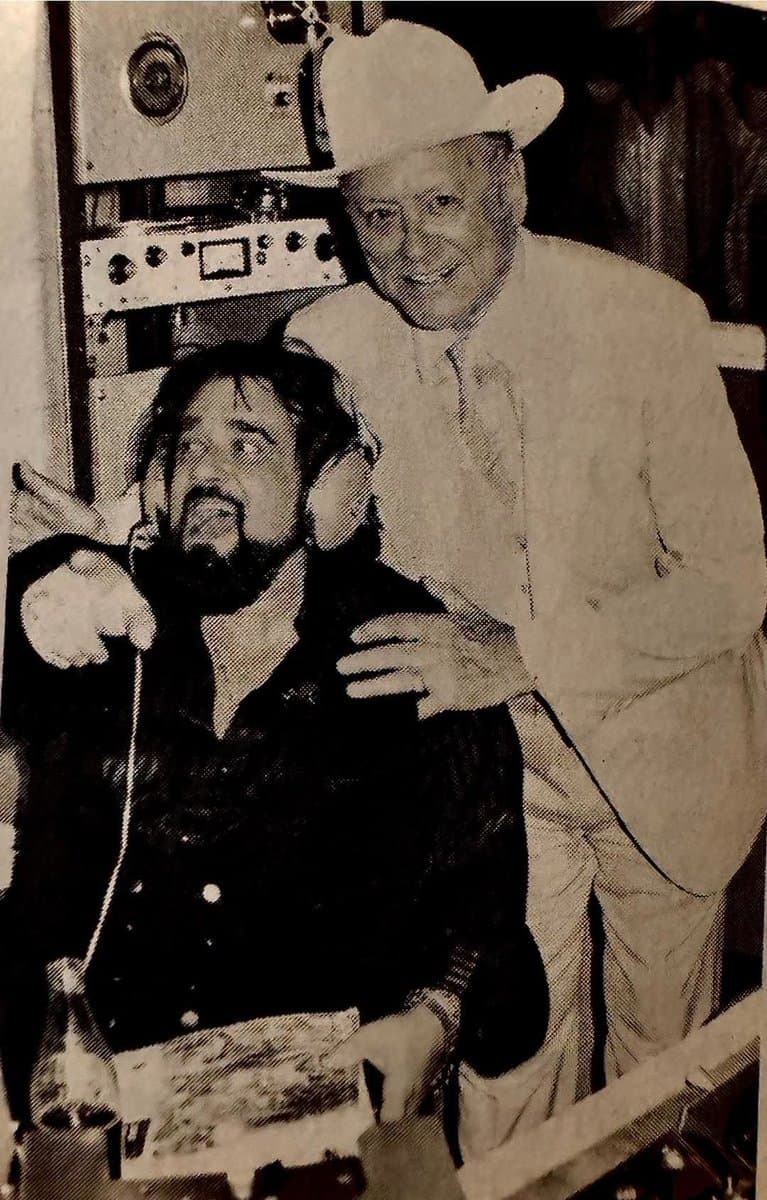
Gonzalez’s influence extended well beyond law and housing. After World War II, he joined longtime border-radio figures Don Howard and Walter Wilson to acquire a Mexican radio license, and in 1947 they launched XERF from Ciudad Acuña, Coahuila, across the Rio Grande from Del Rio. For a time, the station’s business office operated out of the Roswell Hotel in Del Rio, another local address that tied the project back to the city that produced Gonzalez.
Archival radio-history sources identify Gonzalez as station manager in XERF’s early years, placing a Del Rio attorney at the center of one of the most important border-blaster operations in North America. Border stations emerged in the 1930s because high-powered Mexican transmitters could reach beyond U.S. regulatory limits, with some broadcasting at powers up to 500,000 watts. XERF’s signal helped popularize country, rhythm-and-blues and rock-and-roll, giving the station a place in the broader history of American popular music as well as border media.
That kind of broadcasting mattered in Del Rio because the city sits at a literal and cultural crossing point. XERF’s origin across from Del Rio made the station part of the same daily border reality that shaped housing, commerce and law. Gonzalez was not a bystander to that world. He helped build one of its most recognizable media institutions.
A lifelong attachment to the station he helped build
Gonzalez never entirely left XERF behind. In 1959, he and Ramon D. Bosquez formed Inter-American Radio Advertising, Inc. in Del Rio to handle U.S. ad sales for the station, showing that his role was not limited to the launch years. Even decades later, the Texas State Historical Association reported that Gonzalez, then in his nineties, was still trying to regain control of XERF and contacting engineering firms about a new transmitter.
That persistence says something important about the scale of his involvement. XERF was not a passing business venture for him; it was a long-running institutional commitment that stayed tied to Del Rio and to the idea that the border could be a platform rather than a boundary. The station’s changing ownership and technology did not erase Gonzalez’s place in its story.
Why his name still matters in Del Rio
Gonzalez’s life connected three pieces of local infrastructure that continue to matter: law, housing and radio. His law office at 313 Pecan St. anchored him in the city center, his work with the Citizens Council and the Del Rio Housing Authority shaped where families could live, and his role in XERF linked Del Rio to a broader media landscape that crossed national lines.
That combination is why his legacy still reads as a map of Del Rio itself. The city’s housing authority continues to serve low- and mixed-income families, and the border-radio history attached to XERF still marks Del Rio as a place where local decisions can echo far beyond the river. Gonzalez helped build both kinds of influence, and Del Rio still lives with the institutions he left behind.
This article was produced by Prism’s automated news system from verified source data, official records, and press releases, then run through automated quality and moderation checks before publishing. The system is built and supervised by the people who set the standards it runs under. Read our full AI policy.
Know something we missed? Have a correction or additional information?
Submit a Tip