Devils River state natural area showcases rare, intact Texas ecosystem
Devils River State Natural Area protects one of Texas’ most intact river systems, where rare species, springs and canyon habitat still hold the line for Val Verde County.
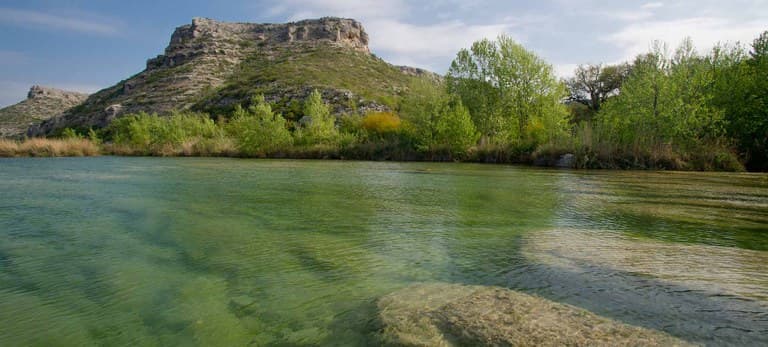
Devils River State Natural Area is one of the few places in Texas where the landscape still reads as a working ecological whole: springs feed a river with no impoundments, limited public access has kept it primitive and unpolluted, and three major ecological regions meet in a narrow corridor of water, rock and canyon. In Val Verde County, that makes the river more than a scenic draw. It is a living stronghold for clean water, native wildlife and the kind of intact habitat that has become rare across the state.
A river system that still functions like Texas once did
Texas Parks & Wildlife describes the Devils River as one of the best remaining examples in the state of an ecologically intact river system. That matters because the river is not broken up by dams, reservoirs or heavy shoreline development, and the springs that feed it help keep the water clear and cold enough to support species that need stable conditions. Finegan Springs, on the shoreline of the Del Norte Unit, is part of that spring-fed network and one reason the river holds its aquamarine color through a dry country landscape.
The absence of impoundments has done more than preserve a pretty view. It has allowed the river to remain essentially primitive, with limited access helping shield it from the kind of degradation that can fragment habitat and diminish water quality. For Val Verde County, that means the Devils River continues to function as a corridor where water, wildlife and geology still connect instead of competing with one another.
Where three Texas regions meet
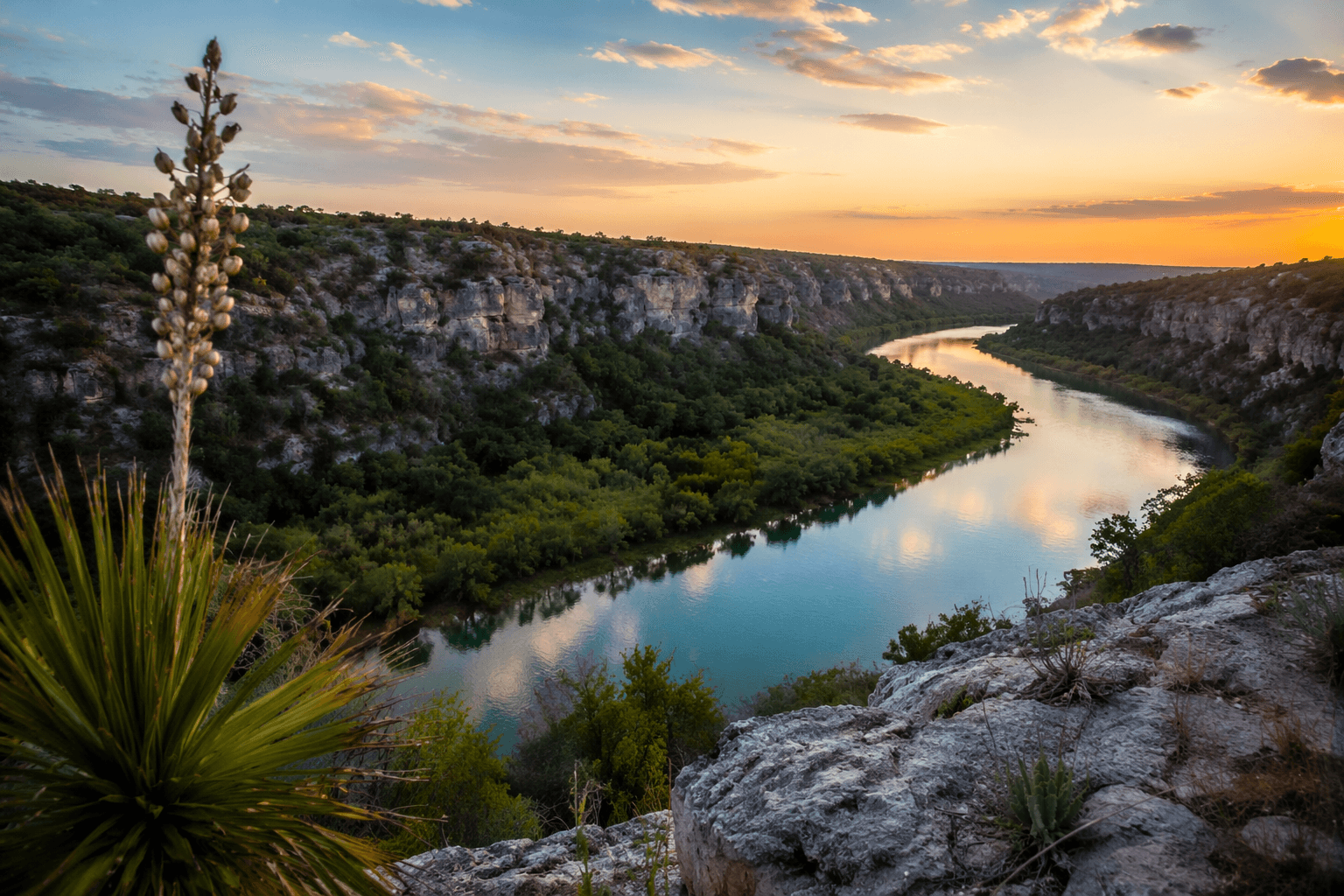
The natural area is ecologically unusual because it sits at the meeting point of three regions: the Chihuahuan Desert to the west, the Edwards Plateau to the north, and the Tamaulipan region to the south and east. That convergence creates a patchwork of conditions that supports a wider range of life than a single landscape type could sustain on its own.
Plants and animals adapted to desert slopes, limestone hills and South Texas brush can all show up in the same broader system here. The result is a natural area that is not only beautiful but biologically important, because it preserves a living edge where multiple ecosystems overlap. In practical terms, that overlap gives the county a landscape that can still shelter native species and reflect the region’s original ecological complexity.
Rare species and the value of clean water
The Devils River corridor supports native fish, wildlife and plants that depend on intact habitat and reliable spring flow. Among the species tied to this system are the Devils River minnow, a rare salamander, and protected species including the Rio Grande darter, Conchos pupfish and Proserpine shiner. Those names matter because they are indicators of water quality and habitat health, not just checklist species for nature watchers.
A river that can still support this mix of organisms is doing something many waterways can no longer do: it is maintaining the conditions needed for sensitive aquatic life. That gives the Devils River significance beyond recreation. It serves as a water-quality stronghold in a part of Texas where pressure on rivers, springs and watershed health can quickly affect both wildlife and the people who depend on clean water downstream.
Two units, one protected landscape
Devils River State Natural Area is split into two units. The Del Norte Unit was acquired in 1988, and the 18,000-acre Dan A. Hughes Unit was added later, 13 miles downstream. Together, they extend protection across a long stretch of the river and give the state room to manage a broader swath of canyon, spring and riparian habitat.
That spacing matters. By protecting land in more than one place along the river, the state has kept key habitats from being isolated into a single preserve. The result is a more resilient landscape, one that can protect springs, wildlife movement and the natural character of the river corridor over a larger area than a single parcel would allow.
What the ground looks like up close
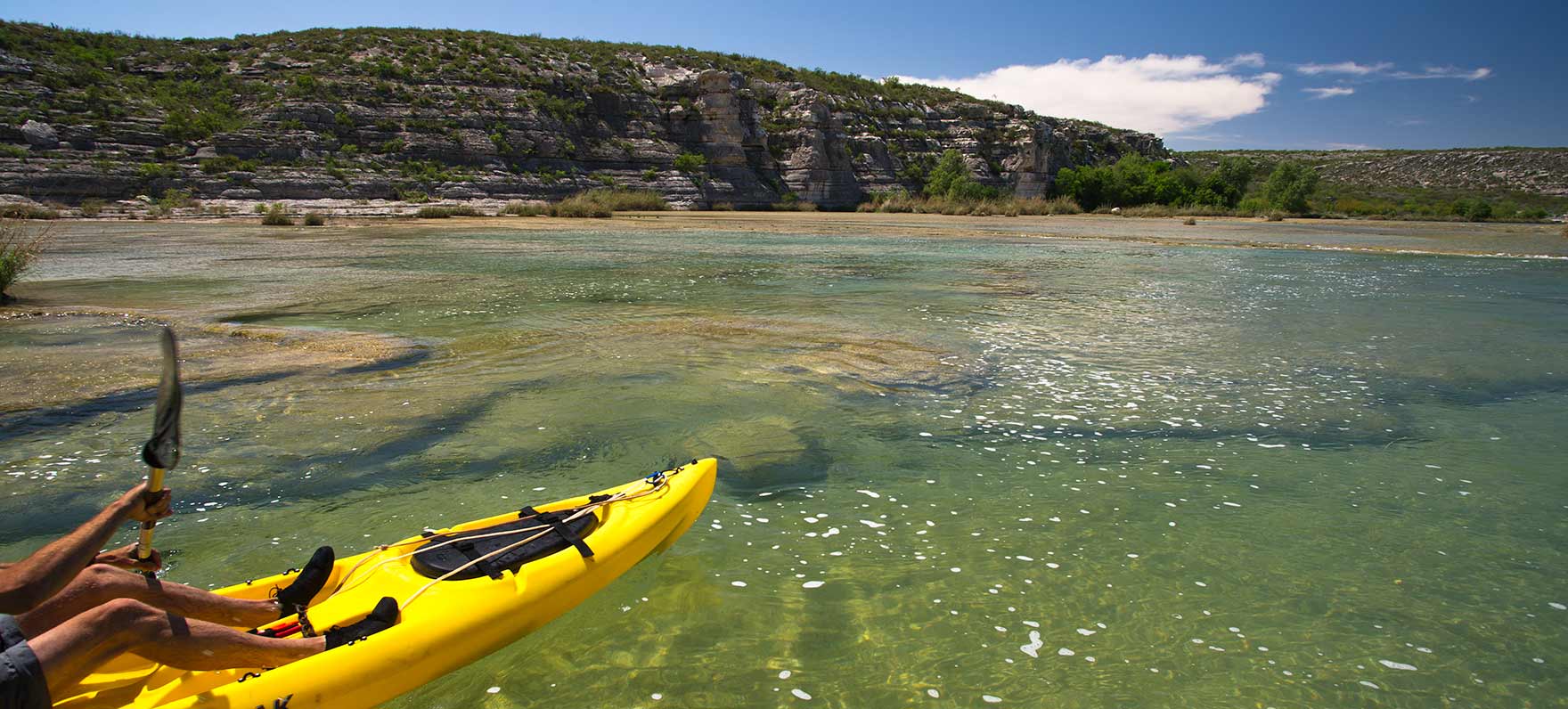
The trails at Devils River State Natural Area show how geology and ecology are braided together here. Texas Parks & Wildlife describes a nearly untouched environment with routes including Kennard Canyon Trail, Little Satan Trail, Overlook Trail and Gage Canyon Trail. Those paths are not just ways to get around the property. They lead through terrain that makes the river system legible on foot.
One of the most striking features is Devils Tower, a limestone monolith that anchors the landscape. Karst springs feed the river and help create its clear, blue-green color, while tinajas, natural rock basins, hold precious water for wildlife through dry stretches. The agency also points to a tri-ecoregion garden, where plants from the same three regions that meet at the river can be seen together in one place. That combination of springs, rock, canyons and plant communities gives the area an unusually complete ecological story.
Why this landscape matters to Val Verde County
Val Verde County has more than open space at stake here. Devils River State Natural Area preserves one of the county’s most intact natural systems, a stretch of river and canyon land where water quality, habitat continuity and native biodiversity still reinforce one another. It also gives residents a protected landscape that stands apart from the pressures that often transform fragile river corridors into overused or degraded places.
The value of that protection shows up in the species the river still supports, the spring-fed water that still runs clear, and the fact that the area remains one of Texas’ most primitive river systems. In a county where landscape and livelihood are tightly linked, the Devils River remains a rare example of what is preserved when a watershed is kept whole.
This article was produced by Prism’s automated news system from verified source data, official records, and press releases, then run through automated quality and moderation checks before publishing. The system is built and supervised by the people who set the standards it runs under. Read our full AI policy.
Did this article answer your question?