Federal waivers clear way for border projects in Val Verde County
Federal waivers now cover part of Val Verde County’s Rio Grande corridor, where CBP is weighing patrol roads, barriers and surveillance instead of a continuous wall.

Federal environmental law is being pushed aside in the Rio Grande corridor that reaches into Val Verde County, clearing a faster path for border roads, barriers and surveillance in one of the region’s most protected river landscapes. The change matters because it affects not just the Big Bend backcountry but also the county’s river edge, where landowners, river users and conservation groups have long depended on normal review before major construction moves ahead.
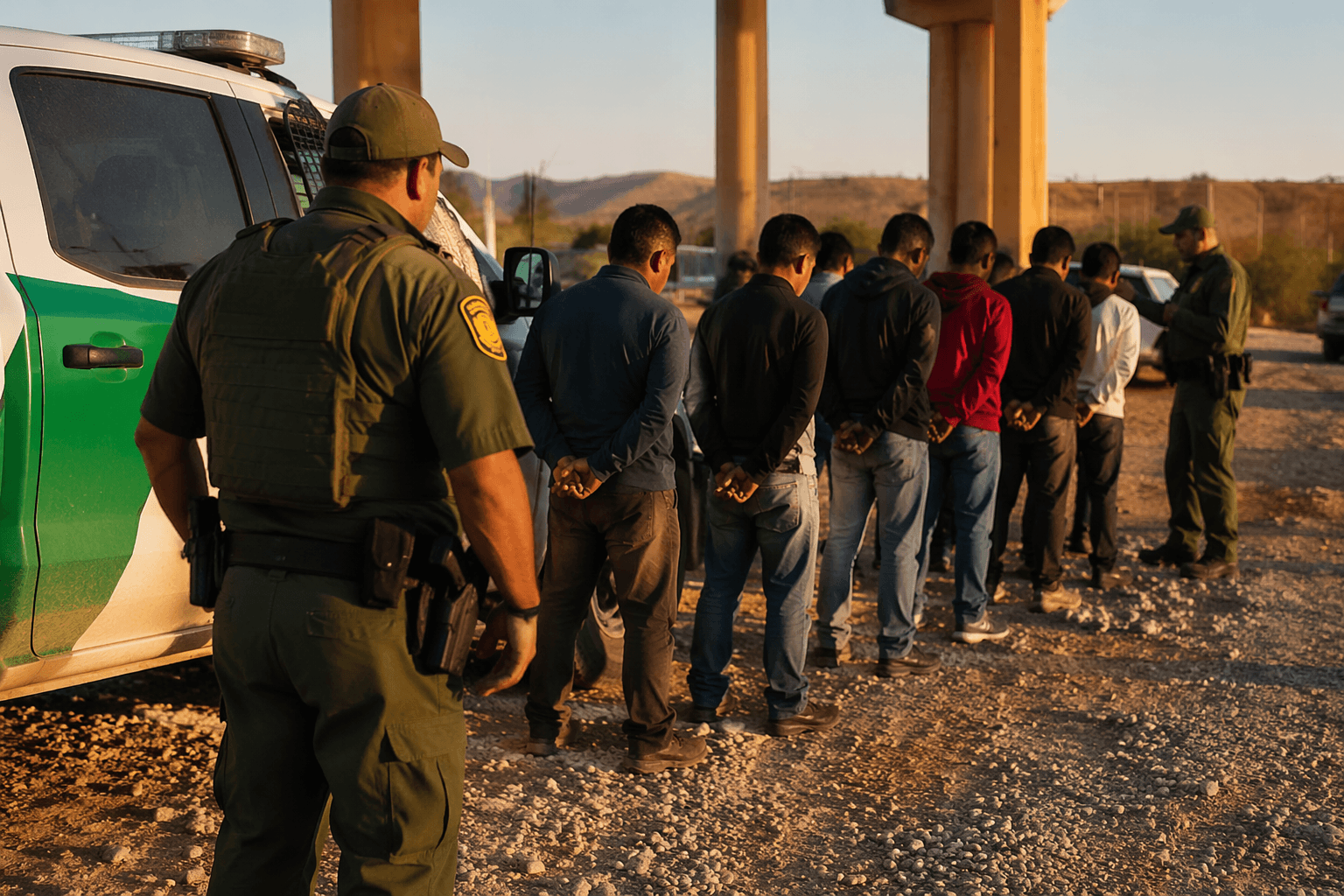
The Department of Homeland Security waiver for Texas border barriers took effect Feb. 17, 2026, after Secretary Markwayne Mullin issued a determination saying the government could waive certain laws to ensure expeditious construction of barriers and roads near the international land border. In Val Verde and neighboring Kinney counties, U.S. Customs and Border Protection had already outlined a sizable project on Dec. 30, 2025: about 30 miles of primary border barrier, about 36 miles of waterborne barrier system and about 2 miles of replacement barrier in Val Verde County, along with fiber-optic cable, lighting poles, artificial lighting, power cables, surveillance cameras, access and patrol roads and utility shelters.

CBP’s updated map for the Big Bend region, released April 22, 2026, widened the picture further. It showed about 17 miles of vehicle border barriers in or near Big Bend National Park, added patrol roads in the park and nearby Big Bend Ranch State Park, and extended vehicle-barrier planning across southeastern Brewster County and through Terrell County toward the Del Rio area. Marfa Public Radio reported that the waivers apply to a portion of the federally protected Rio Grande Wild and Scenic River east of Big Bend National Park in Brewster, Terrell and Val Verde counties.

That river designation is what makes the waiver so consequential for Val Verde County. Normal environmental protections can slow or reshape federal work in a corridor where the river, not just the border, is the central feature. Without those reviews, residents and landowners along the stretch lose a layer of scrutiny over where patrol roads might cut in, where barriers might be placed and how the work could affect habitat and access to the river.
Terrell County Sheriff Thaddeus Cleveland said local sheriffs and officials met with CBP that day and were told the agency was not planning a vehicle barrier all the way across the county. He said the steep terrain there makes a continuous drive-across barrier unnecessary, suggesting the practical focus may be on roads and selected barriers rather than a wall from end to end.
The changes have already triggered a lawsuit. On April 16, the Center for Biological Diversity, Friends of the Ruidosa Church and other plaintiffs sued DHS, arguing the waivers were unconstitutional and would harm wildlife, public access and the river recreation economy. CBP and the National Park Service did not immediately comment, and a later Texas media report said CBP was no longer planning a wall inside Big Bend National Park, instead leaning more on roads, drones and other surveillance. For Val Verde County, the buildout remains fluid, but the federal green light is already in place.
This article was produced by Prism’s automated news system from verified source data, official records, and press releases, then run through automated quality and moderation checks before publishing. The system is built and supervised by the people who set the standards it runs under. Read our full AI policy.
Did this article answer your question?